| | Washington restricts OpenAI’s latest model release, data centers reshape the world’s power grids, an͏ ͏ ͏ ͏ ͏ ͏ |
| |  | Flagship |  |
| |
|
The World Today |  - US restricts OpenAI model
- Stocks slump on tech rout
- Data centers reshape grids
- Heat hits Europe’s power
- Ships move through Hormuz
- Oil firms’ climate liability
- Roundup ruling overturned
- S. Africa police corruption
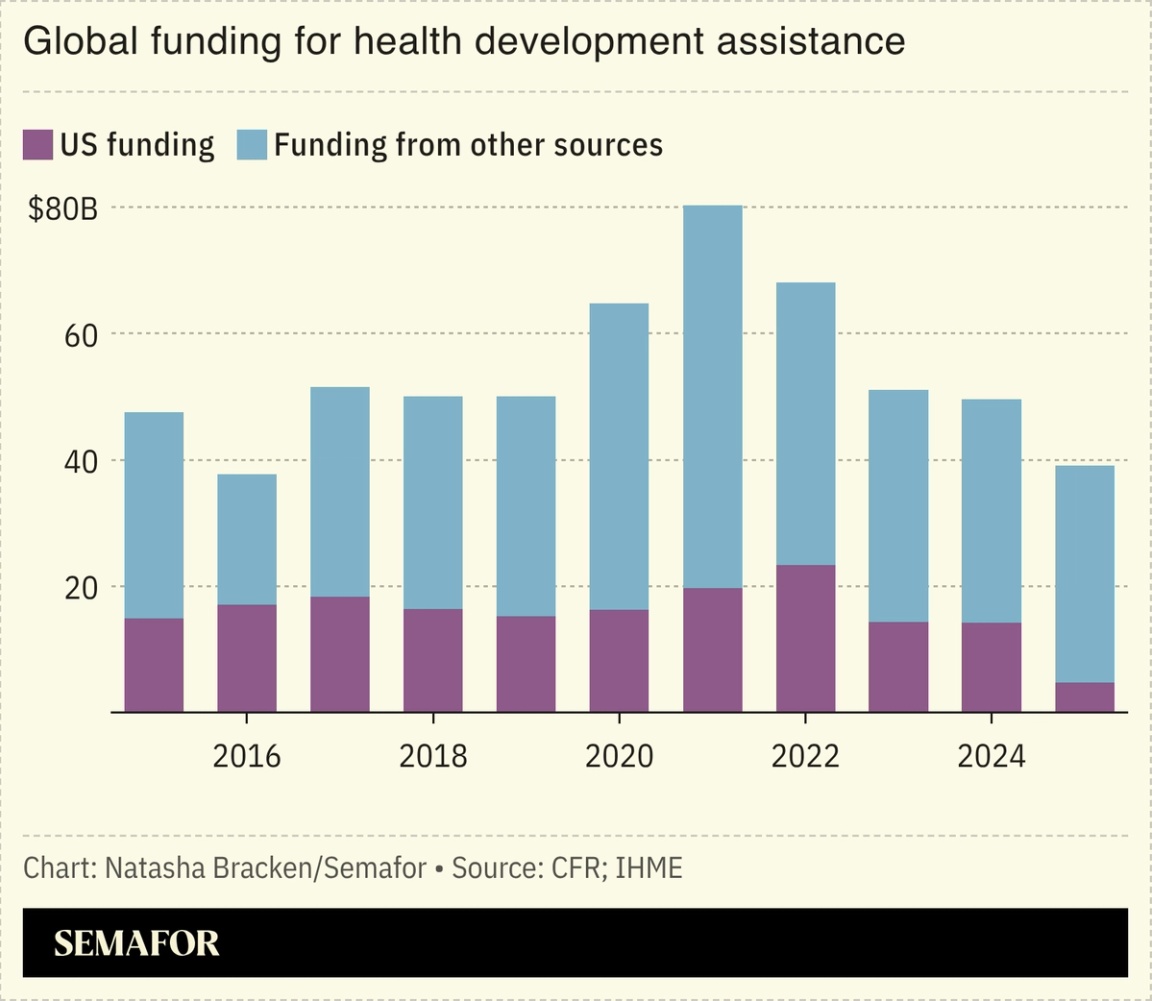
- US shifts aid policy
- Videogames price rises
 A ‘breathtaking’ account of Russia’s decades-long program of deep-cover spies in Western countries. |
|
US limits OpenAI model release |
 Evelyn Hockstein/Reuters Evelyn Hockstein/ReutersThe White House asked OpenAI to limit the release of its next model to government-approved users, cementing the Trump administration’s shift toward AI interventionism. It started out laissez-faire on AI, removing Biden-era rules requiring safety reviews of frontier models. But it has rapidly changed direction, getting into a legal tussle with Anthropic over the military’s use of its AI while blocking foreign nationals from accessing the company’s cutting-edge systems, and this month signing an order imposing nominally voluntary reviews of new releases. The result is an “open-ended and confusing regulatory landscape,” Politico said. Perhaps coincidentally, OpenAI is considering delaying its IPO, The New York Times reported, with executives unnerved by SpaceX’s volatile debut and stock-market choppiness. |
|
Stocks slump on tech rout |
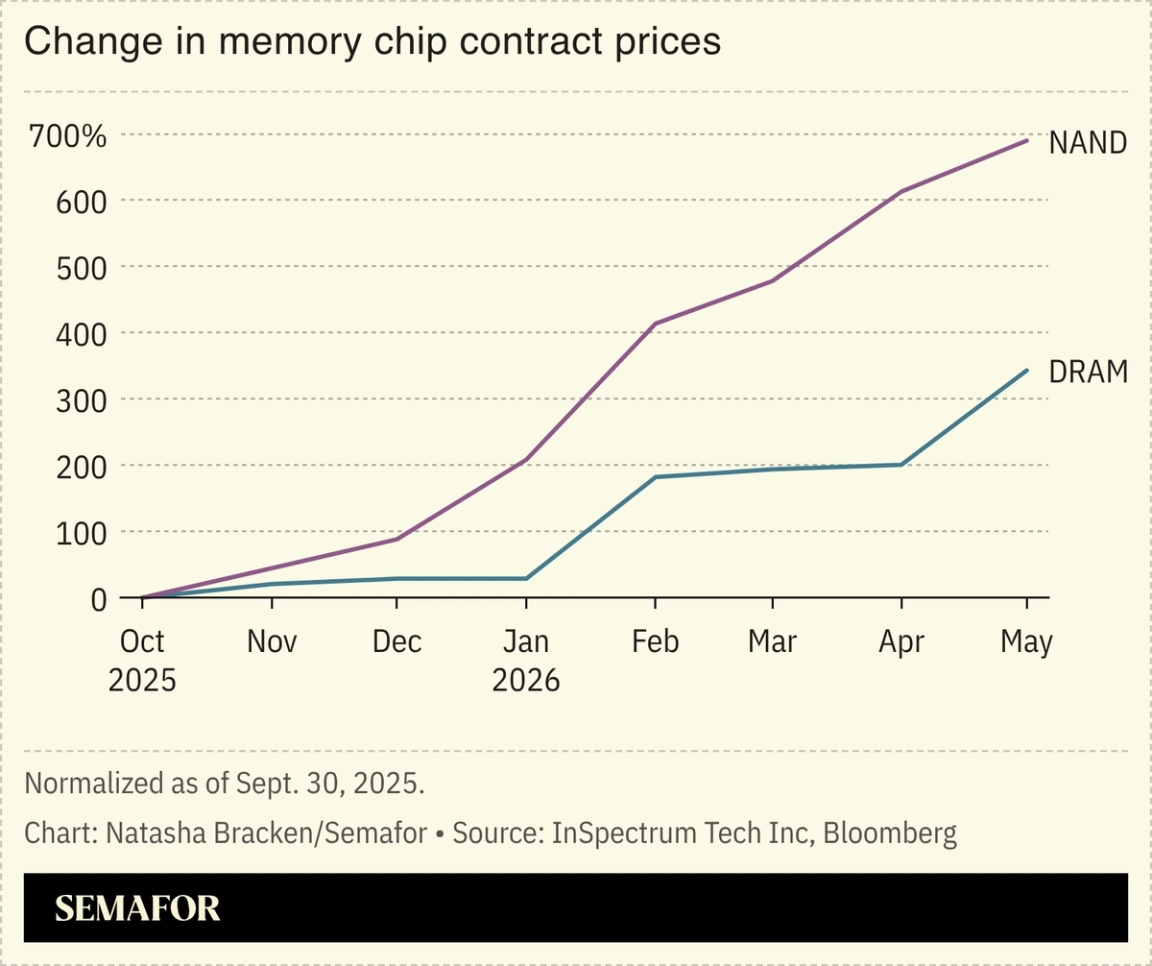 A tech stock sell-off saw Asian markets tumble, with Wall Street set to follow. South Korea’s benchmark index triggered an automatic suspension of trading before closing down 5.8%, while markets in Hong Kong, Japan, and Taiwan also slumped. It has been a volatile week for tech stocks: Shares in memory makers SK Hynix and Micron have swung wildly, while Apple stocks slid 6.1% after major increases in input costs forced the company to raise prices. Investors are concerned about “inflation, rate hikes, and global volatility,” an analyst told the Financial Times, as well as concern that consumer tech companies are being hurt by the intense competition for memory, processors, and storage from the AI buildout. |
|
AI reshaping energy networks |
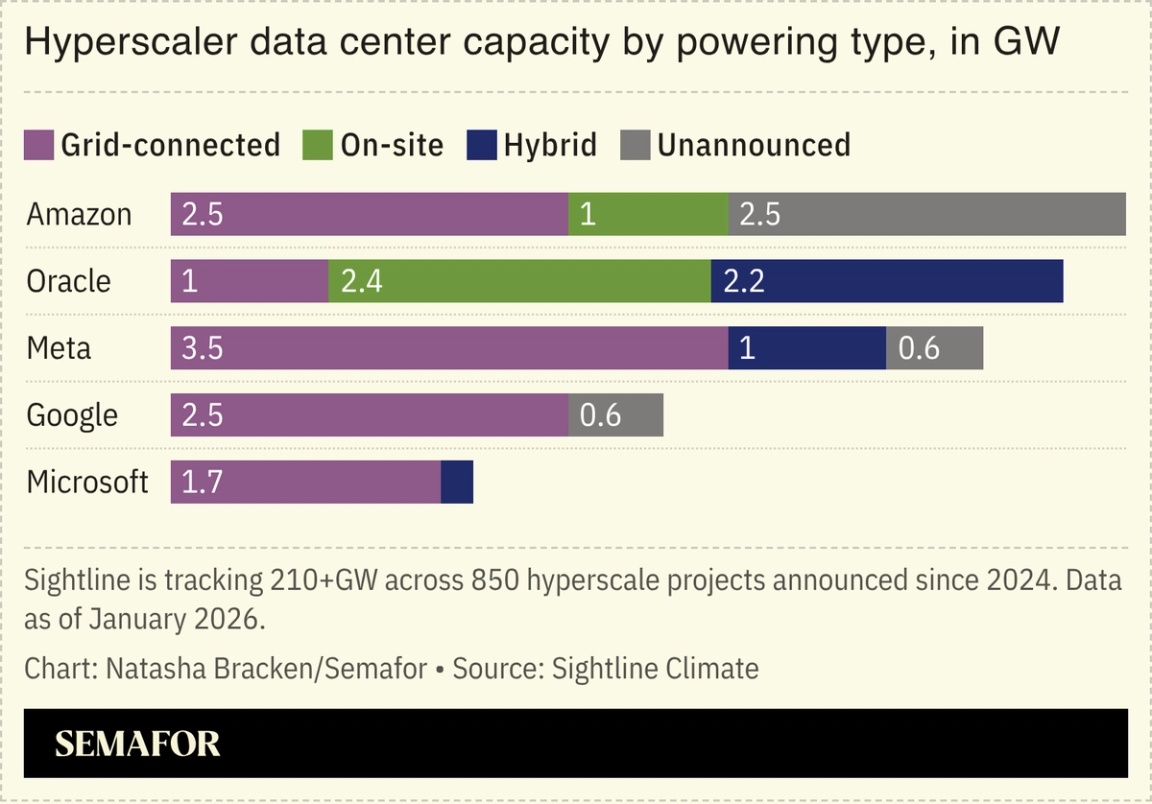 The AI buildout is reshaping global energy grids. In the US, data centers are boosting energy demand faster than the power network can keep up, according to ING analysis. But the Dutch bank said that the data center buildout could be “a new grid asset” — developers are having to build their own power and power storage, which can be used to support local energy systems. In China, compute demand has also driven up electricity requirements: AI could reach 5.3% of the country’s total usage by 2030. Authorities are pushing an “Eastern Data, Western Computing” model, Caixin reported, putting major power-hungry data centers in China’s more sparsely populated west and requiring those hubs to run off 80% green energy. |
|
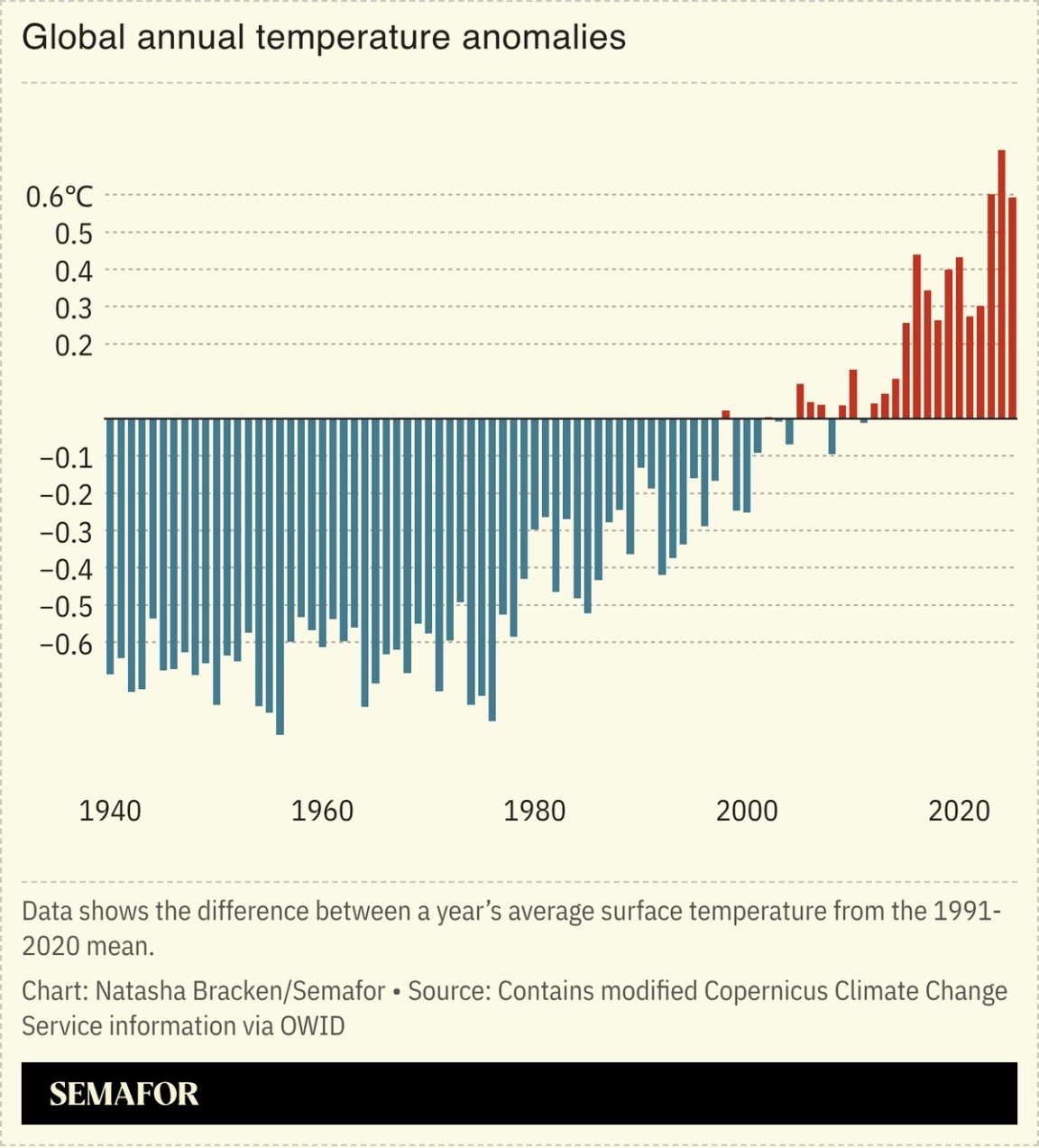 Europe’s ongoing heat wave is piling pressure on its electricity system. Surging demand for air conditioning, with temperatures staying high into the evening when solar output falls, combined with the high-pressure system behind the heat wave stilling the air and limiting wind generation, have forced power networks to scramble. Britain’s national grid issued, then retracted, a call for more power as the buffer between supply and expected demand grew tight; electricity prices hit $740 per megawatt Wednesday evening, up from $100 in the morning. In France, several nuclear plants went offline as they were unable to cool sufficiently. Germany and the UK are on track to see their highest June average electricity prices since the 2022 energy crisis, Bloomberg reported. |
|
Hormuz traffic tests US-Iran truce |
 Edgar Su/Reuters Edgar Su/ReutersTankers crept through the Strait of Hormuz, despite a new vessel attack rattling an already unsettled energy market. Traffic through the waterway has more than tripled since a US-Iran interim peace deal, but remains far below prewar levels. A key test of the truce is looming today as four empty supertankers head into the strait: Their journey would suggest shipping companies are confident that existing measures allow them to load cargo and freely leave for ports elsewhere. The potential resumption of oil flows is already reshaping energy-market dynamics. With supply now abundant, Iraq’s president told The National that his country would suspend its OPEC membership if production quotas weren’t increased, following the UAE’s withdrawal from the group last month. |
|
Paris court adds to climate verdicts |
 Alice Sacco/Reuters Alice Sacco/ReutersA Paris court ordered TotalEnergies to set out plans to mitigate the climate risks linked to emissions from its oil and gas products, a key decision in the growing wave of legal cases against fossil fuel companies over their environmental impact. The ruling highlights how the fight against climate change is increasingly being waged in courtrooms: A new London School of Economics study found that three-quarters of the more than 3,600 climate cases ever filed have been submitted in the last decade, across more than 60 countries. Yet they have had mixed success. A 2021 ruling in the Netherlands ordering Shell to cut its emissions was overturned, and is now before the Dutch Supreme Court. |
|
US Supreme Court kills Bayer award |
 Kylie Cooper/Reuters Kylie Cooper/ReutersThe US Supreme Court overturned a $1.25 million award to a man who said a weedkiller caused his cancer, likely shielding parent company Bayer from billions in lawsuits. The case hinged on whether Roundup should have carried a cancer warning. SCOTUS ruled the label was federally approved and so did not require further information. The broader issue is whether courts are a suitable venue for scientific questions: Lower courts approved the payout despite every major regulator saying glyphosate, Roundup’s active ingredient, is non-carcinogenic in doses humans could realistically face. Judges have made scientifically indefensible decisions before: One Italian court awarded damages to the parents of an autistic child in 2012, misled by fraudulent research linking the condition to vaccines. |
|
 From launching Call Her Daddy in 2018 to becoming one of the most successful podcasters in the world, Alex Cooper has built a highly influential media brand — and now she’s expanding into the creative agency space. On this week’s episode of Mixed Signals, Unwell co-founder Alex Cooper joins Max and Ben live from Cannes Lions to talk about growing her media business beyond podcasting, how her creative agency ended up going toe-to-toe with Call Her Daddy in revenue, and why she’s more interested in the marketing than most talent in her field. Plus, what she’s learned from her interview with Michelle Obama. Listen to the latest Mixed Signals now. |
|
Plea deal widens S. Africa graft probe |
 Phill Magakoe/Pool via Reuters Phill Magakoe/Pool via ReutersA South African businessman pleaded guilty to corruption charges and offered to provide evidence against “high-ranking officials,” underscoring the breadth of a huge graft probe in the continent’s biggest economy. The deal, which has not yet been accepted by magistrates, comes amid growing questions over law and order in South Africa: A national commission is investigating whether criminal syndicates have in effect taken over law enforcement, with a minister having been suspended and a top official facing criminal charges; meanwhile, the president is under pressure over an impeachment inquiry related to undeclared cash stolen from his property. “Together, they amount to a full-scale credibility test of South Africa’s rule-of-law architecture,” Semafor’s Southern Africa correspondent wrote recently. |
|
US aid U-turn in face of disasters |
|
|