ARS 5-Minute Reads
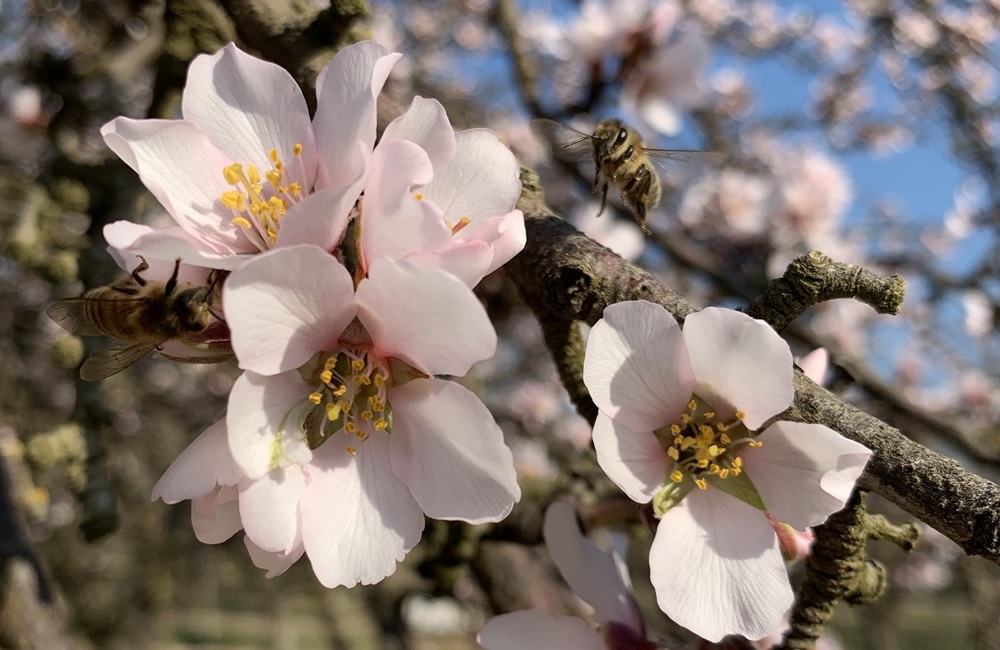
Honey bees (Apis mellifera) forage for pollen and nectar on almond flowers. (Photo by Michael Simone-Finstrom, ARS)
Honey Bees Can Detect Viruses in Food
Honey bees encounter viruses in their environments, especially when they forage on flowers and other food sources. Being able to detect viruses is important for reducing infection and the spread of disease. Many insects, including honey bees, can detect viruses indirectly with sick nestmates, but it has been unclear if honey bees can directly detect viruses in food sources.
To help beekeepers protect their colonies by reducing viral spread, ARS researchers from the Honey Bee Breeding, Genetics, and Physiology Research Unit in Baton Rouge, LA, studied if honey bees could sense viruses such as deformed wing virus, black queen cell virus, and chronic bee paralysis virus in contaminated food sources.
In an experimental study, the researchers found that when honey bees were presented with the choice between a spiked sugar solution with viruses and a plain sugar solution, the honey bees preferred the virus-spiked solution. Learn more...
|