| | In this edition: The prolonged impact of the Iran war, miners in DR Congo to see fuel subsidy adjust͏ ͏ ͏ ͏ ͏ ͏ |
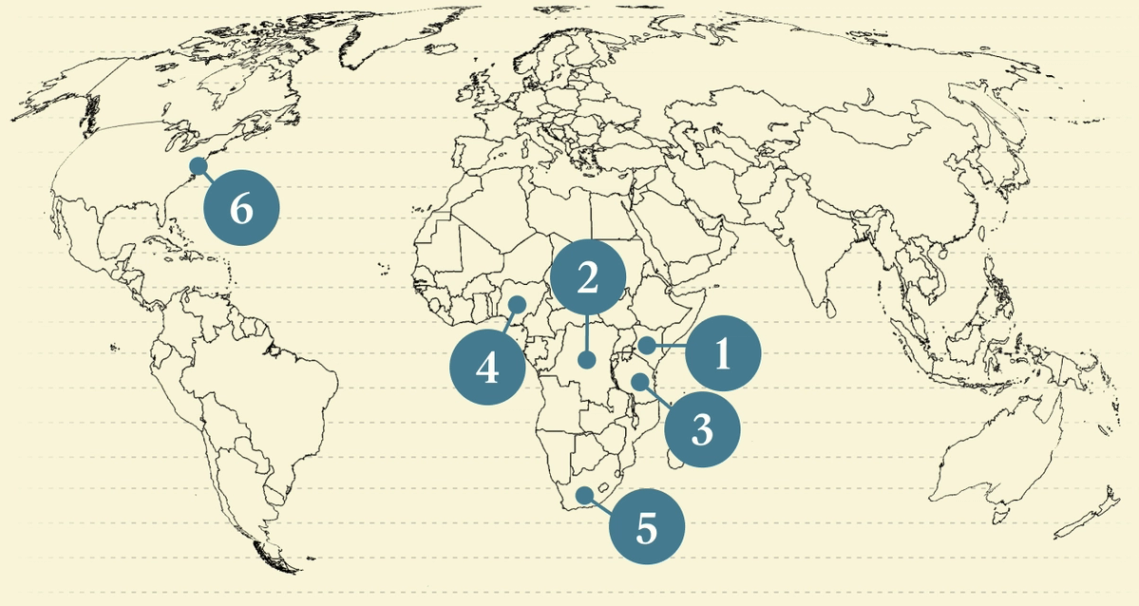
| |  Kinshasa Kinshasa | Dar es Salaam | Pretoria |
 | Africa |  |
| |
|
 - Economic strains persist
- DRC fuel subsidy changes
- Dangote eyes expansion
- Nigeria opposition in court
- Starlink’s S. Africa drama
- The future of AGOA
 The Week Ahead, and East African animators draw praise on the global stage. |
|
Africa’s prolonged economic risk |
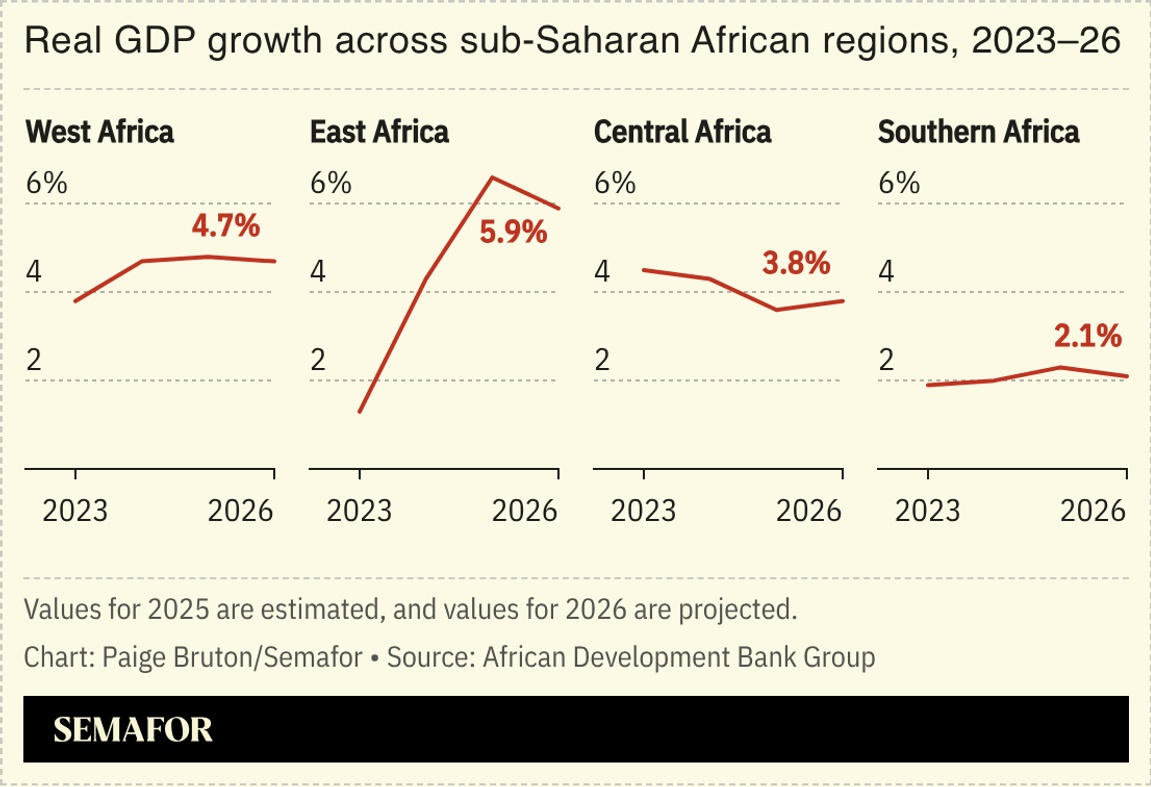 Economists and asset managers warned that sub-Saharan Africa’s economic crunch will likely extend to the end of 2026, dashing hopes that the US-Iran ceasefire would ease short-term conditions in a region badly impacted by the war. “The real effects of a conflict like this do not end when the headlines soften,” said Cliff Bakashaba, head of investments at Jubilee Asset Management in Nairobi. S&P Ratings said the damage done to the continent’s fiscal balances is already baked into the second half of the year. Last week, the agency cut its projection for South Africa’s GDP growth by 20 basis points for both 2026 and 2027. It estimated a growth rate of 1.3% and 1.5% respectively. Nigeria’s GDP projections were also lowered by 30 basis points to 3.7% for 2026 and 3.5% for 2027, reflecting its dependence on imported refined fuel. Capital Economics said the de-escalation buys African policymakers a bit of wiggle room to manage the prolonged economic hangover of the US-Iran war. The majority of the continent’s energy and fertilizers pass through the Strait of Hormuz, and the waterway’s effective closure sparked fuel-price hikes and related protests, along with dire warnings about food security and inflation. — Tiisetso Motsoeneng |
|
DRC fuel subsidies to change for miners |
| |  | Ruben Nyanguila |
| |
 Hereward Holland/File Photo/Reuters Hereward Holland/File Photo/ReutersDR Congo is extending cuts to fuel subsidies after shifting mining companies onto market prices, as the government looks to ease pressure on public finances following the global energy shock triggered by the Iran war. Finance Minister Doudou Fwamba Likunde told Semafor the government is “rationalizing fuel-related support” by targeting sectors that can absorb higher costs, starting with mining before expanding the policy to telecommunications companies. Kinshasa spent more than $300 million on fuel subsidies in 2024 to stabilize prices in a country that imports nearly all of its refined fuel. Many mining companies depend on diesel because of chronic electricity shortages, though the preferential fuel pricing they have long enjoyed was originally introduced to attract foreign investment. The policy will increase operating costs for miners and could reduce corporate tax payments, according to Deloitte’s DR Congo managing partner Bob David Nzoimbengene. But he argued it is “abnormal” for the government to subsidize fuel for profitable commercial companies, saying the state was right to begin scaling back the support. |
|
Dangote pursues Tanzania deal |
 Temilade Adelaja/Reuters Temilade Adelaja/ReutersAfrica’s richest man, Aliko Dangote, said he plans to make major investment in ports, power, and roads in Tanzania, as part of his plans to expand amid a surge in global fuel and fertilizer costs. The Nigerian billionaire held talks with Tanzania’s president last week, and said both parties have agreed on mutually beneficially sectors that can “deliver significant value,” with formal talks to finalise a deal to be held soon. Dangote’s vast empire includes cement and fertilizer subsidiaries, which he is looking to expand across the continent. The group’s oil refinery in Nigeria is the largest in Africa, with a project to double its capacity to 1.4 million barrels per day now underway. Dangote has already announced plans to set up a second oil plant in Kenya to serve the East Africa region, and invited Tanzania to “to participate in the investment.” Rising oil prices and fuel shortages have spurred calls for Africa to move toward greater self-reliance. — Alexander Onukwue |
|
Lawsuits threaten Nigerian opposition |
| |  | Alexander Onukwue |
| |
 Nigeria Democratic Congress presidential candidate Peter Obi. Temilade Adelaja/Reuters. Nigeria Democratic Congress presidential candidate Peter Obi. Temilade Adelaja/Reuters.Nigeria’s main opposition parties are racing to overturn court rulings that could knock them out of January’s presidential election, raising fresh concerns over the credibility of the vote in Africa’s most populous country. Separate lawsuits resulted in orders to de-register the African Democratic Congress (ADC) and the Nigeria Democratic Congress (NDC), the parties backing former vice president Atiku Abubakar and former Anambra governor Peter Obi. Both have appealed, arguing the cases undermine transparency and the rule of law. Legal experts told Semafor the rulings appear to conflict with Nigeria’s electoral procedures. The ADC says it met the constitutional threshold needed to retain registration, while analysts argue any review of party eligibility should have taken place after the 2023 election, not months before voters return to the polls. With more than 1.5 million new voters registered — and the economy dominating the campaign — the legal battle risks eroding confidence in an already closely watched election. |
|
S. Africa minister denies Starlink ties |
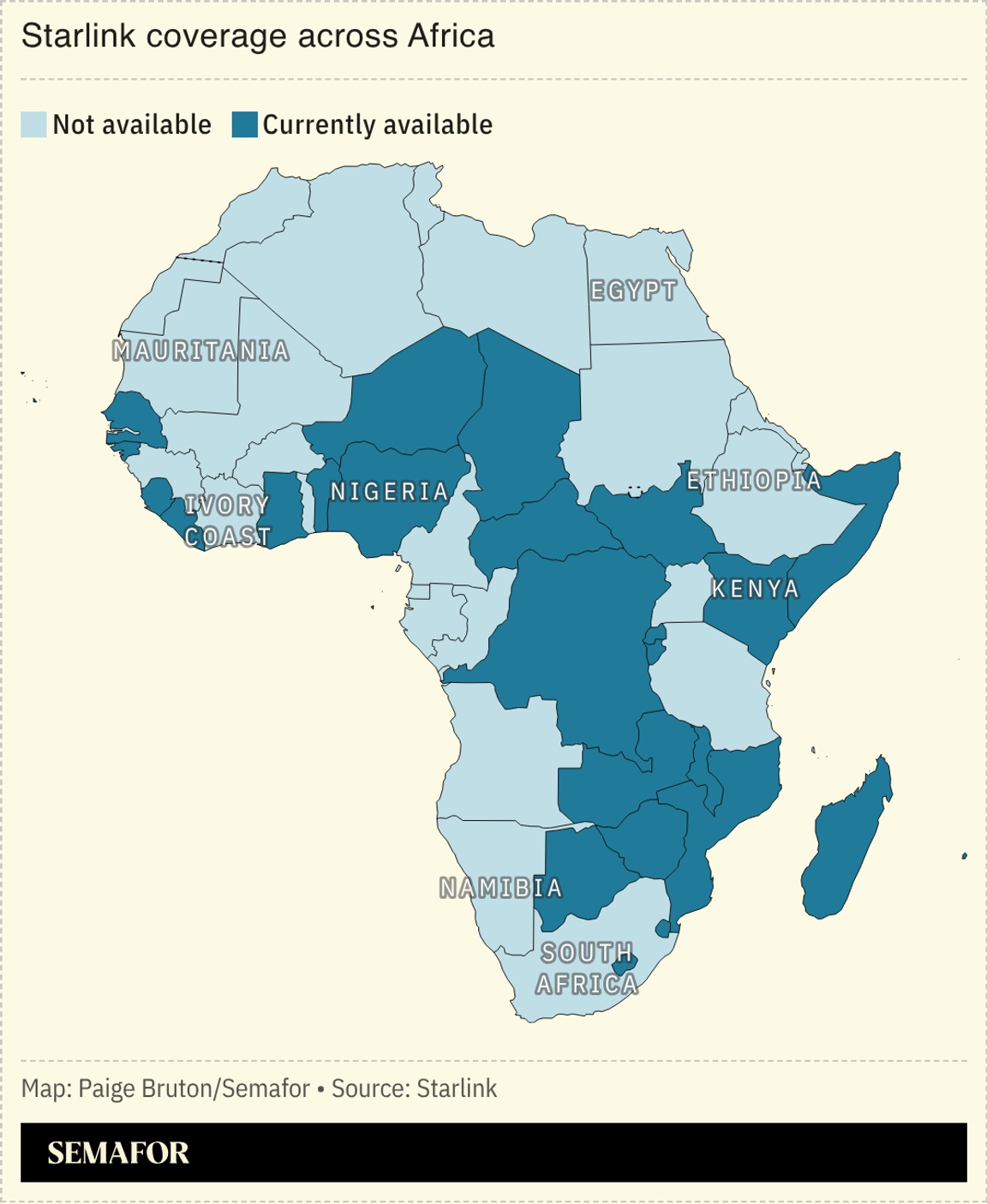 South Africa’s information and technology minister has dismissed allegations that lobbyists tried to influence the government’s policy on Starlink’s entry into the domestic market, telling parliament his regulatory calls are made “without fear or favor.” The issue was thrust into the spotlight last week, when former Democratic Alliance leader John Steenhuisen said a public affairs company used political proximity to secure access to private clients and pressure Technology Minister Solly Malatsi over satellite licensing requirements. Malatsi said his push to allow foreign telecom firms to meet Black Economic Empowerment policies through “equity equivalent” contributions predates any lobbying. “It’s impossible to be unduly influenced to do something one is already doing,” he said. Parliament is due to review his response before deciding on further action, in an episode that has conjured up memories of the so-called State Capture era — a period of widespread government corruption under former President Jacob Zuma. Several African countries have relaxed regulations around ownership to allow access to Starlink, which has set up operations in nearly 20 countries across the continent. — Tiisetso Motsoeneng |
|
View: What the AGOA debate misses |
 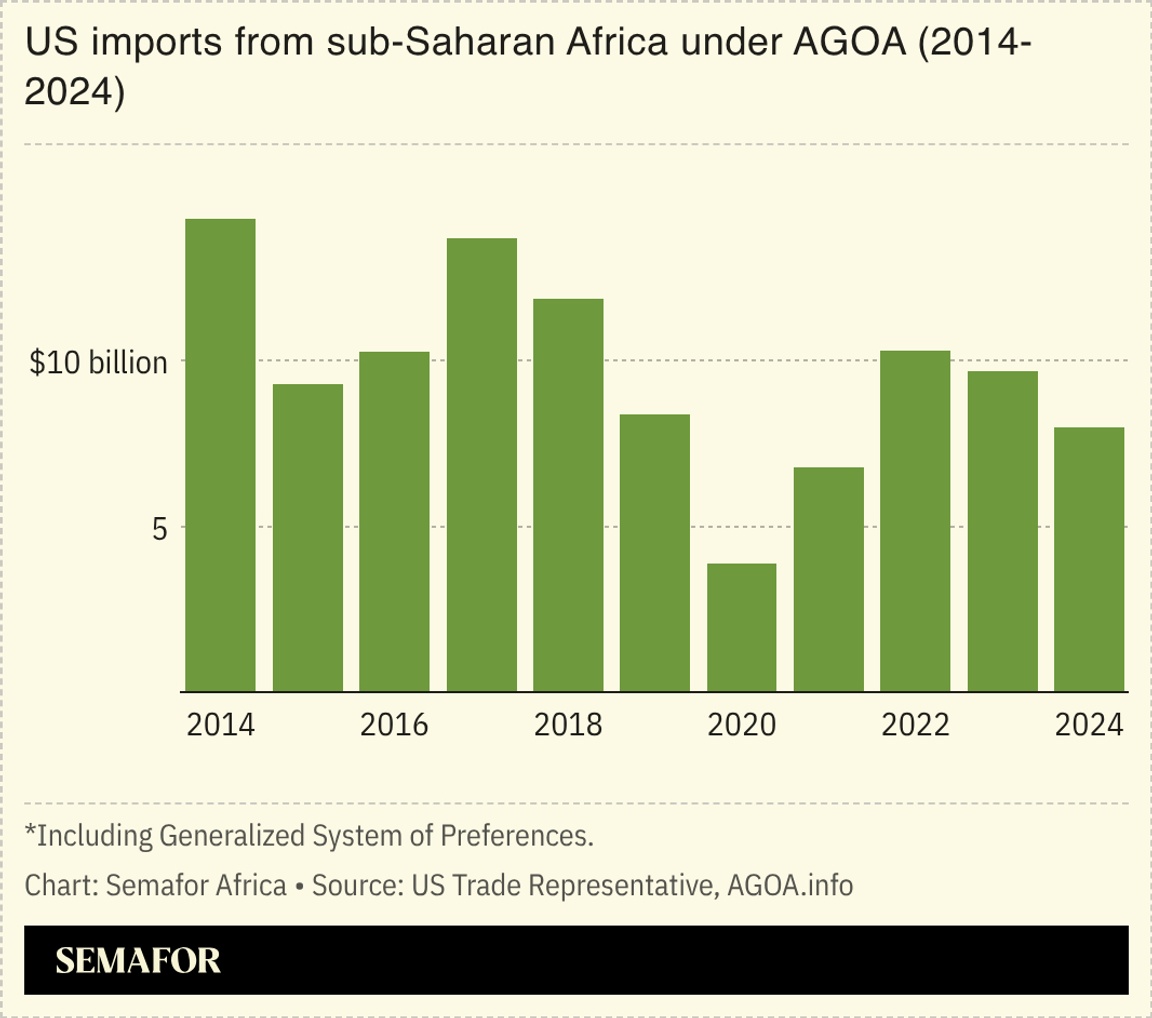 Washington is asking the wrong question about the future of the African Growth and Opportunity Act, argues a former USAID Africa director in a column for Semafor. Rather than debating another short-term extension of AGOA, the US should be building a broader commercial strategy that treats Africa as a single, increasingly integrated market, while rivals including China and the EU deepen long-term trade and investment ties across the continent. Daniele Nyirandutiye, now a senior fellow at the Center for American Progress, says Washington should make the African Continental Free Trade Area the foundation of its economic engagement, pair trade with investment in supply chains and value addition, and revive technical cooperation with AfCFTA institutions. AGOA helped prove trade could drive development, she argues, but it was never meant to be the limit of America’s economic ambitions in Africa. |
|
 Business & Macro |
|
|