| | A controversial FIFA decision tests transatlantic ties, Alibaba wins a reprieve in US lobbying effor͏ ͏ ͏ ͏ ͏ ͏ |
| |  | Flagship |  |
| |
|
The World Today | 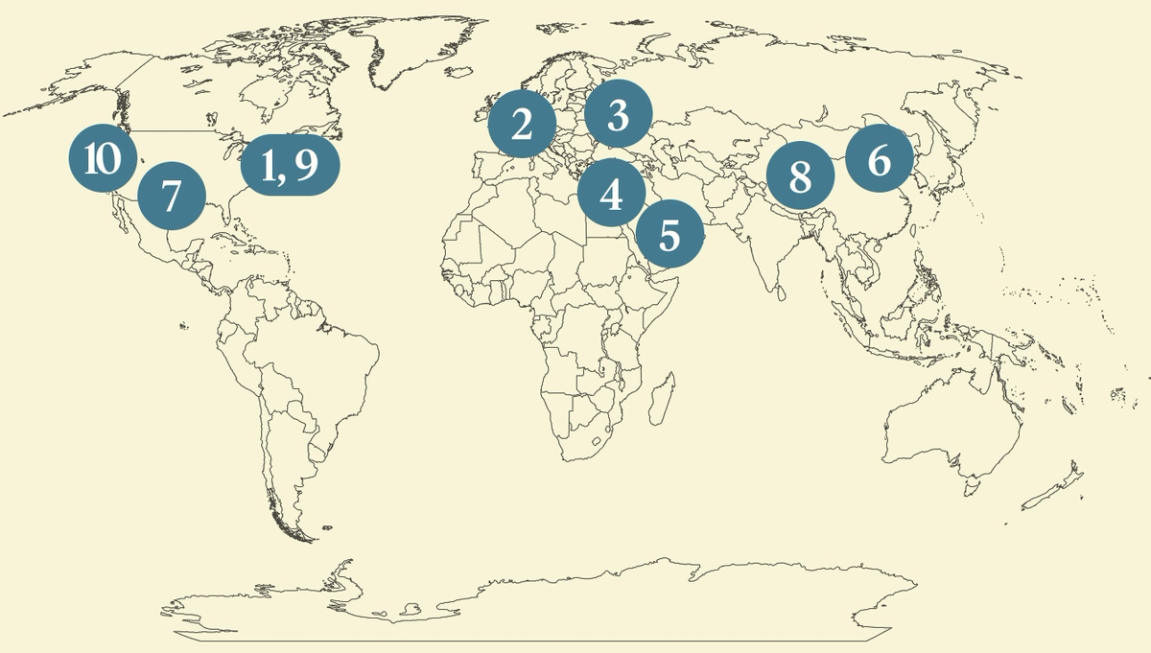 - US chip stocks rally
- FIFA decision outrage
- Trump warms to Kyiv
- US shift in Israel support
- Saudi slashes oil price
- Alibaba wins US reprieve
- Trump promotes Dell
- Lithium’s price rebound
- Heterodox media swings right
- AI design doppelgängers
 A once-revered king’s notorious appetites. |
|
Chip stocks lead Big Tech rally |
 Jeenah Moon/Reuters Jeenah Moon/ReutersThe US stock market soared on Monday as a reinvigorated AI trade drove up chip stocks at the start of a critical week testing investor appetite in the AI boom. US chipmaker Broadcom led the rally after announcing it would extend its deal with Apple to supply bespoke semiconductors until 2031, adding to its tie-ups with Alphabet and Meta. Following multiple selloffs, Monday’s rally offers encouragement ahead of Samsung’s earnings report on Tuesday and fellow Korean chipmaker SK Hynix’s $28 billion expected US listing Friday, which will be parsed “for signs that tech’s recent volatility is stabilizing,” a UBS analyst told Bloomberg. SK Hynix is up 260% on the year, as Big Tech firms race to add compute. |
|
FIFA reversal prompts US-Europe row |
 Phil Noble/Reuters Phil Noble/ReutersFIFA rejected Belgium’s challenge of the soccer body’s decision to overturn US star striker Folarin Balogun’s one-match World Cup suspension ahead of the countries’ game Monday, provoking Europe’s ire. The rejection came as US President Donald Trump defended his decision to personally urge FIFA President Gianni Infantino to review Balogun’s suspension, calling the reversal “brilliant,” even as Infantino dismissed notions of undue influence. European soccer’s governing body panned FIFA’s decision as “unprecedented” and “incomprehensible.” The controversy is the latest episode to test transatlantic ties on the eve of NATO leaders’ summit, with the US secretary of state suggesting Washington may discuss the issue with Belgium on Tuesday. |
|
Trump changes mind on war: Zelenskyy |
 Jonathan Ernst/Reuters Jonathan Ernst/ReutersUS President Donald Trump has changed his mind about the Russia-Ukraine war, Ukrainian President Volodymyr Zelenskyy said Monday, ahead of a meeting between the two on the NATO summit’s sidelines. The US president “wants to be where there’s success,” Zelenskyy told the Financial Times, adding that Trump said Kyiv was “doing very well” with its drone campaign, which has caused a Russian fuel crisis. NATO fully backs Ukraine’s drone offensive, Finland’s president said, as the alliance looks to finally win Washington’s support for Kyiv, namely in the form of interceptors. Meanwhile, Russia’s Vladimir Putin could consider expanding the conflict, CNN wrote, possibly to distract from the war he is “not winning now” with “the one he can justify losing against NATO.” |
|
Shift in US support for Israel |
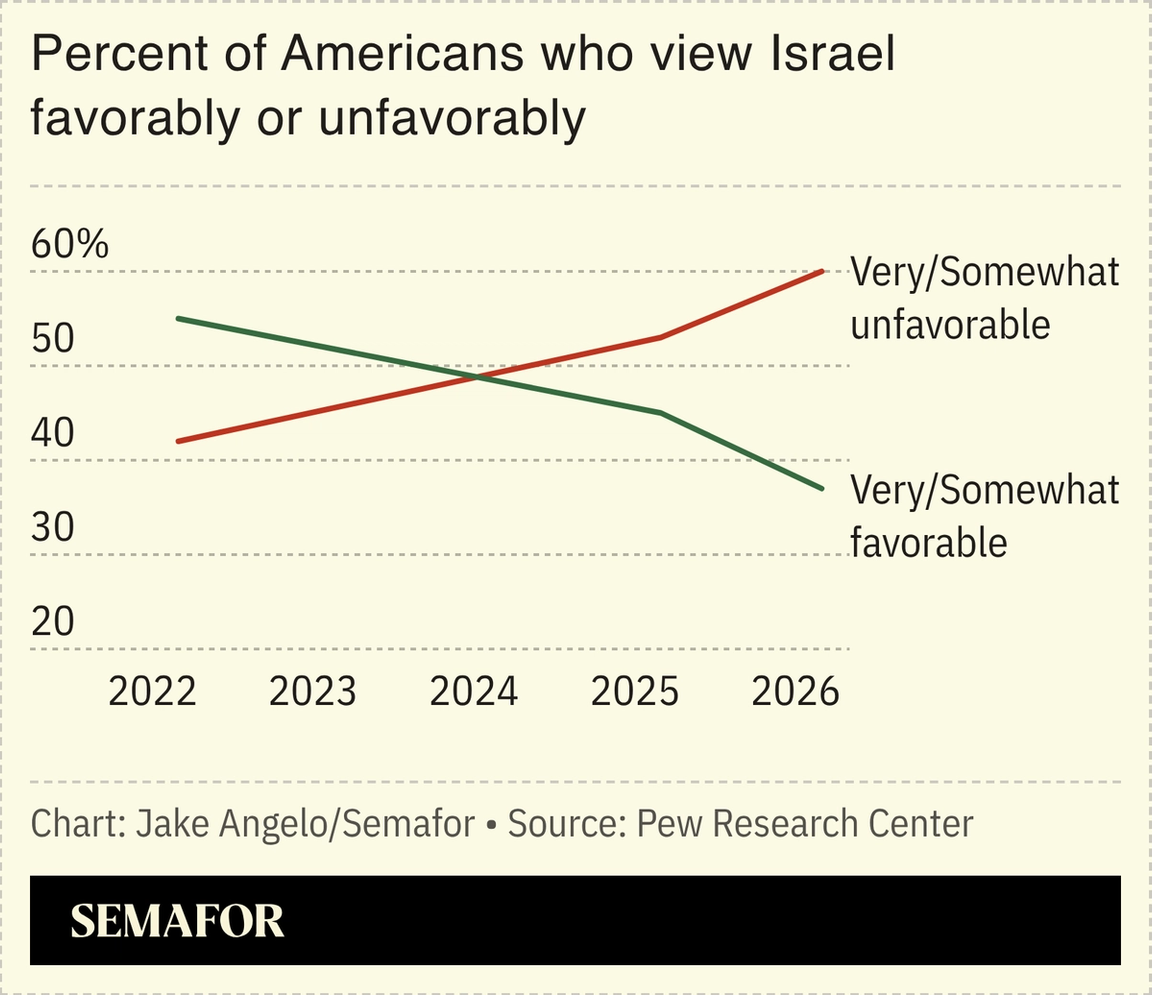 A Democratic 2028 presidential hopeful’s speech in Israel this week is expected to convey that “the era of absolute US support for Israel’s government is over,” Politico reported. Rahm Emanuel, an Israel supporter and critic of the Netanyahu government, plans to say that Israel should view US support as “expressly contingent” on several factors, including Israeli actions in Gaza and Iran. The “message and messenger should produce a loud echo,” Politico noted, as Democrats’ stance on Israel shapes up to be a defining issue in the midterm elections. A poll found nearly half of Americans think Washington is “too supportive” of Israel. The US needs to fundamentally reform its alliances with Israel as well as NATO, Emanuel argued Monday. |
|
Saudi slashes crude oil price |
 Ali Jarekji/Reuters Ali Jarekji/ReutersSaudi Arabia slashed its main crude oil price for Asian customers, as a resumption of flows through the Strait of Hormuz and OPEC+’s decision to boost output intensifies the competition for buyers. Despite the discount, Asian buyers said Saudi supplies were still more expensive than those from other regional producers, Bloomberg noted, potentially signaling steeper cuts amid fears of a global glut, given that China hasn’t resumed large-scale oil imports so far. One analyst, however, argued the cutback was more a sign of “Hormuz’s messy normalization” than a price war, noting that competitive pricing could “reinvigorate Chinese interest.” Fears of a glut may be overblown, a global energy consultant said, suggesting that full supply won’t return before 2027. |
|
Alibaba wins US lobbying reprieve |
 Florence Lo/Reuters Florence Lo/ReutersA US federal judge granted Alibaba a legal reprieve that would allow the Chinese e-commerce giant to temporarily resume lobbying in the US, the latest development in a closely-watched case with implications for the countries’ technological rivalry. Washington lobbyists dropped Alibaba as a client following a US law barring the Pentagon from working with companies that represented firms on its blacklist of alleged Chinese-military linked entities. The judge ordered the Pentagon not to treat Alibaba as a Chinese military company until she reviewed the constitutionality of the measure. The decision comes as US AI firms are adopting a more aggressive stance toward Chinese competitors, accusing them of stealing their technology to build increasingly powerful AI systems. |
|
Trump promotes Dell at White House |
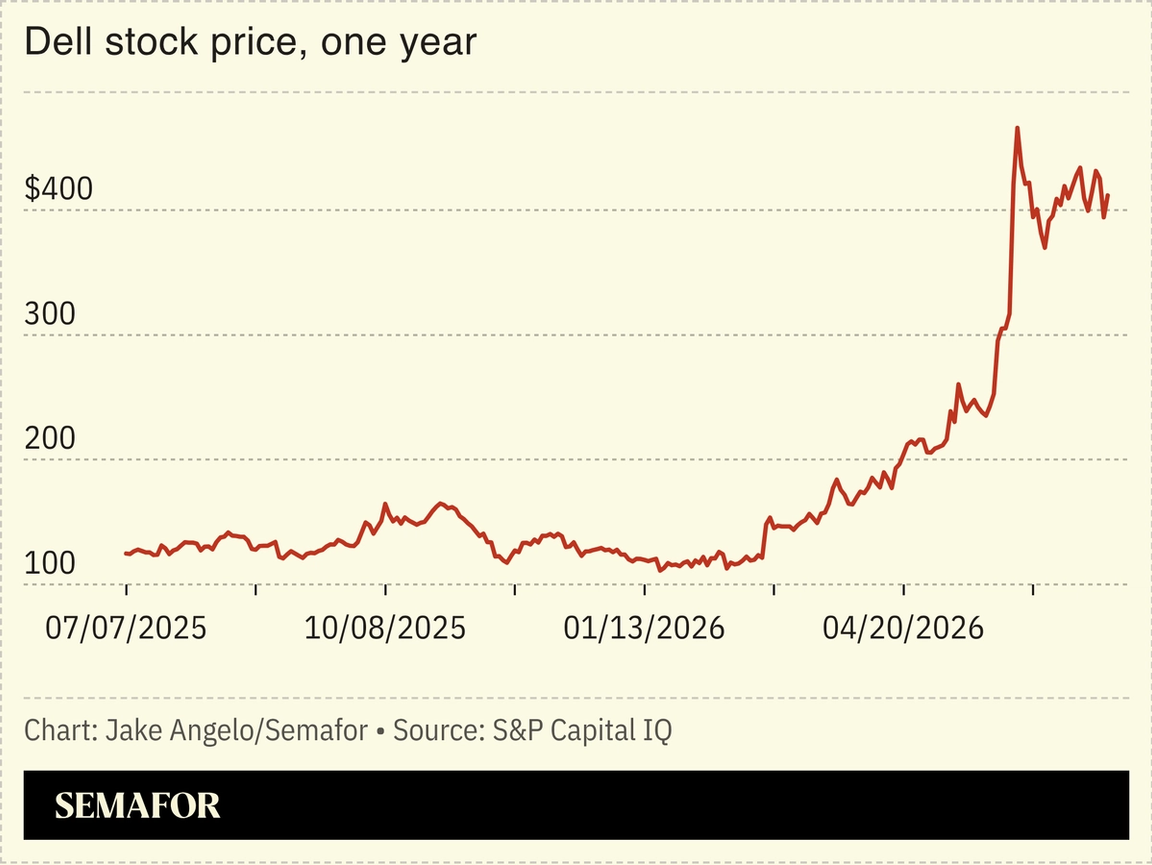 Dell shares jumped Monday after US President Donald Trump encouraged Americans to “go out and buy a Dell computer,” underscoring the growing proximity of Big Tech and US executive power. Trump promoted the company during the first-ever Wall Street opening bell held at the White House, marking the launch of “Trump Accounts” — government investment accounts for kids. CEO Michael Dell “bought into President Donald Trump’s second term early,” CNBC wrote, and his company has experienced some of its most profitable months since relisting in 2018. On Monday, SpaceX’s president announced she would donate $320 million of stock in Elon Musk’s rocket maker to Trump Accounts. |
|
The forces driving lithium’s price |
 Ivan Alvarado/Reuters Ivan Alvarado/ReutersLithium’s global price rebound is being driven by Chinese demand and processing, rather than supply constraints that fed the prior boom, analysis suggests. Until recently, the mining industry’s output could not meet requirements, and prices spiked in 2021-22. But capacity has since surged, especially in Australia. China mines just 18% of lithium ore, but dominates refinement and industries that use lithium products. Now that there is a glut, it is those factors controlling the market, an S&P analysis argued. Oil is similar: Prices’ determining factor will be whether China returns to the market following the Strait of Hormuz’s reopening, JPMorgan told investors. If China does not, the supply surge will meet a market that “simply does not need it.” |
|
How the heterodox media swung right |
 Kevin Lamarque/Reuters Kevin Lamarque/ReutersThe US “heterodox” media ecosystem, formed ostensibly to defend free speech from left-wing cancel culture, has collapsed into the mirror image of the thing it opposed, a writer recently argued. A 2010s-era turn against free expression led to a breakaway movement, Jacob Siegel wrote in The Tablet. At first it was politically diverse but became increasingly centered around populists such as Tucker Carlson. Any public figure runs the risk of “audience capture,” the incentive to feed their public ever more extreme material; Siegel argued that such a phenomenon has pushed the heterodox media into a right-wing conspiratorial hatred of Israel and, since Oct. 7, 2023, it has descended into “a propaganda industry promoting … fantasists and open antisemites.” |
|
AI fuels rise of website doppelgängers |
AI is creating an internet of near-identical websites. Generative AI has made it easier for users to create sites, but the format is instantly recognizable, web-design pros told The New Yorker, much as “it’s not X, it’s Y” tics identify AI writing. The tells include “tasteful, slightly askew primary colors” and large serif typefaces. Web designers have an incentive to warn potential customers away from AI alternatives, but we’ve seen enough posters with slightly off lighting and too-busy content to believe it’s working. It may get better as the tech improves, or not: As AI output fills the internet, it informs the training data of future models. Researchers found that models trained on their own work return steadily less diverse outputs. |
|
|


