| | A key NATO summit kicks off in Türkiye, Iran strikes tankers on the Strait of Hormuz, LePen’s politi͏ ͏ ͏ ͏ ͏ ͏ |
| |  | Flagship |  |
| |
|
The World Today | 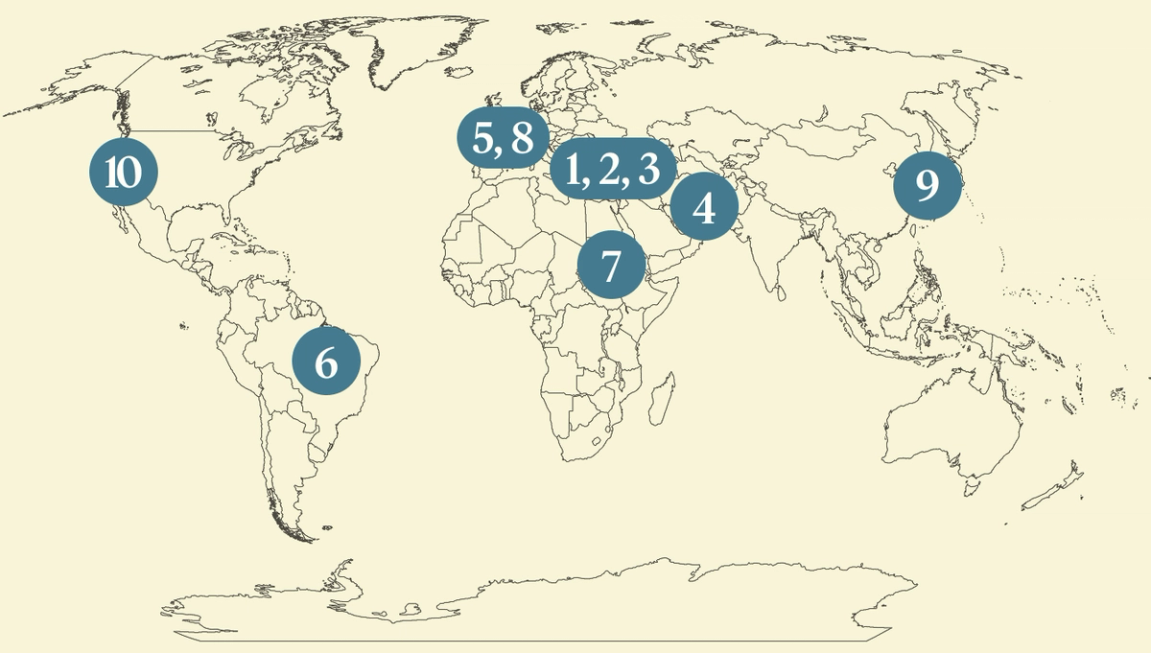 - NATO pivoting from US
- Türkiye’s crackdown
- How war is changing
- Vessels hit in Hormuz
- Le Pen verdict due
- Bolsonaro’s Trump pitch
- Sudan violence fears
- Wildfires hit Europe
- Samsung’s bumper results
- AI conflicts of interest
 A book to help explain Belgium, apropos nothing in particular.
|
|
Key NATO summit kicks off |
 Canadian Prime Minister Mark Carney is welcomed by Turkish Finance Minister Mehmet Simsek. Muhammed Abdullah Kurtar/Pool via Reuters. Canadian Prime Minister Mark Carney is welcomed by Turkish Finance Minister Mehmet Simsek. Muhammed Abdullah Kurtar/Pool via Reuters.
NATO leaders gather in Ankara today, with members already taking steps to reduce their reliance on the US. Washington’s retrenchment from the alliance and Russia’s growing aggression on NATO’s borders are pushing a rapid realignment: Canada said it would buy a new fleet of submarines from European providers, and Germany plans to borrow $900 billion for defense, breaking Berlin’s usual fiscal restraint to exceed NATO’s spending target. Europe also expects to lean more on Ukraine’s burgeoning defense industry and drone expertise. Still, European officials told The New York Times that the reduction in US support will weaken NATO for years to come, even if smaller countries quickly step up. |
|
Türkiye cracks down ahead of NATO meet |
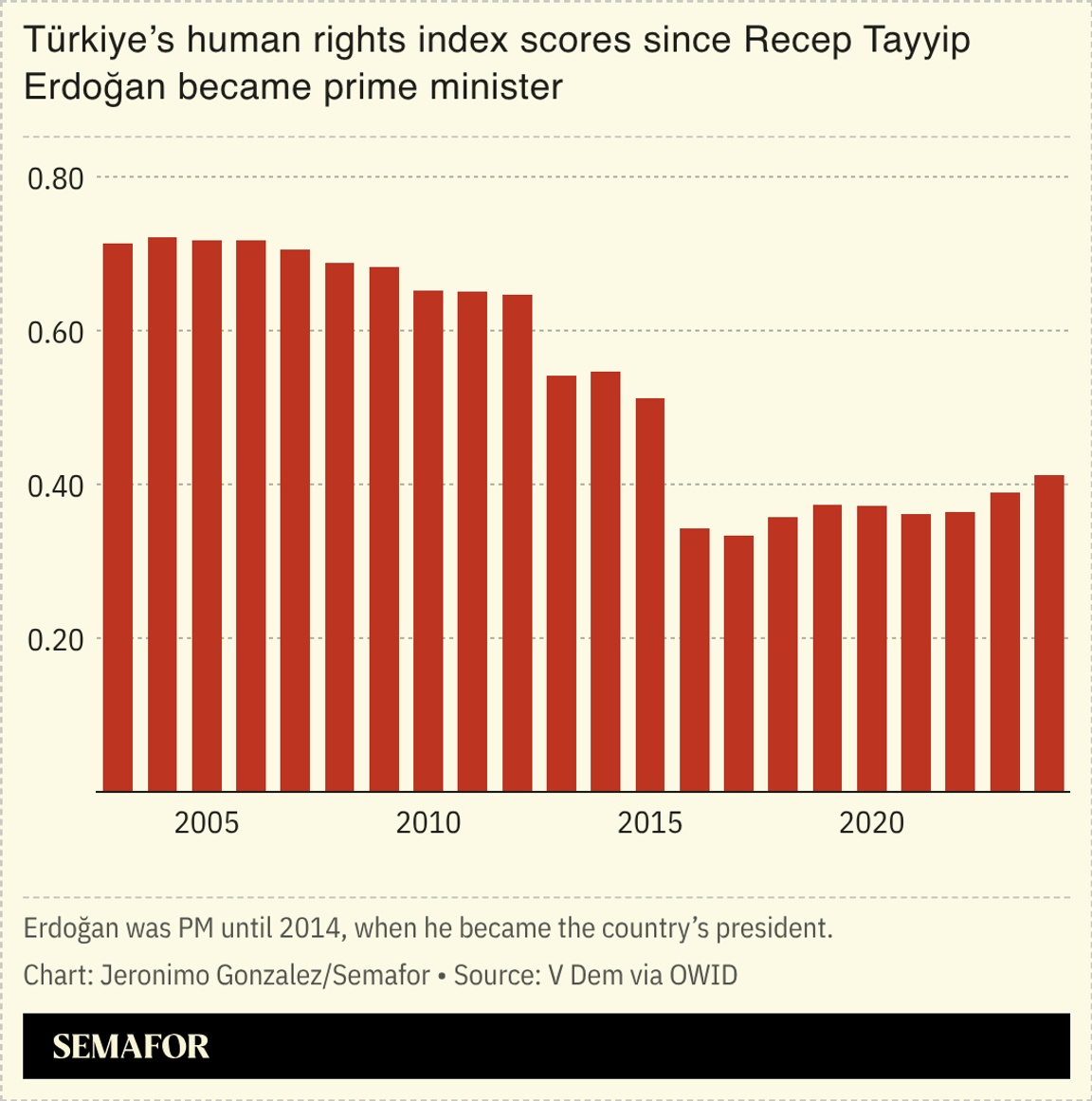 Türkiye has cracked down on dissent ahead of the NATO summit in Ankara. More than 200 people were arrested in protest marches and anti-terror raids, including academics, lawyers, and journalists; a comedian who mocked President Recep Tayyip Erdoğan was held at the airport. Istanbul Mayor Ekrem İmamoğlu, a key opposition figure, was bundled between three legal hearings to face charges that carry up to 2,300 years in prison: An EU diplomat said there was no longer “even the appearance of a fair trial.” Although NATO Secretary-General Mark Rutte has supported the right to demonstrate, the alliance is unwilling to criticize Türkiye, which has its second-largest army and a major defense industry, as the US takes a back seat. |
|
NATO flagging in global arms race |
 Fabian Bimmer/Reuters Fabian Bimmer/ReutersWar has changed, and NATO is struggling to keep up. Apart from the need to bolster European leadership as the US backs off, the alliance “has the wrong technology” and its “doctrine is outmoded,” analysts told the Financial Times. “Our tactical/operational conceptual thinking rather stopped in about 1991,” a NATO commander said in June. Militaries worldwide face similar challenges, The Wall Street Journal reported: Drone-centered warfare and the widespread availability of cheap long-range missiles, plus the development of AI-guided autonomous systems, mean targets hundreds of miles from the front line are at risk. Countries across three continents are spending $2 trillion on a new, technological arms race, according to Bloomberg, including anti-satellite weapons to counter threats from space. |
|
Iran strikes tankers in Hormuz |
 Amirhosein Khorgooi/ISNA/via WANA via Reuters Amirhosein Khorgooi/ISNA/via WANA via ReutersUS officials said Iran had struck two tankers traversing the Strait of Hormuz, testing a ceasefire that has helped almost halve oil prices from their recent April peak. While some Gulf countries have ramped up oil shipments to near pre-Iran war levels — Saudi Arabia has exported 34 million barrels since the June 17 ceasefire — experts suggest the flow of oil through the strait may never fully recover. Meanwhile, exporters will be hoping that China, by far their biggest buyer, will replenish its stockpile and lift crude prices, underscoring Beijing’s growing clout over the global oil market. However, the country’s rapid rollout of green energy means future demand will likely fall. “China giveth and China taketh away,” Bloomberg’s Javier Blas wrote. |
|
Le Pen challenge hangs in balance |
 French far-right leader and member of parliament Marine Le Pen. Alice Sacco/Reuters. French far-right leader and member of parliament Marine Le Pen. Alice Sacco/Reuters.A French court will rule today on whether the hard-right leader Marine Le Pen can run in next year’s presidential elections, a decision that will reverberate well beyond Paris. Le Pen is appealing a 2025 conviction for embezzling public funds, resulting in a jail sentence and a five-year ban on serving in public office. If the verdict is upheld, Jordan Bardella — a relative neophyte with whom she often disagrees — will take the vanguard of her National Rally, which holds a commanding opinion poll lead. Regardless of who heads it, the party’s victory would represent “a rupture in French governance,” one expert wrote in Foreign Affairs. “And such a rupture would, in turn, send shock waves through the EU itself.” |
|
Bolsonaro’s son lobbies Trump |
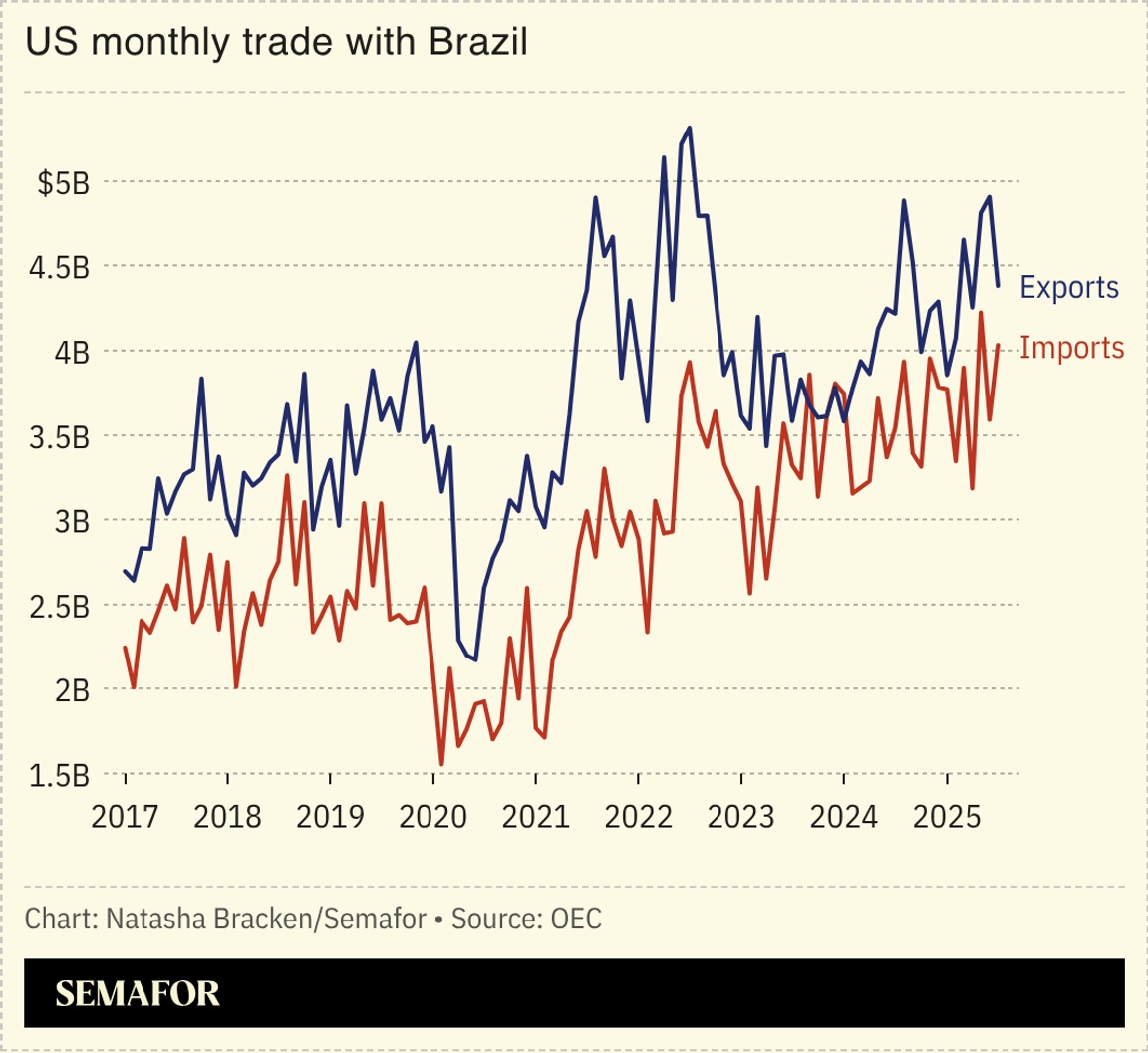 The son of former Brazilian President Jair Bolsonaro lobbied the US to pause tariffs on his country until after October’s elections, the family’s latest apparent effort to get Washington to intervene in Brazilian politics. Last month, the Trump administration proposed 25% duties on all Brazilian goods, shortly after Flavio Bolsonaro met with US officials. The move prompted Brazil’s President Luiz Inácio Lula da Silva to accuse the Bolsonaros of advocating for foreign interference — Flavio’s brother Eduardo was convicted in absentia last month of seeking US intervention in his father’s trial for plotting a coup, for which Jair is serving 27 years. Flavio is expected to run against Lula, and he fears new tariffs would boost the incumbent, Reuters reported. |
|
 Is the World Cup a raw deal for cities? FIFA’s New York frontman disagrees. On this week’s Compound Interest, presented by Amazon Business, New York-New Jersey Host Committee CEO Alex Lasry joins Liz and Rohan to discuss what’s really in it for the two states, why he thinks you can’t put a price on the opportunity to host the World Cup, how celebrities are getting their hands on coveted tickets, and the hypothetical logistical nightmare that keeps him up at night. Plus, his family’s experience owning the Milwaukee Bucks and why he thinks more sports owners should prioritize fans’ experiences over the bottom line. Listen to the latest Compound Interest now. |
|
UN warns of Sudan ‘catastrophe’ |
|
Thousands flee European wildfires |
 Alexandre Dimou/Reuters Alexandre Dimou/ReutersWildfires raged across Southern Europe, forcing thousands to evacuate their homes, with forecasters warning that early summer heatwaves are turning the continent into a “powder keg.” The fires come after temperature peaks that killed thousands in France and Spain, as premature heatwaves in May and June sent the mercury to record levels. Europe faces major challenges: The continent is the fastest-warming region in the world, heating up twice as fast as the rest of the world. It also has the oldest population in the world, and heatwaves are particularly deadly to the elderly and vulnerable: The last period of high temperatures, in late June, may have killed over 20,000 people, an early analysis of excess deaths suggested. |
|
Memory boom drives Samsung profit surge |
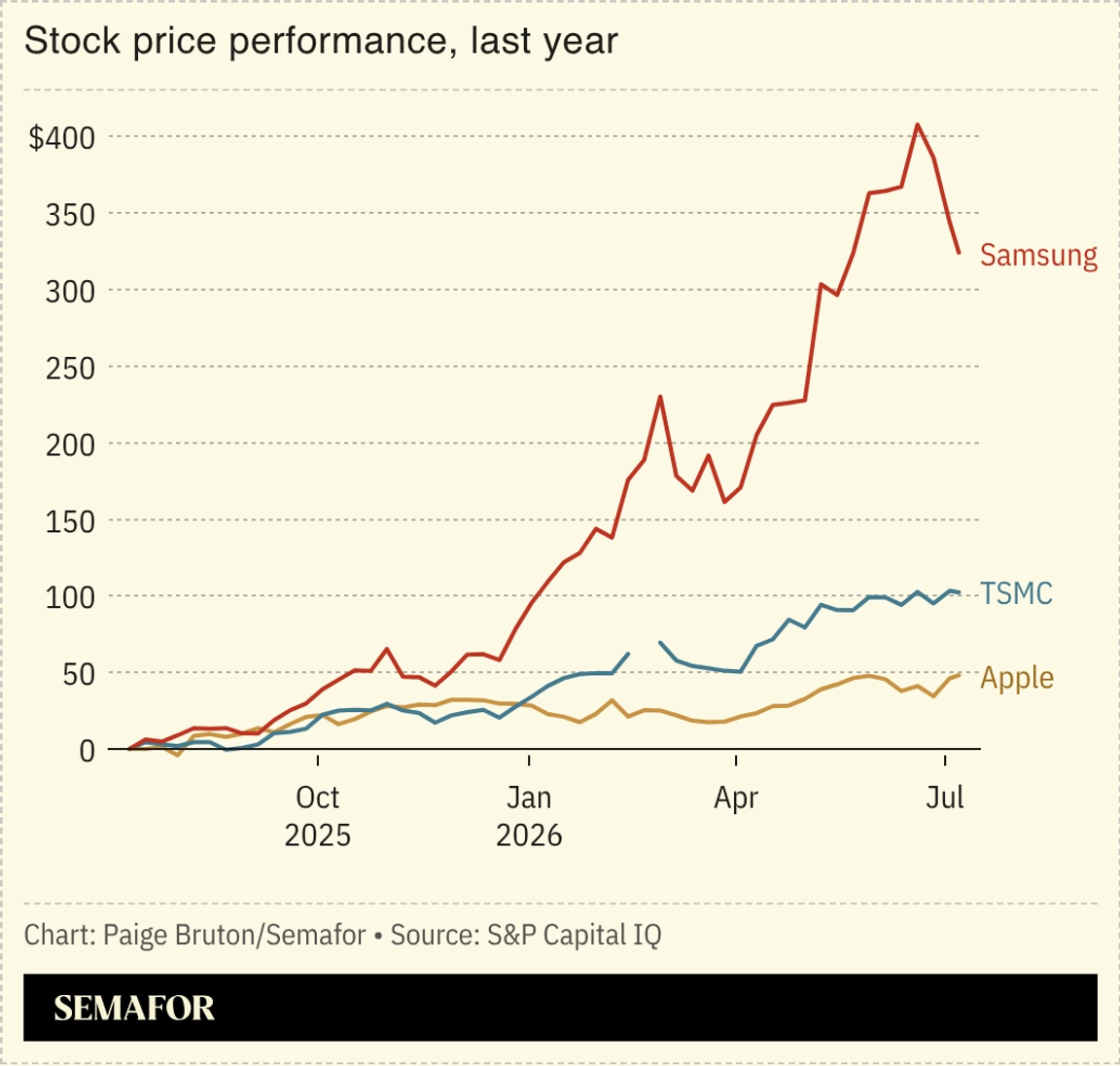 Samsung’s predicted second-quarter profits jumped 1,800% from a year ago — but shares fell 10% as even that huge leap underperformed hyped-up expectations. The South Korean memory giant has benefitted from surging demand for chips driven by the global AI data center buildout: Its forecast $58.4 billion Q2 operating profit is more than all of 2025. But the industry’s rapid expansion has raised worries about oversupply: Nvidia posted record quarterly profits in May, but also saw stocks slide. Investors are questioning whether the huge outlay on memory can be maintained, JP Morgan warned, and Meta reportedly plans to sell excess computing capacity to external customers. Still, Samsung’s market capitalization has more than doubled this year. |
|
|


