| | In today’s edition: Abu Dhabi buys up South African gas stations, Saudi Arabia cuts the price of cru͏ ͏ ͏ ͏ ͏ ͏ |
| |  Jeddah Jeddah |  Abu Dhabi Abu Dhabi | Washington, DC |
 | Gulf |  |
| |
|
 - ADNOC buys gas stations
- Hormuz attacks flare up
- Saudi slashes crude prices
- Arada raises real estate fund
- Emirates boosts cargo fleet
- Israel’s waning US support
 Mountains of cash seized in Iraq. |
|
ADNOC spends $1B on gas stations |
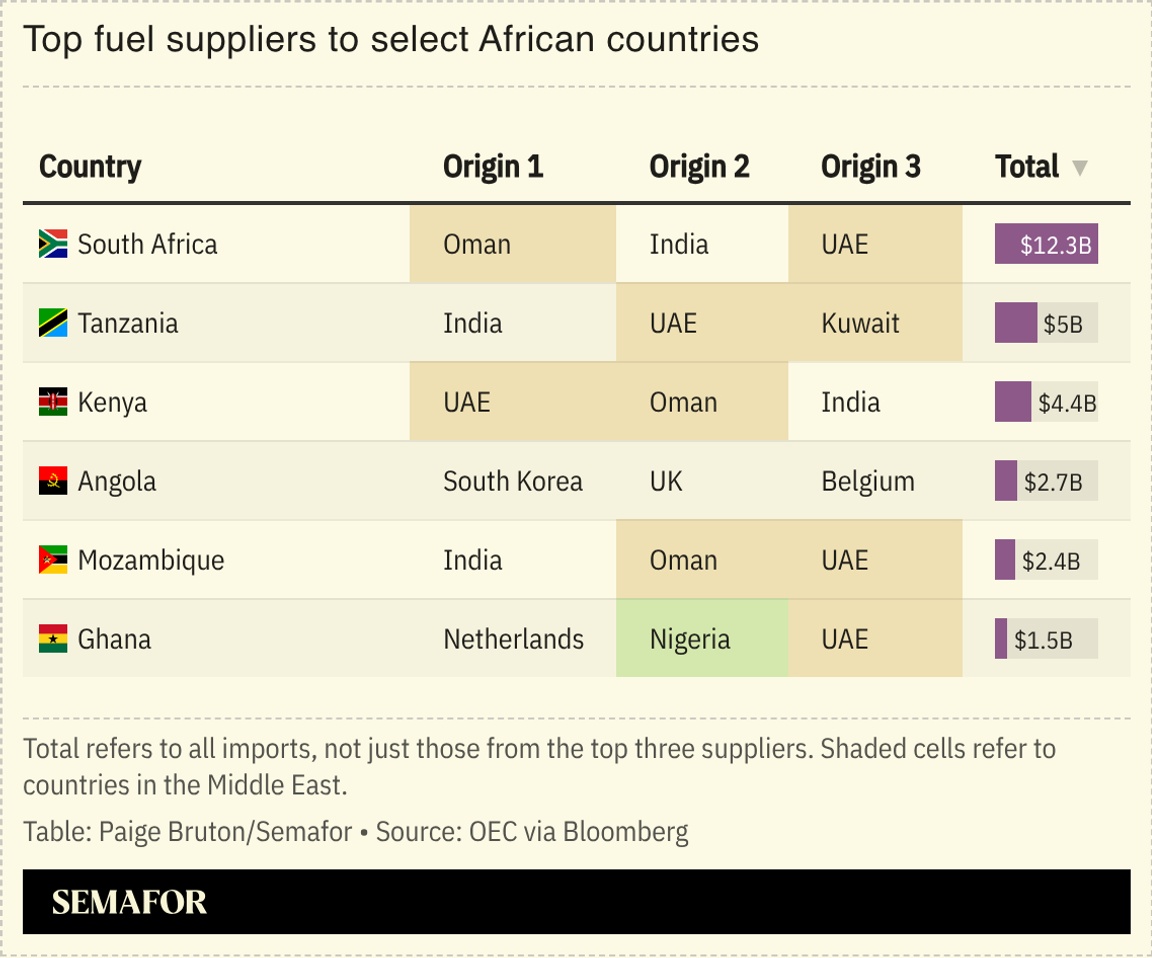 The Abu Dhabi state oil company’s retail arm, ADNOC Distribution, has bought Shell’s downstream business in South Africa for $1 billion, adding to a string of foreign acquisitions in recent months. The deal hands ADNOC 580 gas stations and a 10% market share in Africa’s largest economy. In the past year, ADNOC has invested in a Texan LNG project, taken a stake in Argentinian gas blocks, and completed a $16.9 billion takeover of German chemicals firm Covestro. On Monday, it also launched a global LNG trading platform, merging three existing divisions to create one of the world’s largest LNG players. It is targeting 47 million tonnes of annual LNG trading by 2035, equivalent to around 11% of the current global market. Taken together, the deals show a company trying to remake itself from a Gulf oil producer into a global energy heavyweight — a push that looks more important than ever as the Iran war disrupts its home market. The UAE is already one of the top fuel suppliers to South Africa. |
|
Hormuz attacks cloud NATO summit |
 NATO Secretary General Mark Rutte leaves the stage at the NATO summit. Yves Herman/Reuters NATO Secretary General Mark Rutte leaves the stage at the NATO summit. Yves Herman/ReutersAs Western leaders gather for the NATO summit in Ankara, the fragile situation in the Strait of Hormuz adds to a crowded agenda alongside the Ukraine war and tensions between the US and its putative allies. US officials told Axios that two commercial ships were hit while transiting the Strait of Hormuz on Monday night. The attacks undermine a diplomatic process between the US and Iran that was already losing momentum: Recent indirect talks in Qatar produced no breakthroughs. Others are stepping up efforts to protect shipping through the strait. France, Oman, and the UK announced a plan to ensure safe navigation; the first warships are expected to arrive within days to carry out mine clearing and other tasks, according to The National. While traffic levels have been rising, they remain constrained. QatarEnergy has halved its planned deliveries of LNG to Bangladesh this year. — Dominic Dudley |
|
Saudi slashes crude prices |
 Ali Jarekji/Reuters Ali Jarekji/ReutersSaudi Arabia slashed its main crude oil price for Asian customers, as a resumption of flows through the Strait of Hormuz and OPEC+’s decision to boost output intensifies the competition for buyers. Despite the discount, Asian buyers said Saudi supplies were still more expensive than those from other regional producers, Bloomberg noted. That could be a signal for steeper cuts amid fears of a global oil glut, given that China hasn’t resumed large-scale imports so far. One analyst, however, argued the Saudi cuts were more a sign of “Hormuz’s messy normalization” than a price war, noting that competitive pricing could “reinvigorate Chinese interest.” Besides, fears of a glut may be overblown, a global energy consultant said, suggesting that full supply won’t return before 2027. |
|
Arada seeks funds for Gulf real estate |
 Anushka Eranga/NurPhoto via Reuters Anushka Eranga/NurPhoto via ReutersUAE-based Arada launched a fund management arm, bringing in outside investors for the first time to help finance its real estate developments, with the aim of having $5 billion in assets in four years. Arada Capital will be based in the Abu Dhabi financial center and chaired by Prince Khaled bin Alwaleed, the son of one of Saudi Arabia’s most prominent investors, Prince Alwaleed bin Talal. It will initially focus on real estate in the Gulf and later look at infrastructure and other private market investments. The fund will give Arada a new source of capital to fund its ambitions at a time when lenders and investors have become more cautious about Gulf real estate in the wake of the Iran war. Since it was established in 2017, Arada has announced 11 projects in Australia, the UAE, and the UK, and says its project pipeline is worth 130 billion dirhams ($35.4 billion). — Matthew Martin |
|
Emirates cargo conversion takes flight |
 The inside of Emirates’ converted freighter. Courtesy of Emirates. The inside of Emirates’ converted freighter. Courtesy of Emirates.Emirates SkyCargo operated the first commercial flight of a Boeing 777-300 passenger-to-freighter conversion, boosting cargo capacity while extending the life of its fleet. The inaugural flight carried more than 100 tons of freight from Hong Kong to Dubai — exceeding the volume of Boeing’s factory-built 777 freighter while using fuel more efficiently. The aircraft was converted by Israel Aerospace Industries, which is under contract to deliver at least three more. Gulf carriers, including Qatar Airways and Etihad Airways, are expanding cargo operations through dedicated freighters and using free capacity on passenger flights. Strong demand for air freight and long Airbus and Boeing delivery backlogs are making passenger-to-freighter conversions an attractive way to get more value from existing aircraft. |
|
US sentiment on Israel shifts |
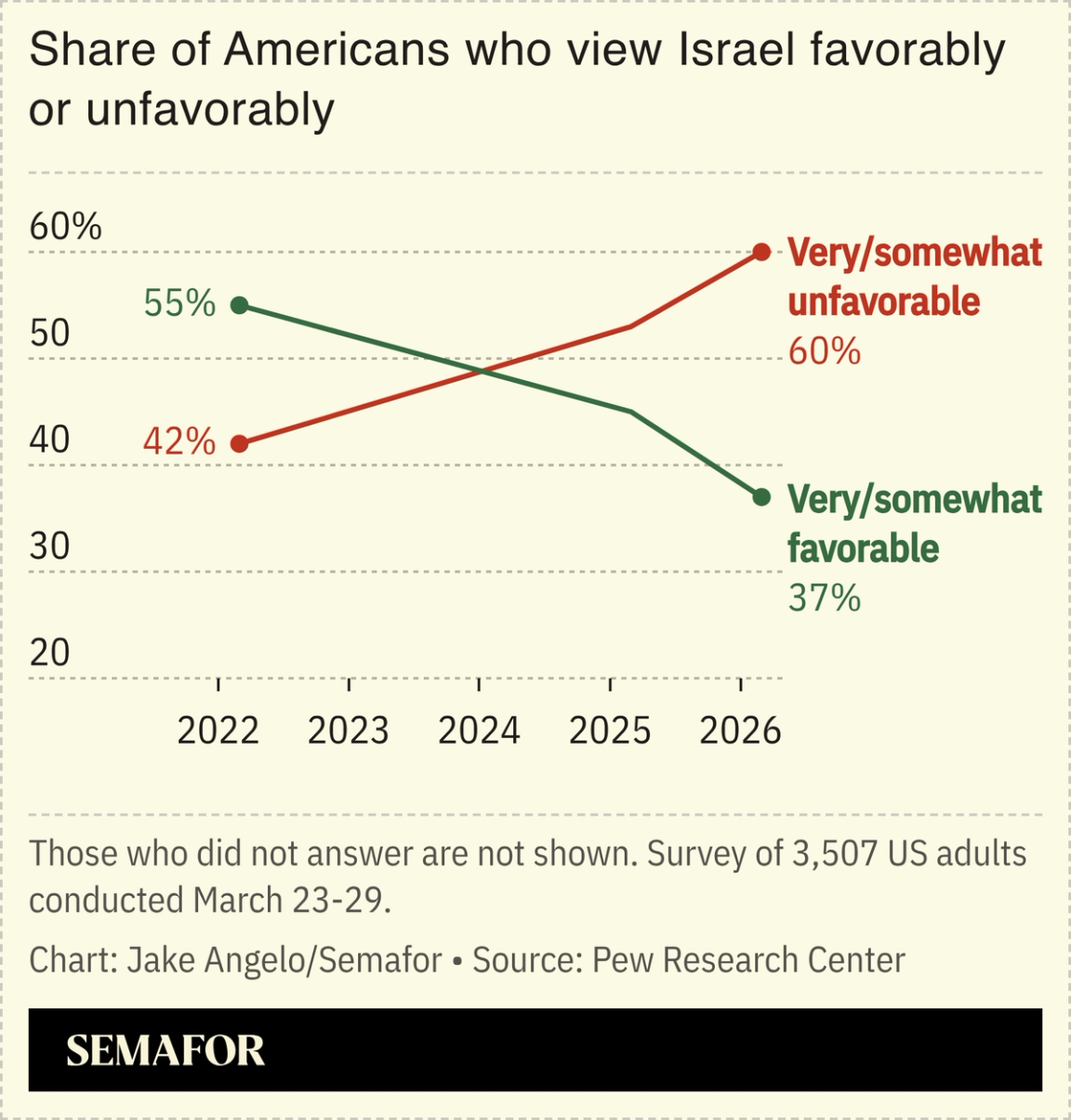 Washington’s bipartisan consensus on Israel is showing new signs of strain, echoing global criticism of Benjamin Netanyahu’s government and potentially reshaping Gulf diplomacy. Rahm Emanuel, a potential Democratic presidential contender, is expected to argue in Israel this week that the era of unconditional US backing is over, saying future support should depend on Israeli actions in Gaza and policy toward Iran. The speech comes as polling shows nearly half of Americans believe Washington is too supportive of Israel. Many Republicans seem to agree. Vice President JD Vance recently warned Israeli officials against publicly criticizing the administration’s Iran diplomacy, while President Donald Trump is reportedly preparing to restore Türkiye’s access to F-35 fighter jets, despite long-standing Israeli objections. For Gulf states, particularly Saudi Arabia, the changing mood in Washington could strengthen efforts to advance an Arab approach to the Palestinian issue and integrate Israel into — rather than allowing it to dominate — a regional security architecture. |
|
 Reuters/Kai Pfaffenbach/Shannon Stapleton/Bob Donnan-Imagn Images Reuters/Kai Pfaffenbach/Shannon Stapleton/Bob Donnan-Imagn ImagesIs the World Cup a raw deal for cities? FIFA’s New York frontman disagrees. On this week’s episode of Compound Interest, presented by Amazon Business, New York-New Jersey Host Committee CEO Alex Lasry joins Liz and Rohan to discuss what’s really in it for the two states, why he thinks you can’t put a price on the opportunity, how celebrities are getting their hands on coveted tickets, and the hypothetical logistical nightmare that keeps him up at night. Plus, his family’s experience owning the Milwaukee Bucks and why he thinks more sports owners should prioritize the fan experience over the bottom line. |
|
 Banks- Lending by Saudi banks slowed in the first five months of the year, as government-backed projects were scaled back, interest rates rose, and there was a sharp drop in mortgage approvals. — AGBI
Entertainment- Saudi Arabia is seeking private investors for a $135 million Ferris wheel in Medina, part of a strategy to get the 20 million religious tourists who visit the kingdom every year to spend beyond the holy sites. — AGBI
Trade- Canada has pushed back on a $50 billion investment pledge from the UAE because there are no projects ready to invest in; the commitment was announced by Abu Dhabi in November. — FT
Media- Asharq Bloomberg, the business news network from Saudi-owned SRMG, has moved its broadcasts from Dubai to Riyadh, finally filling the King Abdullah Financial District tower that has carried the group’s name for years. — Arab News
|
|
 Courtesy of Iraqi News Agency. Courtesy of Iraqi News Agency.The crackdown on corrupt officials in Iraq is getting top billing in Gulf media — not because the news is surprising, but because the evidence is so damning. Cash stuffed into walls and plastic water bottles, along with a solid gold lingerie set are among the assets investigators say they have uncovered in the case involving a former deputy oil minister, with seizures now totaling about $121 million, including $24 million in cash. While no public servant could accumulate such a fortune on a government salary, hoarding cash is common in Iraq. An estimated $80 billion sits outside the banking system after decades of conflict, bank failures, and mistrust. Many Iraqis want their cash accessible, ready in a go bag. Or perhaps, for the accused deputy minister, a go truck. — Mohammed Sergie |
|
|


