| | Iran strikes tankers traversing the Strait of Hormuz, Russian buyers turn to Chinese EVs amid fuel c͏ ͏ ͏ ͏ ͏ ͏ |
| |  | Energy |  |
| |
|
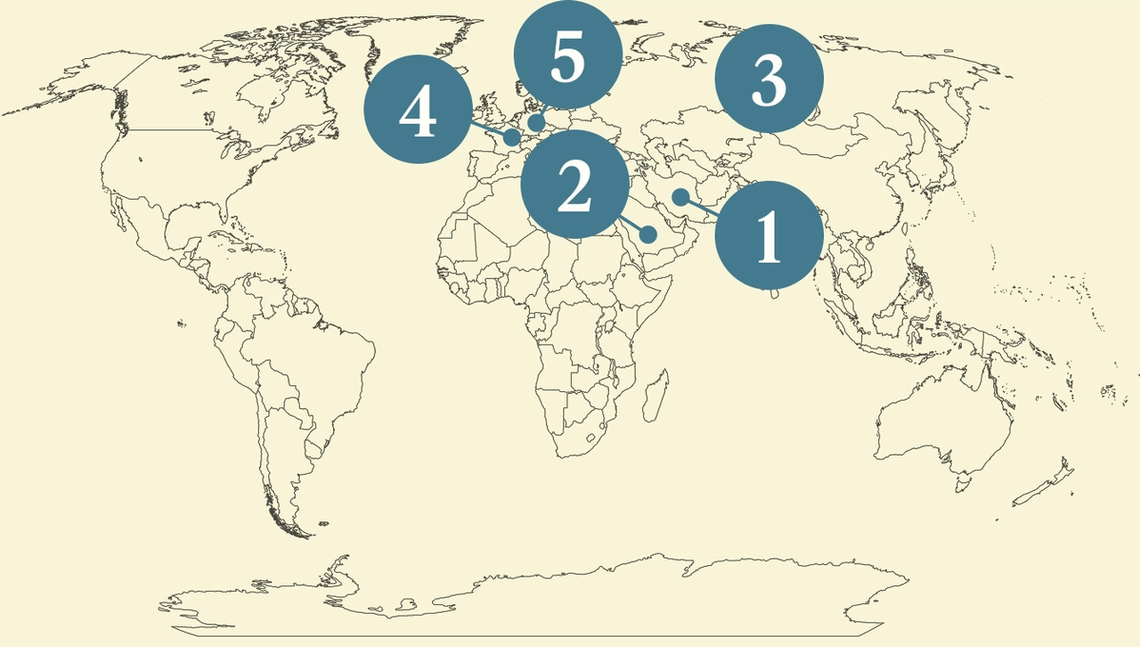 - Renewed Hormuz tensions
- Saudis discount oil price
- China drives Russia EV surge
- Another Europe heatwave
- Where fusion can win
 BHP is granted permission to expand the world’s biggest copper mine. |
|
Iran strikes tankers in Hormuz |
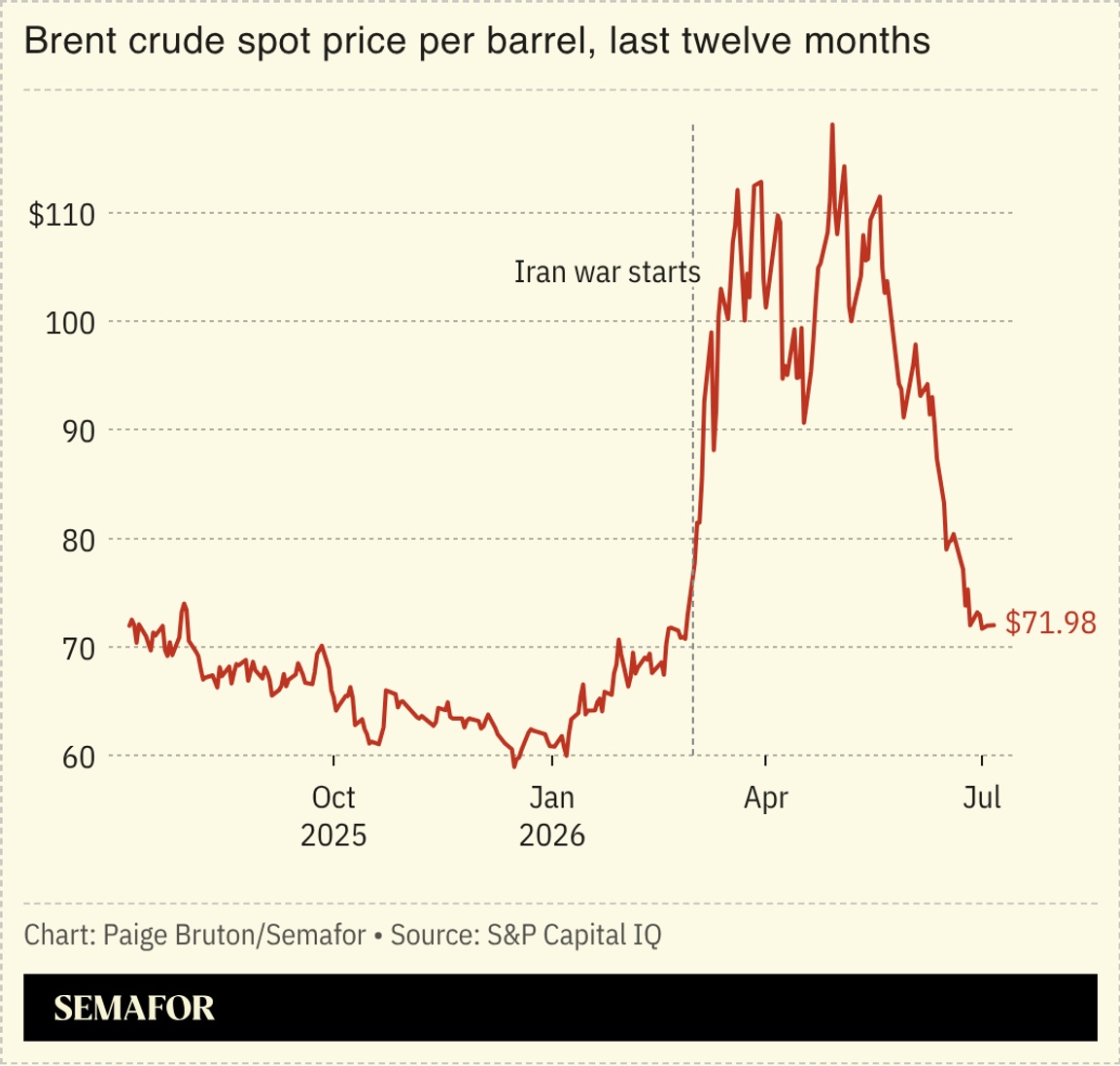 US officials said Iran struck two tankers traversing the Strait of Hormuz, testing a ceasefire that has helped almost halve oil prices from their April peak. While some Gulf countries have ramped up oil shipments to near pre-Iran war levels — Saudi Arabia has exported 34 million barrels since the June 17 ceasefire — experts suggest the flow of oil through the strait may never fully recover. Meanwhile, exporters will be hoping that China, by far their biggest buyer, will replenish its stockpile and lift crude prices, underscoring Beijing’s growing influence over the global oil market. However, the country’s rapid rollout of green energy means future demand will likely fall. “China giveth and China taketh away,” Bloomberg’s Javier Blas wrote. |
|
Saudi slashes crude oil price |
 Ali Jarekji/Reuters Ali Jarekji/ReutersSaudi Arabia slashed its main crude oil price for Asian customers, as a resumption of flows through the Strait of Hormuz and OPEC+’s decision to boost output intensified competition for buyers. Despite the discount, Asian countries said Saudi supplies were still more expensive than those from other regional producers, Bloomberg noted, potentially signaling steeper cuts due to expectations of a global glut, given China hasn’t resumed large-scale oil imports. One analyst, however, argued the cutback was more a sign of “Hormuz’s messy normalization” than a price war, noting that competitive pricing could “reinvigorate Chinese interest.” Fears of a glut may be overblown, an energy consultant said, suggesting that supply won’t return to levels seen before the US-Iran war until 2027. |
|
Russians turn to Chinese EVs |
 Ramil Sitdikov/Reuters Ramil Sitdikov/ReutersRussians are flocking to purchase EVs in the face of a worsening national fuel crisis, with Chinese automakers the prime beneficiaries. Electric vehicle adoption has lagged in Russia given usually cheap gas and the relative paucity of charging stations. But Ukraine’s destruction of Russian energy infrastructure has flipped that dynamic, with Russians experiencing fuel shortages similar to those recently faced by Asian countries — where EV sales also surged due to the energy-price shock caused by the US-Iran war. One Russian car dealer specializing in Chinese brands reported doing a month’s worth of business each day during the crisis. Some Chinese businesses are finding other ways to take advantage by offering to retrieve Russian vehicles, fill them up, and return them across the border. |
|
Thousands flee European wildfires |
 Alexandre Dimou/Reuters Alexandre Dimou/ReutersWildfires raged across Southern Europe, forcing thousands of people to evacuate their homes, with forecasters warning that early summer heatwaves are turning the continent into a “powder keg.” The fires come after temperature peaks that killed thousands in France and Spain, as premature heatwaves in May and June sent the mercury to record levels. Europe faces major challenges: The continent is the fastest-warming region in the world, heating up at twice the pace of the rest of the planet. It also has the oldest population in the world, and heatwaves are particularly deadly to the elderly and vulnerable: The last period of high temperatures, in late June, may have killed over 20,000 people, an early analysis of excess deaths suggested. |
|
US fusion needs more gov backing |
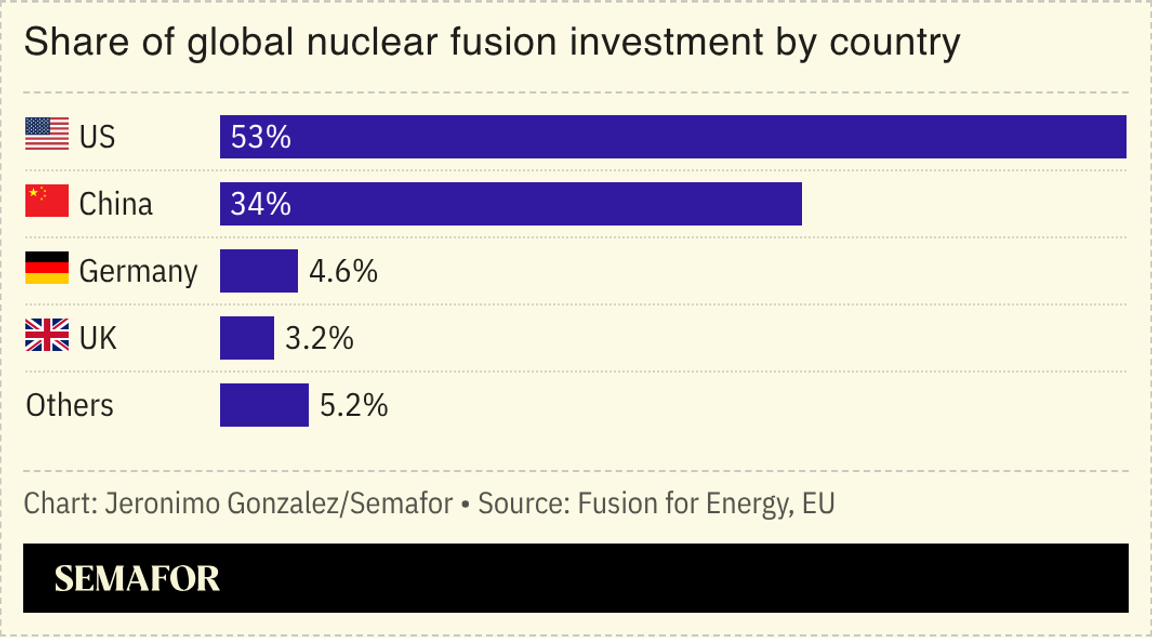 Nuclear fusion is likely to succeed outside the US before it takes hold in the country because of the scale of government support required, the CEO of a European fusion startup told Semafor. Though Washington is showing greater appetite for government involvement and financial investment in sectors ranging from rare earths to chips, Proxima Fusion chief Francesco Sciortino said public-private partnerships would be essential for fusion to succeed, meaning places with greater state involvement in the energy sector such as today in Europe were more likely locales. “Without serious government backing … it is simply not a good business,” Sciortino — whose firm counted Google among the investors in a $489 million funding round announced today, said in an interview. “It’s too early” for the technology to succeed in the US, he added. — Ed Clowes |
|
 Kai Pfaffenbach/Shannon Stapleton/Bob Donnan-Imagn Images/Reuters Kai Pfaffenbach/Shannon Stapleton/Bob Donnan-Imagn Images/ReutersIs the World Cup a raw deal for cities? FIFA’s New York frontman disagrees. On this week’s Compound Interest, presented by Amazon Business, New York-New Jersey Host Committee CEO Alex Lasry joins Liz and Rohan to discuss what’s really in it for the two states, why he thinks you can’t put a price on the opportunity to host the World Cup, how celebrities are getting their hands on coveted tickets, and the hypothetical logistical nightmare that keeps him up at night. Plus, his family’s experience owning the Milwaukee Bucks and why he thinks more sports owners should prioritize fans’ experiences over the bottom line. Listen to the latest Compound Interest now. |
|
 New Energy- A new MIT report found that despite US President Donald Trump’s fossil fuel agenda, much of the clean-tech spending drive brought in by his predecessor remains intact, according to Heatmap.
Fossil Fuels- Energy giant Shell said that it had another strong oil and gas trading result last quarter, as the market volatility caused by the Iran war led to what Bloomberg called a “profit bonanza” for fossil fuel firms.
- Japan signed a 15-year deal with Abu Dhabi’s state oil company for 1 million tonnes of LNG per year from its project in the Gulf.
- The global LNG trade hit a record last year because of strong US exports and rising European imports, according to the International Gas Union, though the Iran war means there could be a contraction in 2026.
- Saudi Arabia is reportedly considering an expansion of its East-West oil pipeline, which was crucial for allowing the country to bypass the Strait of Hormuz during the recent blockade, Reuters reported.
Politics & Policy- A group of Ugandan farmers will file a lawsuit in the UK High Court contesting the development of the $5.6 billion East African Crude Oil Pipeline, a 900-mile transit link that is due to begin exports later this year.
Minerals & Mining Ivan Alvarado/File Photo/Reuters Ivan Alvarado/File Photo/Reuters- Australian multinational BHP received approval to begin the expansion of its Escondida copper mine in Chile, which could cost as much as $14.7 billion to commence.
|
|
|


