| | In this edition: A Semafor scoop on a gold mine dispute in Ghana, South Africa looks to boost indust͏ ͏ ͏ ͏ ͏ ͏ |
| |  Accra Accra |  Johannesburg Johannesburg | Ibadan |
 | Africa |  |
| |
|
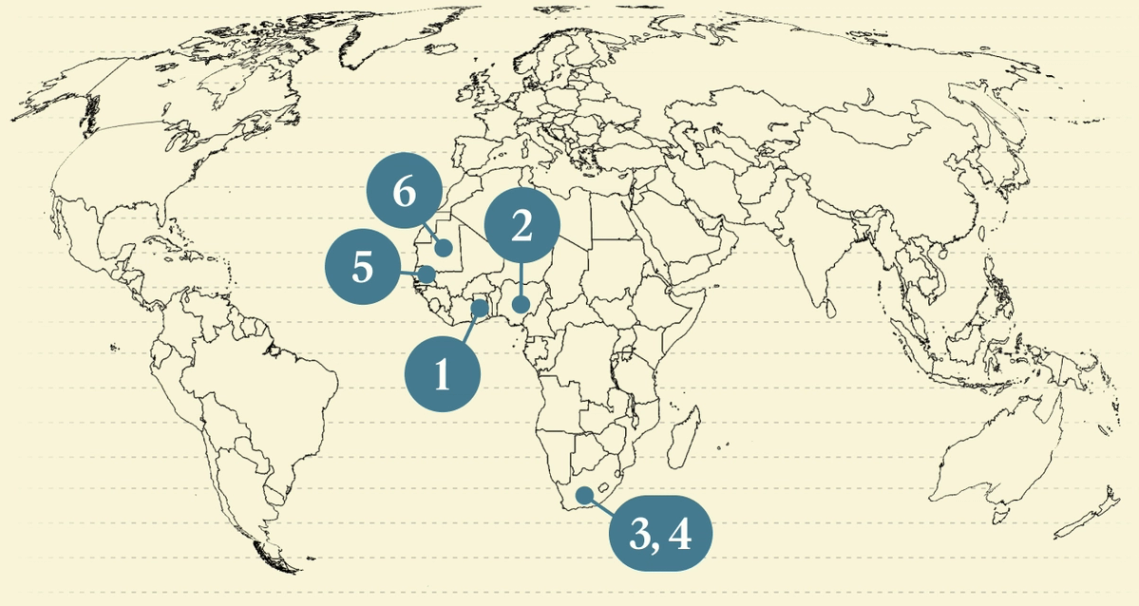 - Ghana gold mine row
- Nigeria to process lithium
- Pretoria mulls tax cuts
- Joburg budget freeze
- Senegal politics split further
- Saudi invests in Mauritania
 A Nigerian theater honors literary legend Wole Soyinka. |
|
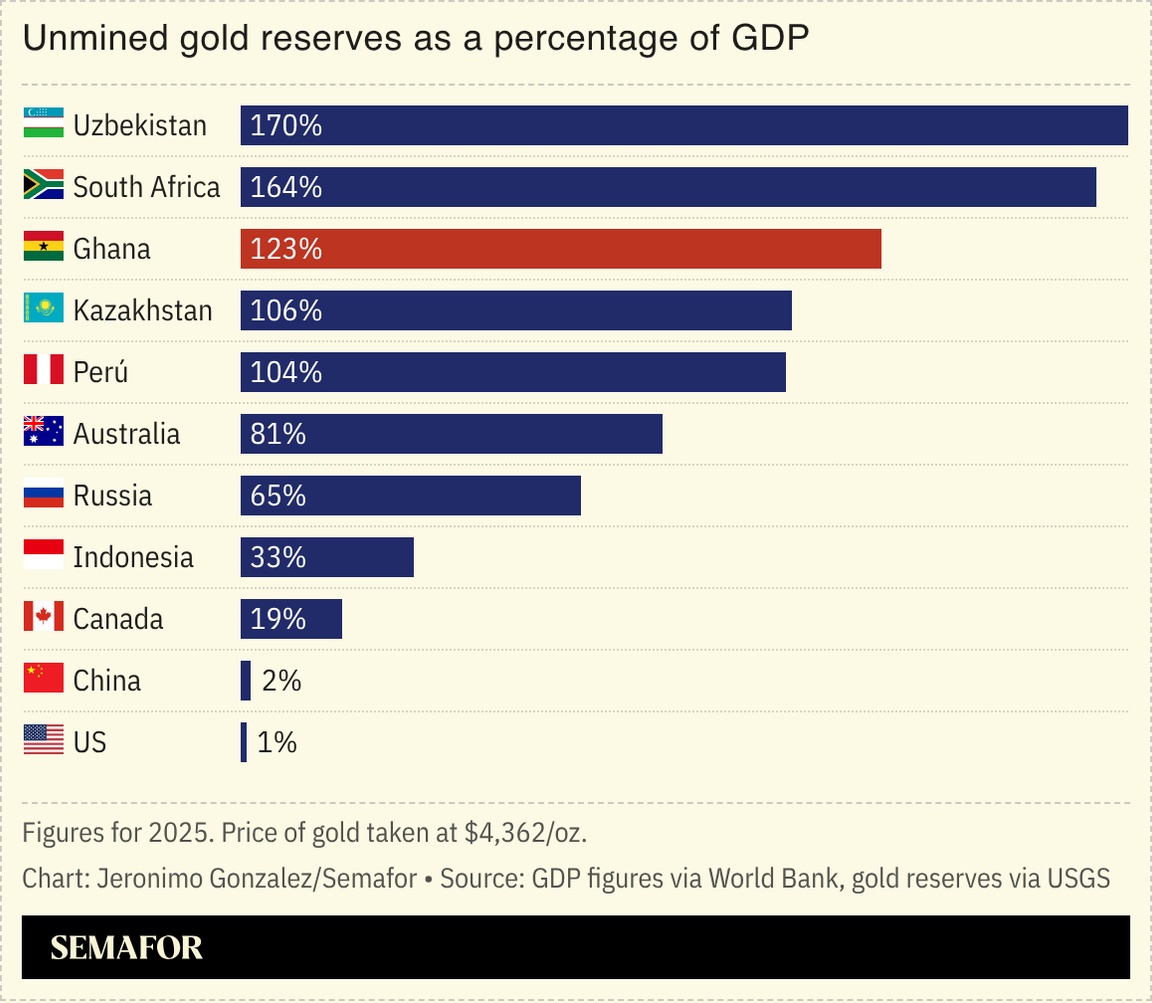
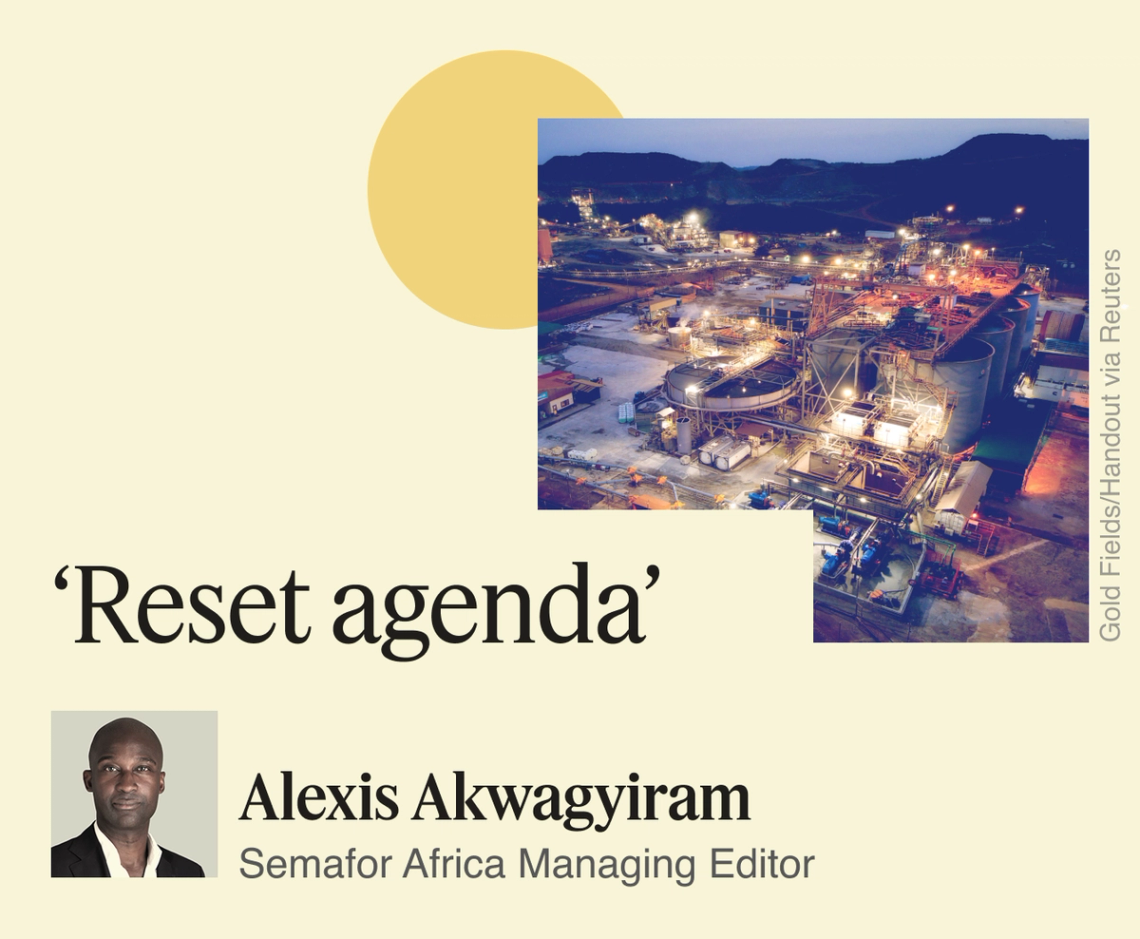 Ghana has a long and complicated relationship with gold. It can be found in such abundance that British colonialists, unable to view the country through any other lens, named it the Gold Coast. Today, it is Ghana’s biggest foreign currency earner and the country is Africa’s top gold exporter. Yet the precious metal is also at the center of a vast smuggling network, fed by illegal mining known locally as “galamsey,” that has contaminated water supplies and, in recent years, stoked food inflation. President John Dramani Mahama has upended the nation’s gold sector with new rules prioritizing Ghanaian ownership to formalize the industry and retain more wealth locally. But a legal battle involving a company headed by one of Mahama’s brothers threatens to dent investor confidence in his new approach. As I report exclusively today, the dispute has been heard at the International Court of Arbitration, with the fallout raising questions about the rule of law, regulatory oversight, and whether politically connected individuals would be the main beneficiaries of the changes. It’s not the only case that raises such worries: An Australian firm and a Nasdaq-listed, UK-headquartered one are both locked in arbitration cases against Ghanaian authorities. They allege that mineral rights agreements have not been honored — accusations denied by Ghana — and are seeking hundreds of millions of dollars in compensation. Ghanaian opposition politicians have warned that Mahama’s new rules raise the potential for conflicts of interest, which the president has rejected. Still, the country’s reputation for good governance is increasingly under scrutiny. It has long been considered among the continent’s more investor-friendly places: Conflict-hit DR Congo — also home to prized minerals — and regional giant Nigeria perennially score less favorably on ease of doing business indexes, while the Sahelian countries of Burkina Faso, Mali, and Niger have changed their mining codes to boost state revenue and ownership stakes at the expense of foreign mining companies after military juntas seized power in recent years. For centuries, other countries benefited from Ghana’s natural resources. So it makes sense to pursue ways to retain more wealth locally. Mahama has presented his mining overhaul as a crucial element of a broader economic “reset agenda.” But the underlying question is whether Ghana’s mining reset is genuinely geared towards broad-based economic development, or enriching a small group of politically connected individuals. In either case, the way it is being viewed internationally means the new approach is unlikely to attract greater investment. |
|
Mining row roils Ghana gold sector |
| |  | Alexis Akwagyiram |
| |
 A company headed by a brother of Ghana’s president has refused to hand back a $100 million gold mine at the center of an ownership row, defying a ruling by an international court, documents seen by Semafor show. The row over the Black Volta gold mine in northwest Ghana involves local mining firm Engineers & Planners — whose founder and CEO Ibrahim Mahama is a brother of President John Dramani Mahama. A 2023 earn-in agreement that would enable the Ghanaian firm to acquire equity in the mine was disputed by investors, who say the company failed to fulfill the terms that would have enabled it to take ownership, accusing it of forging signatures to facilitate the transfer and seizing the site, according to the documents. Engineers & Planners has denied the allegations. The dispute is emblematic not only of the growing wariness among international investors around mining projects in Africa’s biggest gold producer, but also of the challenges faced by African policymakers trying to increase revenues from natural resources without deterring foreign firms. |
|
Nigeria opens $250M lithium plant |
 A lithium processing plant in Zimbabwe. Philimon Bulawayo/Reuters. A lithium processing plant in Zimbabwe. Philimon Bulawayo/Reuters.Nigeria opened a $250 million lithium processing plant that underscores a wider push across Africa to capture more value from raw materials. The plant, built by Chinese companies Jiuling and Canmax in the northern state of Nasarawa, will process 3 million metric tons of lithium ore per year. Northern Nigeria boasts commercial-grade lithium deposits that have attracted investment interest from global firms prospecting for green energy minerals. Chinese companies injected about $1.3 billion into developing lithium processing capacity in Nigeria between 2023 and 2025, according to Nigeria’s solid minerals minister. Nigerian government officials hope that the new plant will make lithium batteries, a critical component in the growing global market for electric vehicles. Zimbabwe, the continent’s biggest lithium producer, is also looking to ramp up local processing. Lithium miners in the country recently asked the government for more time to build processing facilities before a ban on concentrate exports takes effect in January 2027. |
|
South Africa considers tax cuts |
| |  | Tiisetso Motsoeneng |
| |
 Siphiwe Sibeko/Reuters Siphiwe Sibeko/ReutersSouth Africa is considering rolling out tax cuts to revive its struggling industrial sector, in line with a World Bank recommendation to help reverse a long-running manufacturing slump and unlock billions in idle corporate cash. The push to extend the 15% corporate tax rate — nearly half the standard rate — across all special economic zones is the latest measure that officials in Africa’s biggest economy are weighing to recapture its position as the continent’s manufacturing powerhouse. South Africa in May lost its top ranking on the African Development Bank’s Industrialisation Index to Morocco, and the manufacturing share of South Africa’s GDP has fallen from a quarter in the 1980s to about 12%. The proposed plan could put foreign investors such as mining major Rio Tinto and Irish glass maker Ardagh Group inside the tax incentive bracket. Officials are hoping a standardized 15% tax rate could unlock investment: Corporate balance sheets hold roughly 1.8 trillion rand ($109 billion) in cash that firms have withheld due to policy uncertainty. |
|
Treasury freezes Johannesburg budget |
 Shafiek Tassiem/Reuters Shafiek Tassiem/ReutersSouth Africa’s Treasury has withheld budget allocations for Johannesburg and dozens of other municipalities, in a crackdown on allegedly wasteful spending just months before local government elections. Johannesburg, the financial hub of Africa’s biggest economy, is expected to be among the most fiercely contested battlegrounds in November’s vote, which will decide who controls local councils nationwide. The move, a rare fiscal intervention by the Treasury, shines a harsh spotlight on Johannesburg, which generates about 16% of total domestic GDP and is home to the highest concentration of corporate headquarters in Africa. The local polls will be the first electoral test faced by the African National Congress since it was forced to share power in a coalition government after losing its parliamentary majority in 2024. Heavy defeats in key areas would further dilute the ANC’s power. Recent polling by IPSOS places the ANC national support at below 40%, confirming that it will likely need to form a coalition to govern major urban centres. — Tiisetso Motsoeneng |
|
Senegal’s political rift deepens |
 Senegal’s President Bassirou Diomaye Faye. Mike Segar/Reuters. Senegal’s President Bassirou Diomaye Faye. Mike Segar/Reuters.Senegal’s president announced plans to set up his own party, further deepening a rift at the top of the country’s political system after he fired his prime minister. President Bassirou Diomaye Faye gathered more than 300 mayors on Friday and asked his senior adviser to establish a task force for the new party, saying he was looking for “more organic unity” among Senegal’s leadership. The move follows weeks of political turbulence. In May, Faye fired prime minister Ousmane Sonko, who is now the speaker of parliament and retains enormous influence; the majority of parliamentary seats are occupied by members of Sonko’s Pastef party. Last week, lawmakers voted to water down the president’s powers, including barring him from leading a political party, a decision that will now go to a national referendum. Faye and Sonko originally ran on the same ticket in the 2024 elections. But the allies-turned-foes have split over several issues, mainly how to handle billions of dollars of undeclared debt from the previous government, a discovery that prompted the IMF to suspend its activities in Senegal. |
|
Saudis invest in Mauritania energy |
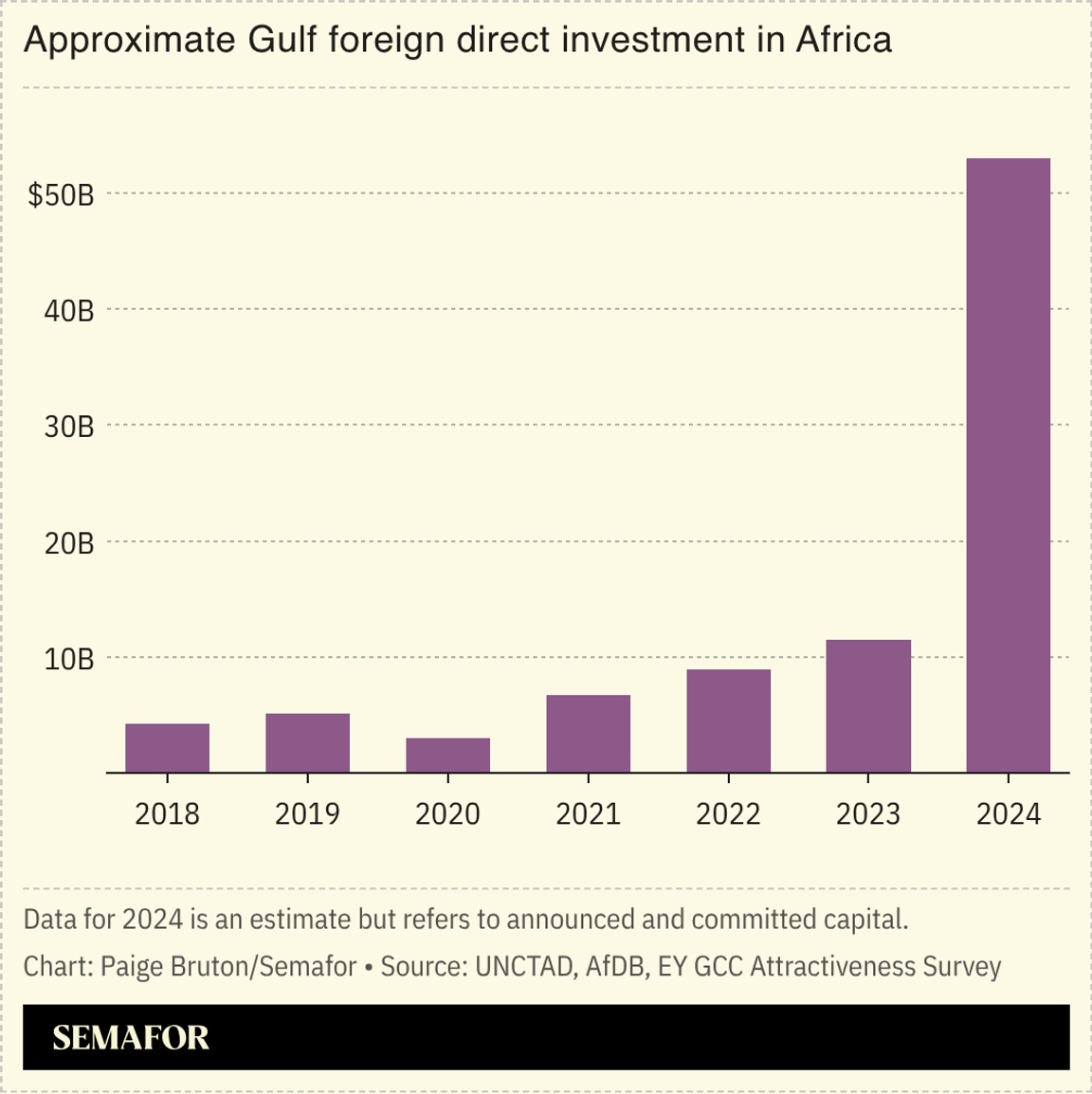 Saudi Arabia’s ACWA Power has signed a $700 million deal to build Mauritania’s first large gas-fired power plant, as the Gulf utility giant extends its push into Africa. The 230-megawatt facility will be supplied from an offshore gas field shared with neighboring Senegal. ACWA Power, which is backed by the kingdom’s sovereign wealth fund, will hold 60% of the project, and be responsible for financing, building, and operating the plant; the Mauritanian state-owned utility Somelec will own the rest. The Saudi company has said it will increase its spending in Africa by $22 billion over the next four years, in line with Riyadh’s broader push to deepen economic and political ties with the continent. Though China and the US are the main investors jostling for deals in Africa, Gulf nations have taken a greater interest in recent years, including in critical minerals that are key for renewable energy manufacturing. |
|
 Business & Macro |
|
|


