| | In today’s edition: Trump says ceasefire is “over,” ADNOC hunts for more deals in Africa, and a down͏ ͏ ͏ ͏ ͏ ͏ |
| |  | Gulf |  |
| |
|
 - Trump says truce is ‘over’
- ADNOC’s global deal spree
- Saudi debt-to-GDP surges
- Disrupted Gulf money flows
- UAE pushes government AI
 Doha unveils the mosque of tomorrow, today. |
|
Strikes resume after ship attacks |
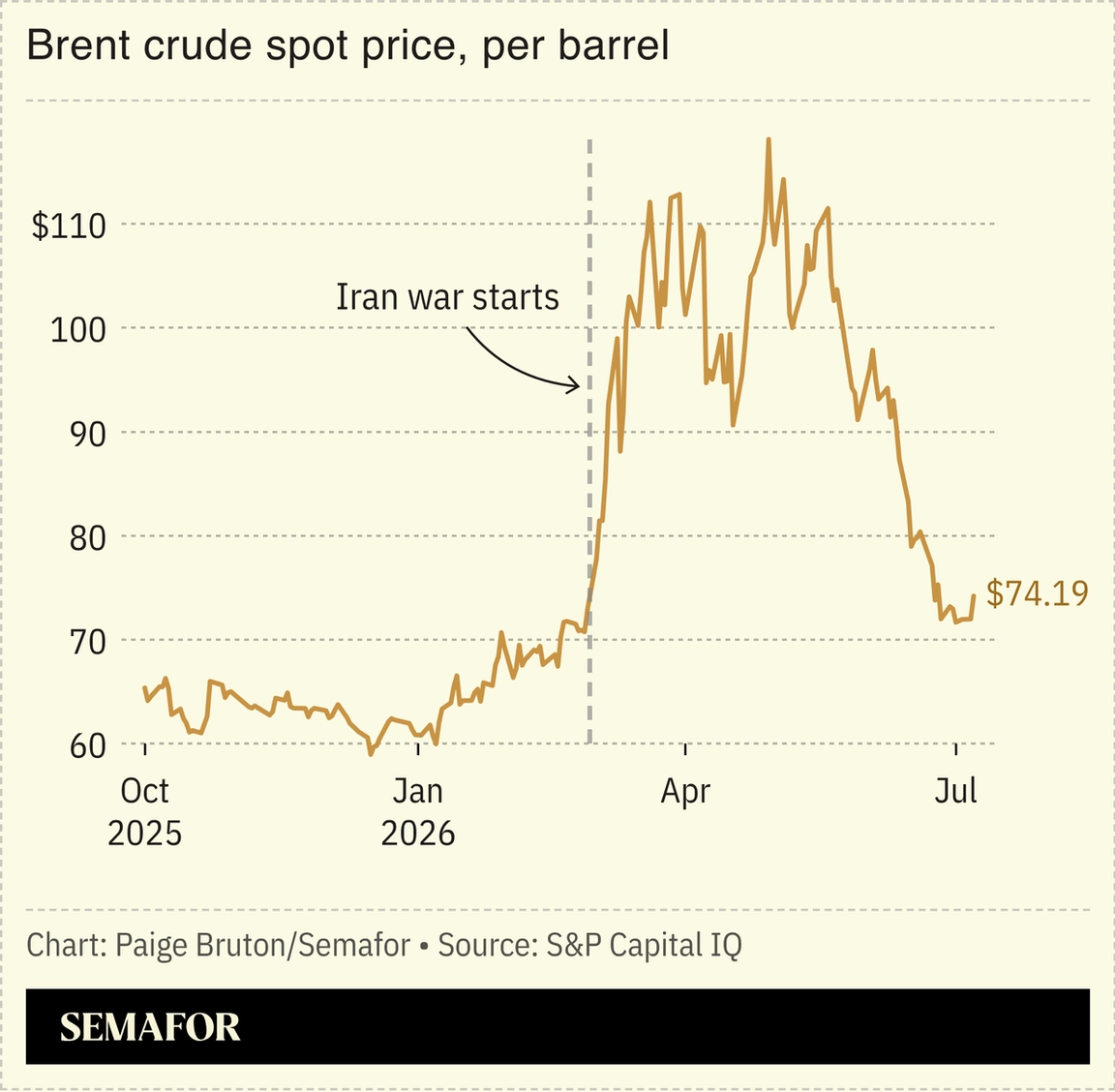 When US President Donald Trump signed the truce with Iran last month, he boasted to world leaders gathered around the table: “Oil down, stocks up.” That dynamic reversed on Wednesday after fighting resumed: The US struck Iranian military assets after attacks on commercial shipping in the Strait of Hormuz, and revoked temporary sanctions relief on Iranian oil; Tehran retaliated with strikes on Bahrain and Kuwait. The escalation threatens to end a diplomatic process that Gulf governments and businesses had hoped would reopen the Strait of Hormuz and establish a new regional security framework that would remove them from the front lines. Oil prices surged almost 6% and Trump said he thought the ceasefire was “over,” even as he allowed negotiators to keep talking, while dismissing the effort as “a waste of time.” Tehran struck a similarly defiant tone. Iran’s top negotiator said the country would not “fold.” |
|
ADNOC wants to buy more gas stations |
 Siphiwe Sibeko/Reuters Siphiwe Sibeko/ReutersADNOC’s retail arm is hunting for deals in Africa and Southeast Asia, its CEO told Semafor, days after its $1 billion swoop on a South African gas station chain. “Africa is the destination of choice, but we’re not limited to it,” said Bader Al Lamki. “Southeast Asia is somewhere we’re also open to exploring.” Al Lamki said the parts of the Middle East and North Africa where ADNOC Distribution wasn’t currently operating gas stations would also be evaluated for expansion opportunities. The wider group has been on a dealmaking spree in recent months, investing in a Texan LNG project, taking a stake in Argentinian gas blocks, and completing a $16.9 billion takeover of German chemicals firm Covestro. On a tour of Asia this week, the group’s CEO, Sultan Al Jaber, signed a long-term LNG supply deal with Japan, and an energy security pact with South Korea, deepening cooperation on crude supply and strategic storage. — Ed Clowes |
|
Saudi debt forecast to rise sharply |
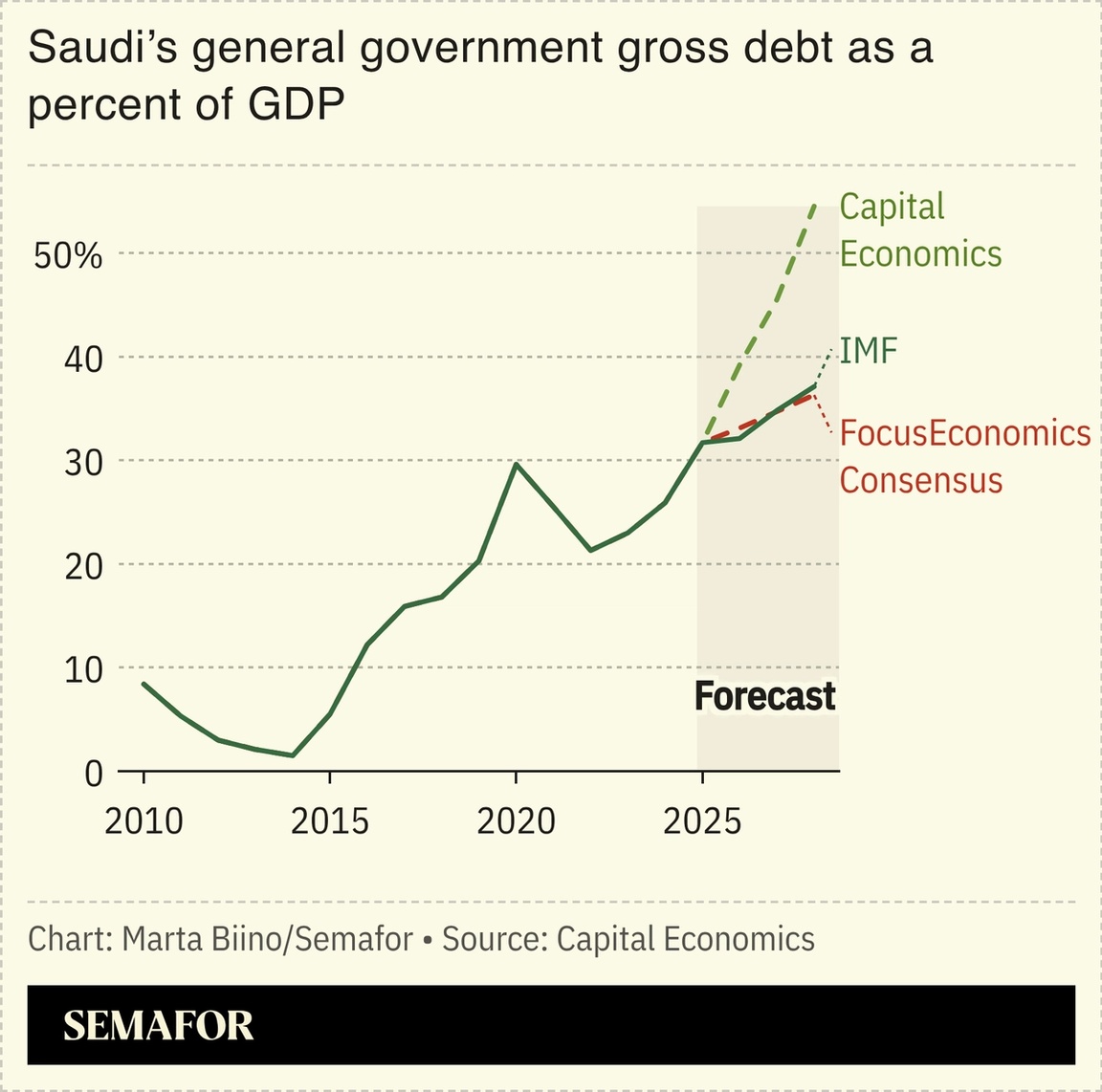 Saudi Arabia’s debt levels could reach 60% of GDP by 2030, which could push up borrowing costs and put pressure on the government to tighten spending, according to consultancy Capital Economics. The kingdom’s debt levels, while low compared to most other countries, are expected to continue rising, based on the assumption that the oil price spike following the closure of the Strait of Hormuz fades and crude prices fall over the next few years, the firm said. Its projection is far worse than that of most other economists; the Saudi government’s own forecast is for debt of around 33% of GDP by 2028, up from 32% now. The Saudi government has said that it is borrowing to invest in economic transformation projects and that its focus is on growing the non-oil economy. The Capital Economics scenario could also lead to higher government borrowing, which could crowd out private-sector firms. — Matthew Martin |
|
Saudi-UAE tensions hit money flows |
 UAE President Sheikh Mohamed bin Zayed meets Saudi Crown Prince Mohammed bin Salman in 2025. Abdulla Al Bedwawi/UAE Presidential Court/Handout via Reuters. UAE President Sheikh Mohamed bin Zayed meets Saudi Crown Prince Mohammed bin Salman in 2025. Abdulla Al Bedwawi/UAE Presidential Court/Handout via Reuters.Money transfers between Saudi Arabia and the UAE are being delayed or cancelled without explanation, forcing some businesses to route payments through third countries and some individuals to travel between the two Gulf states with large amounts of cash. The problem, first reported by Bloomberg, began more than a month ago. Relations between Abu Dhabi and Riyadh have been strained by differing approaches to the wars in Sudan and Yemen, relations with Israel, and management of oil markets (the UAE left OPEC in May). Both countries are also competing to be the region’s primary business hub. It is not the first time souring relations between Abu Dhabi and Riyadh have hit business in the region. Trade at the border was snarled in hours of queues in 2021 when Saudi Arabia imposed new restrictions on imports from the UAE. Riyadh has also introduced rules forcing companies that want to compete for Saudi government contracts to establish regional headquarters in the kingdom, drawing some executives away from Dubai. |
|
Microsoft deepens AI ties with UAE |
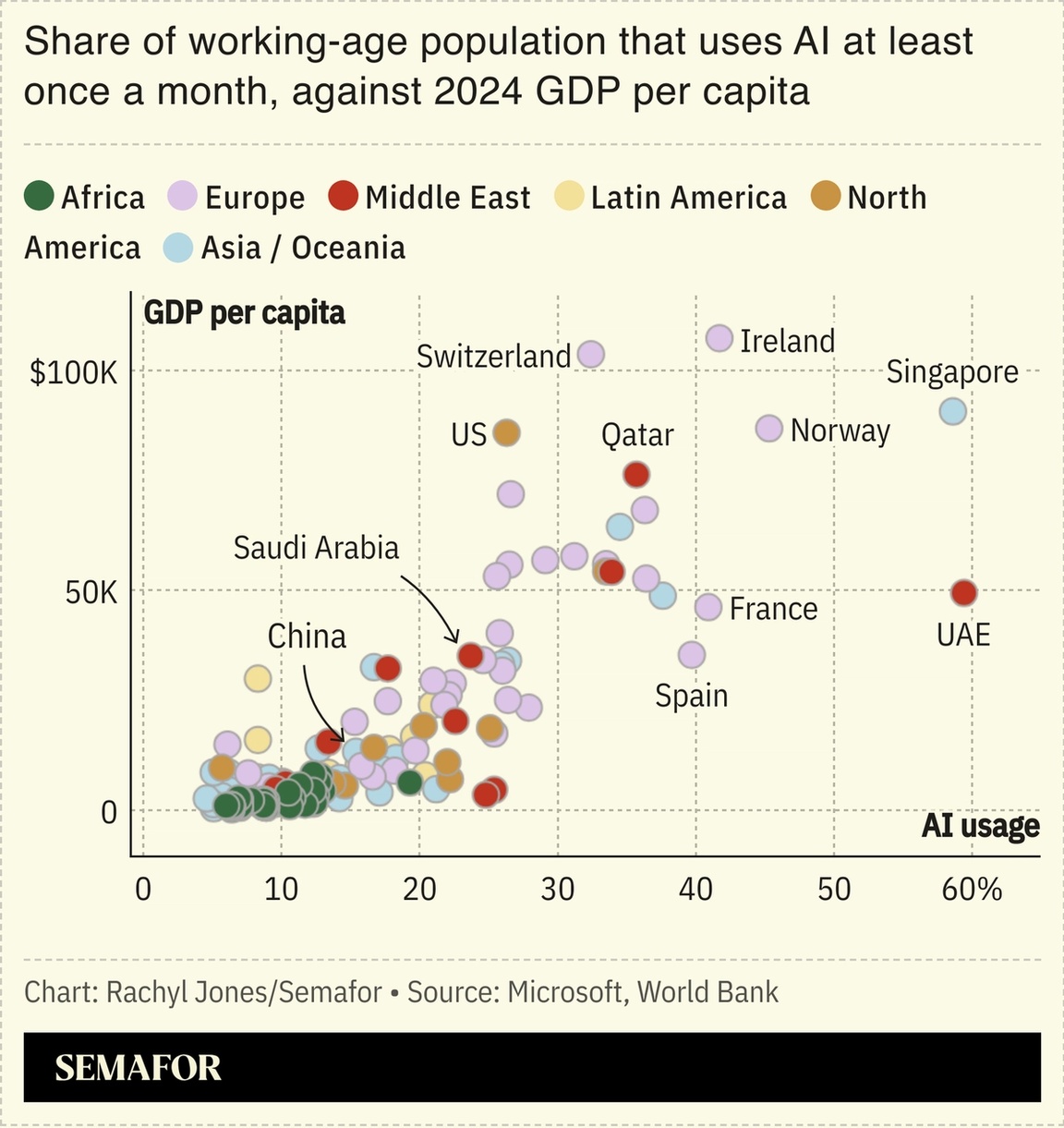 The UAE is deepening its relationship with Microsoft, as the government pushes to meet its own deadline to automate at least half of the public sector’s work using AI agents. Microsoft’s Copilot software is already on 35,000 Abu Dhabi government employees’ computers. Now, Inception42, a subsidiary of Abu Dhabi AI conglomerate G42, is building agents that can work with the Microsoft AI platform to assist with tasks like buying goods and services — in the right quantities and at competitive prices — to keep the country running smoothly. “Success is when it’s invisible,” Inception42 CEO Ashish Koshy told Semafor. With a population of around 11 million, the UAE is a small but meaningful test case for automating government services at a time when most countries are taking a more cautious approach. — Kelsey Warner |
|
 Banking- Deutsche Bank will establish a regional headquarters in Saudi Arabia, the latest in a long line of firms to respond to government encouragement to beef up their presence or risk losing out on contracts with the state or its sovereign wealth fund.
Checking In- Qatar Airways has launched facial recognition technology for passengers travelling through Doha’s Hamad International Airport, allowing them to get through check-in, baggage drop, security screening, and the boarding gate with minimum paperwork.
- Saudi hotel occupancy held steady at 61% in the first quarter, as a surge in domestic travel and Hajj pilgrims offset a drop in foreign visitors. Hotels still cut room rates by 11% on average, with leisure destinations slashing deepest to stay competitive. — AGBI
Logistics- DP World added a large cargo vessel to its 11-ship network in India, as it looks to expand domestic coastal trade routes in the world’s most populous country.
Manufacturing- QatarEnergy is working with Qatari ministries to develop an industrial area in Mesaieed Industrial City, close to Hamad Port, and provide businesses there with natural gas, power, and related resources.
|
|
 Courtesy of Qatar News Agency Courtesy of Qatar News AgencyFrom the outside, it looks much like a thousand other mosques around Qatar, but behind the simple white stucco façade, the Qais bin Saad bin Ubadah Mosque in western Doha is doing some things a little differently. The air conditioning and lighting are powered by solar energy and smart electricity systems to minimize use, while water used in the cleansing rituals before prayers is recycled and repurposed for toilets and to irrigate the areas around the building. The government has hailed it as the first “smart mosque” in Qatar, and says more will be built across the country. |
|
|


