In the spring of 1939, one J.D. Salinger—Jerry—took Whit Burnett’s creative writing class at Columbia. That semester, he handed in a grand total of nothing, but signed up for the class again in the fall anyway. This time—after a letter of apology biographer Thomas Beller describes as “the Big Bang of Salinger’s career”—he did a little better, producing three stories, one of which, “The Young Folks,” Burnett liked enough to publish in the next issue of Story, the influential literary magazine he edited. Then, in 1941, Salinger sold another story, “Slight Rebellion Off Madison,” to The New Yorker; it featured one Holden Morrisey Caulfield, on Christmas vacation from Pencey Prep. But this story wouldn’t be published until 1946, after the war.
Salinger was drafted in 1942, and famously wrote his way through the trenches. Upon his return, Burnett promised to publish his first book, a short story collection, but it fell through, and their relationship fell apart too. Instead, Salinger kept submitting his short stories to The New Yorker (they wouldn’t take anything else until “A Perfect Day for Bananafish,” which was published in 1948), and kept working on his Holden Caulfield novel.
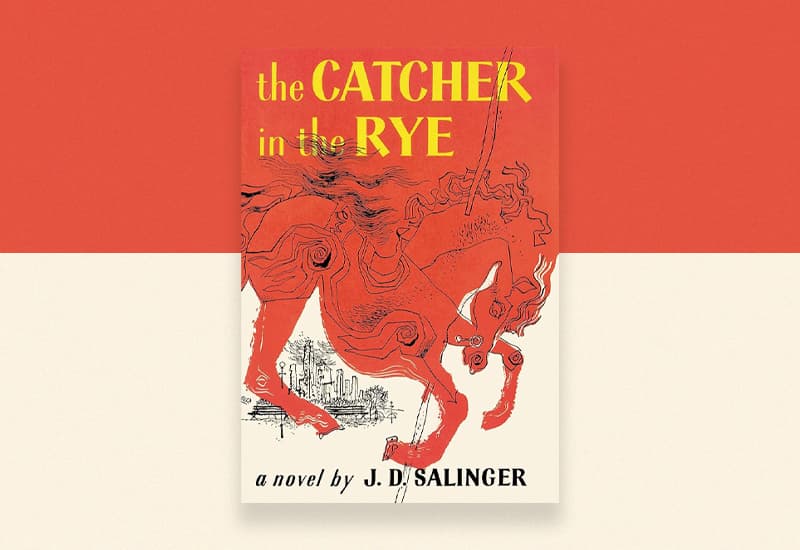
The Catcher in the Rye was published by Little, Brown on July 16, 1951. Early reviews were mixed, but the novel sold like hotcakes, and soon became—and remains—a touchstone of American literature, especially for young people.
“The triumph of the novel and the reason for its influential longevity exists in the simple fact that it changed the way that the youth are portrayed in fiction,” wrote critic Tom Taylor in 2022. “Suddenly, the notion of American adolescence was touched upon and rendered three-dimensional, albeit that depth was largely coloured a shade of dower grey. Neither hero nor anti-hero, just a humourless kid, the idea of the teen as a societal iconoclast was borne from these pages.”
And how does it hold up on its 75th anniversary? “Holden’s moral rigor is refreshing in a cultural moment marked by an unsettling mix of cynicism and heedlessness,” writes Lily Meyer in The Atlantic. Read today, the novel, she argues, “offers something of a guide away from the manosphere and its bluster: a case against nihilism and a vision of a gentler sort of manhood, even if achieving it means living on the edge of a cultural cliff.” Could have left a much worse legacy than that.