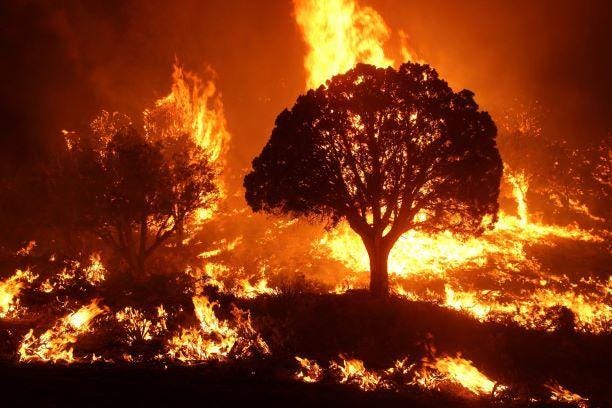
This past week, a series of devastating wildfires have scorched their way across Europe. From the Scottish Highlands to the island of Sicily, much of the western half of the continent has seen conflagrations spread with alarming speed and intensity on the back of a sweltering summer of heatwaves that have seen temperatures soar above 40C (104F) in many places. The regions around Bordeaux in France and Madrid in Spain have been the most badly affected, with more than 300,000 people being displaced in what is being described as the largest evacuation on French soil since the Second World War. However, such scenes are sadly becoming a more regular occurrence, with land burned across Europe having risen by 57 per cent in just four years, according to the World Health Organization’s European office, and 2025, previously the worst year on record, has already been surpassed.
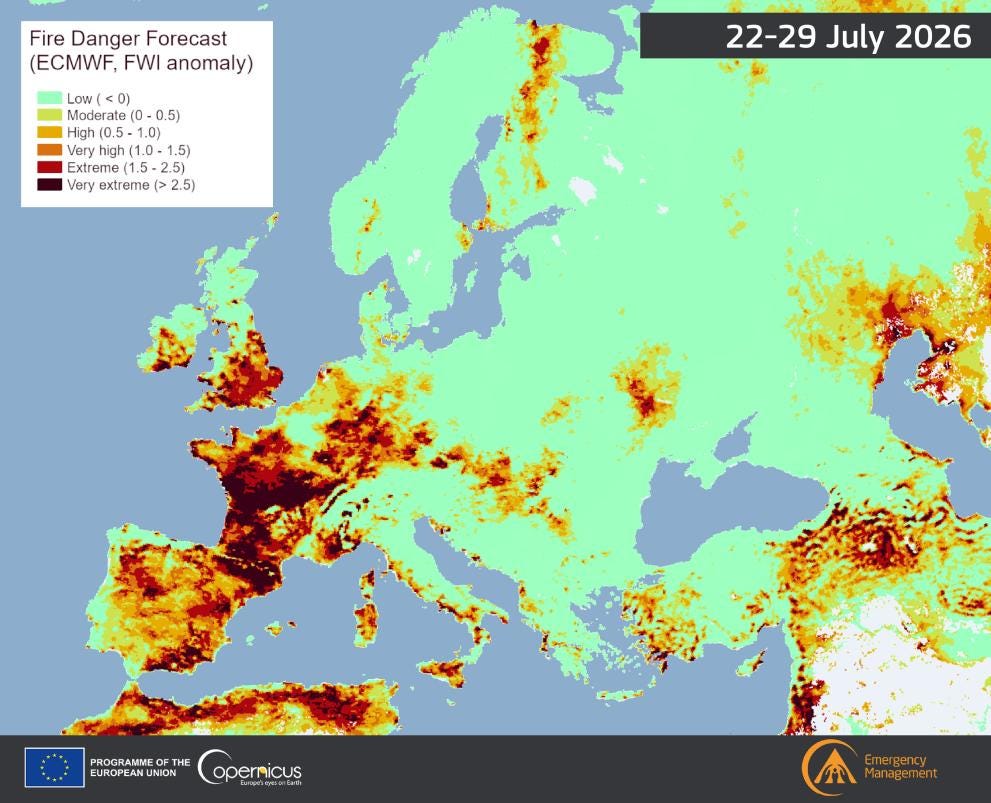
Fire danger forecast between 22 and 29 July.
Climate change offers the most obvious explanation, but it is not the sole or indeed primary contributor. As global temperatures rise, more moisture is being held in the earth’s atmosphere, leading to increasing amounts of rainfall during Europe’s winter months. This in turn nourishes and encourages more vegetation to grow in the springtime, but as summer arrives, the hot, dry conditions transform the lush green landscapes into parched tinderboxes. Heat and drought explain how a fire spreads quickly once it has started, but they do not fully explain why wildfires now burn at a scale and intensity never seen before. That answer lies further back than in recent summers, during a time of a much quieter upheaval that took place across Europe roughly sixty years ago.