| | US President Donald Trump meets the leaders of Israel and Ukraine, FIFA plans to sell a stake in the͏ ͏ ͏ ͏ ͏ ͏ |
| |  | Flagship |  |
| |
|
The World Today | 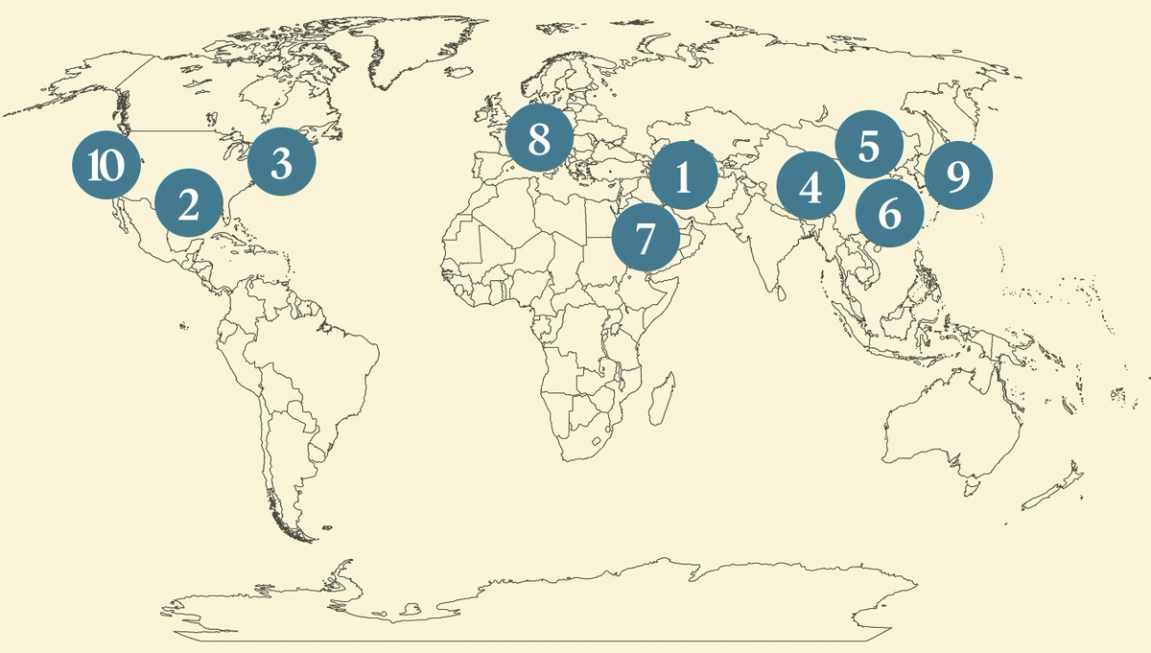 - Hormuz talks in doubt
- Big Oil’s profit spike
- Trump meets wartime leaders
- US bans new Chinese bots
- Moonshot wants Nvidia chips
- China’s pharma catching up
- Saudi lobbying to host G20
- FIFA’s new funding model
- Japan’s workaholic culture
- More shark sightings
 A ‘metaphysical jigsaw puzzle’ of a novel. |
|
Oil falls on US-Iran pause |
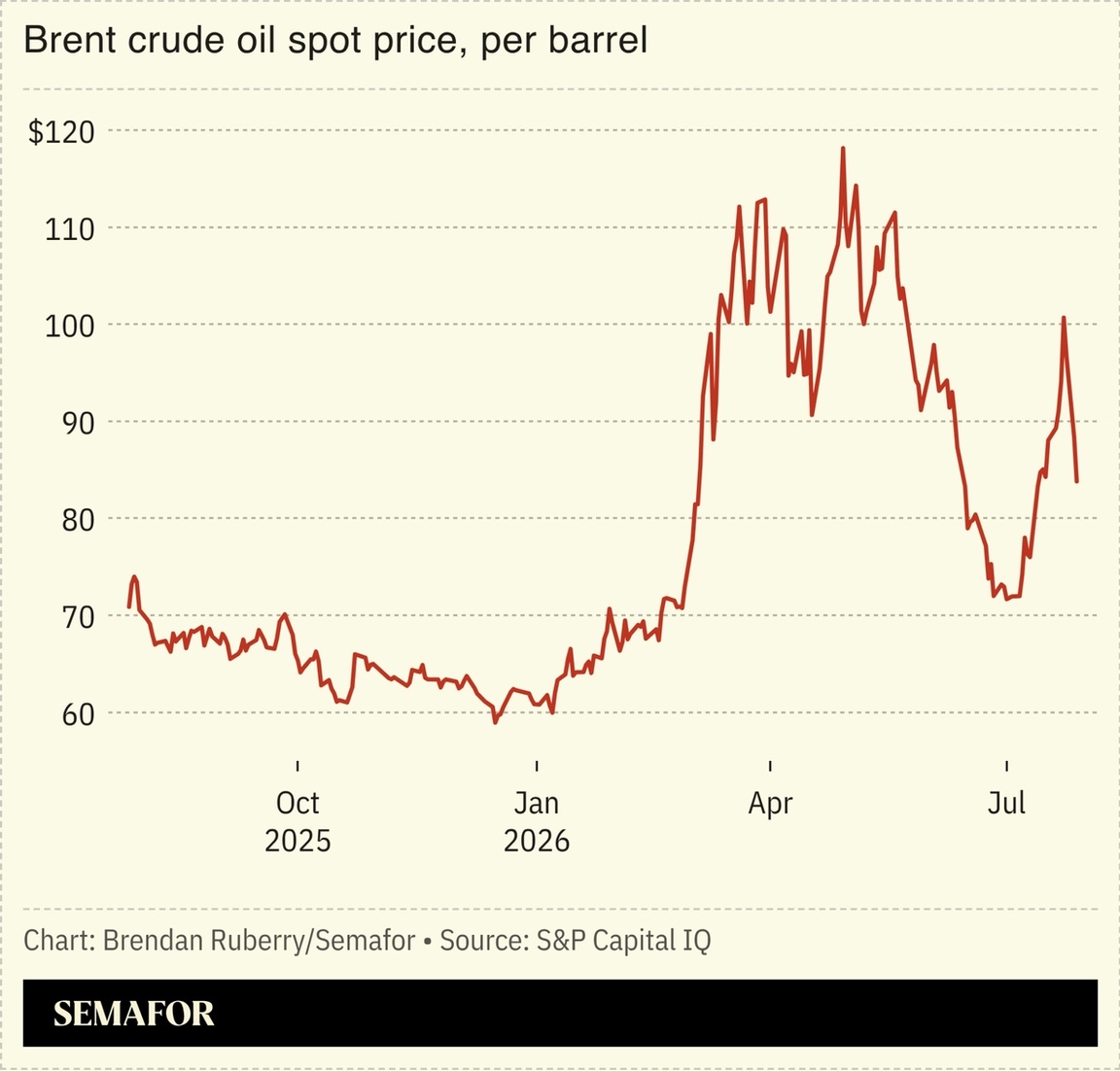 Oil fell to its lowest price in a week on Tuesday following an uneasy lull in the US-Iran conflict, though uncertainty over negotiations lingered. While diplomats signaled progress in Oman-Iran talks to let more ships through the Strait of Hormuz, Tehran proposed a temporary arrangement that would give it greater control over transit routes, and threatened to keep Hormuz closed if Muscat rejected the plan. The crisis has forced Saudi Arabia to tap alternative routes to ship crude, including the costlier Suez Canal detour, and a Bloomberg columnist suggested the kingdom could resort to previously “unthinkable” measures like using Israeli pipelines. Doubts about US-Iran negotiations also grew, with Washington saying “good talks” were underway, while Tehran denied they were even taking place. |
|
Big Oil’s risky profit spike |
 Shahrzad Rasekh/Reuters Shahrzad Rasekh/ReutersOil companies this week are set to report bumper second-quarter profits, as they ride the swell of an unprecedented energy crisis. While share prices of global drillers like ExxonMobil and Chevron have ticked down alongside a fall in oil prices, the sector is on track for a $495 billion cash windfall this year, analysts said, double the prewar estimate. But the thing to watch for is what they plan to do with that cash, Semafor’s Tim McDonnell wrote. So far, most have chosen to sit on it rather than invest in new drilling, drawing Washington’s ire. The bigger risk for energy CEOs “is blowing this unexpected piggy bank on projects that won’t pay off if the situation in Iran calms down soon.” |
|
Trump meets Zelenskyy, Netanyahu |
 Petros Karadjias/Shahrzad Rasekh/Reuters Petros Karadjias/Shahrzad Rasekh/ReutersThe leaders of Ukraine and Israel sought to curry US President Donald Trump’s favor during their visits to the White House on Tuesday. The separate, closed-door meetings come at a critical time for Volodymyr Zelenskyy — whose stock with Trump is rising — and Benjamin Netanyahu, whose influence is waning. Trump has praised Ukraine’s battlefield progress and promised Kyiv military assistance, while voicing impatience with Netanyahu over their diverging interests in the Iran conflict. Zelenskyy needs more US weapons, and Netanyahu wants Trump’s endorsement in a critical election. The White House described both meetings as “positive and productive,” but Zelenskyy can claim measurable progress: Trump’s top envoys Steve Witkoff and Jared Kushner agreed to visit Ukraine for the first time. |
|
US bans new Chinese robots |
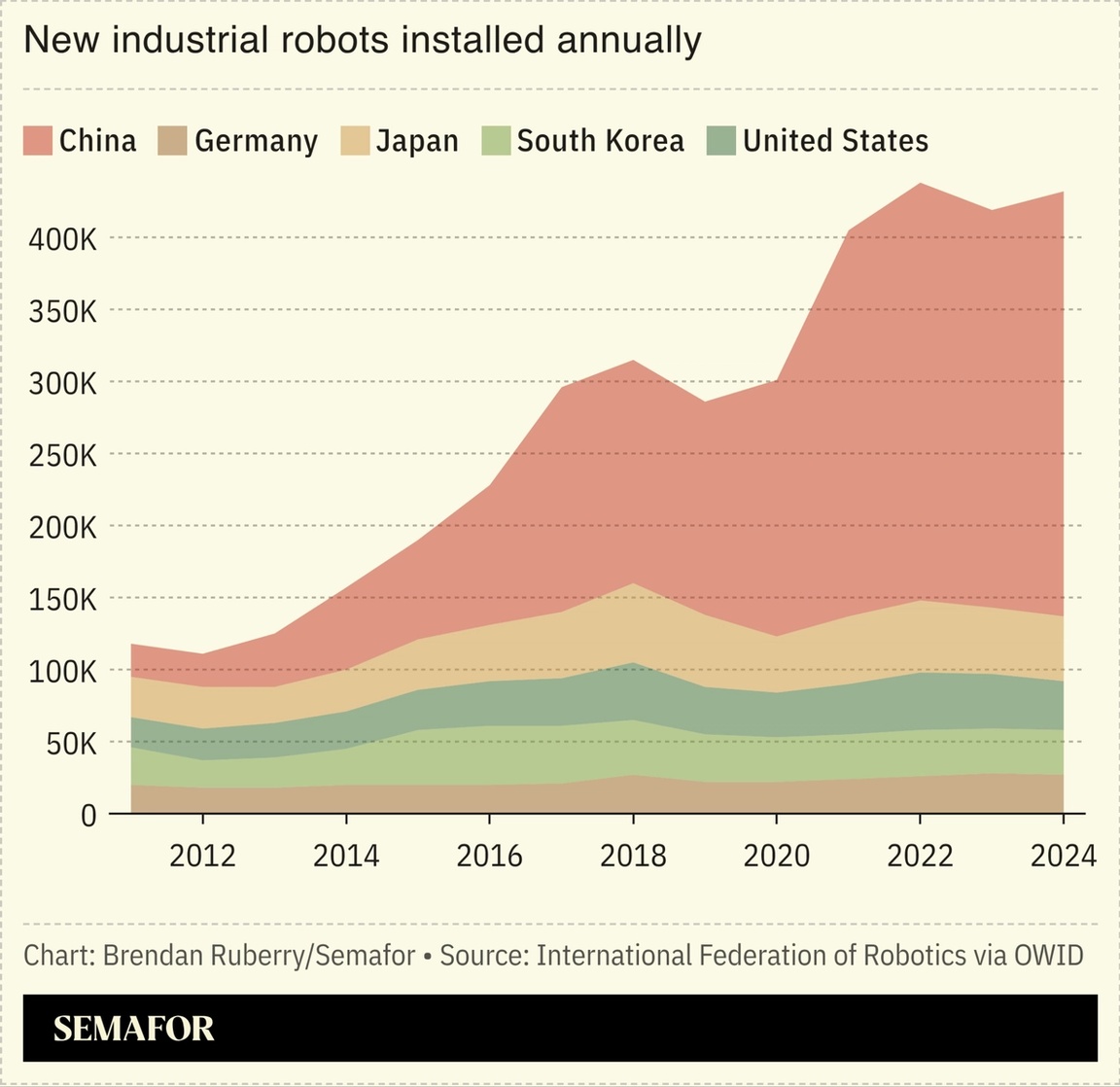 The US government on Tuesday effectively banned imports of new Chinese robots, curbing the global ambitions of an industry Beijing has positioned as a major new growth driver. Washington’s communications agency added all new foreign-made humanoids and quadrupeds to a list of gear considered a national security risk. US robot makers have been lobbying Washington for months to take action to counter the spread of popular Chinese bots — which are almost solely used for entertainment and research purposes in the US — before they enter American factories. Tuesday’s move, which still allows for some case-by-case approvals, comes as Washington hardens its posture toward Chinese tech: The White House is debating whether to restrict access to open-source Chinese AI. |
|
Chinese tech grapples with compute shortage |
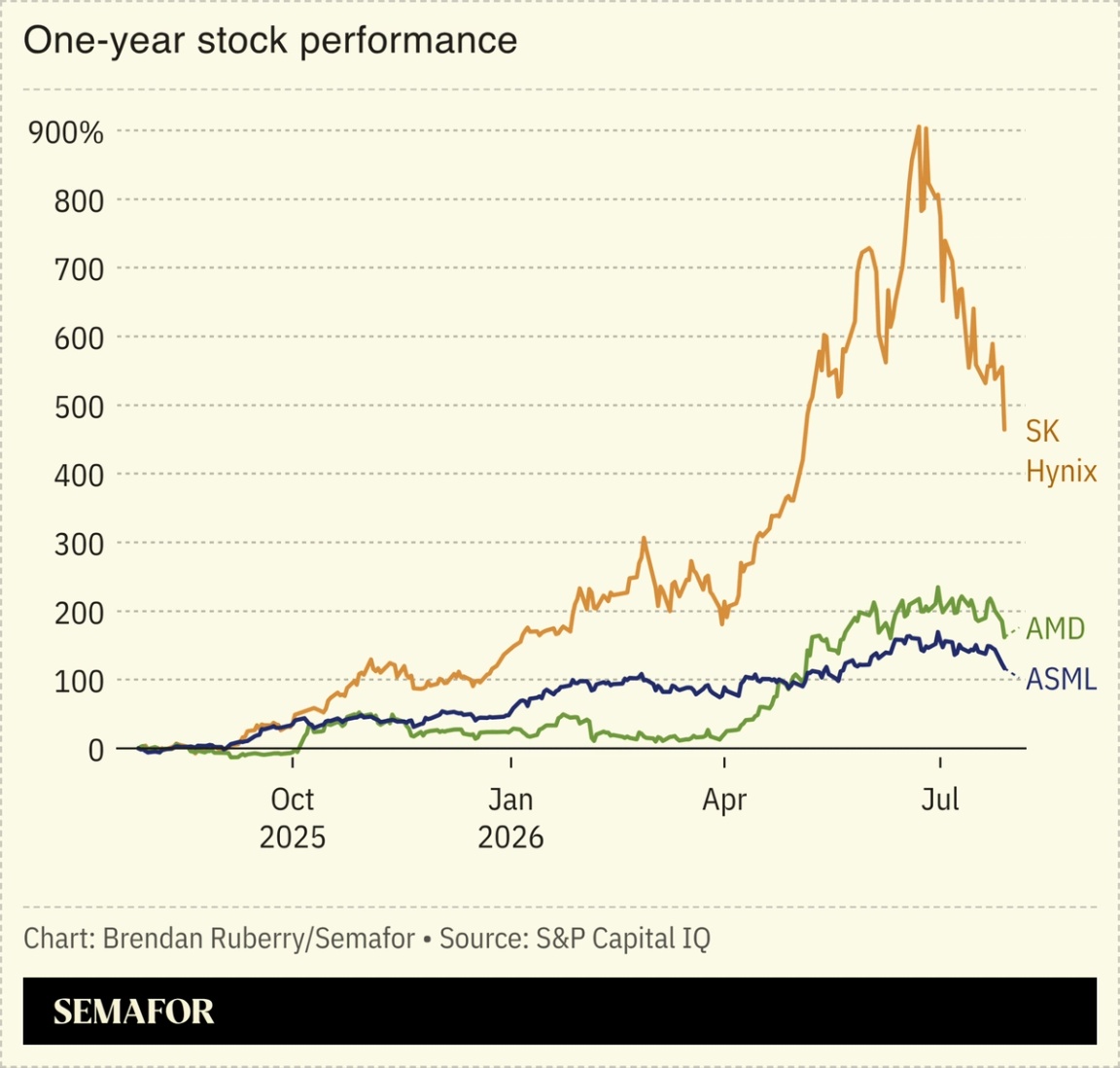 Chinese AI startup Moonshot is looking to acquire more advanced Nvidia chips to create its next model, The Information reported, as China’s tech sector grapples with an AI compute shortage. Moonshot is reported to have stitched together capacity from multiple cloud providers while developing Kimi K3, highlighting the inventiveness of Chinese tech in overcoming Washington’s chip export controls. Beijing’s efforts to build its own domestic semiconductor industry are also beginning to pay off: Chinese chipmakers saw a 2,850% jump in first-half profits. Reports this week that a state-backed company would mass-produce lithography machines caused European tech giant ASML to plunge, raising fears of intensifying competition from China that also prompted a selloff in Japan and South Korea’s chip-heavy markets. |
|
Semafor Exclusive China’s coming pharma giants |
 Go Nakamura/Reuters Go Nakamura/ReutersChinese pharmaceutical companies are gunning for Western giants, but remain about a decade away from challenging industry heavyweights on a global stage, AstraZeneca’s chief financial officer told Semafor. Chinese firms are increasingly on the cutting edge of research, and China gets twice as much value from licensing drug patents to foreign manufacturers as it does from the country’s EV sales, according to HSBC analysts; Pfizer and Eli Lilly have both struck big deals this year to license drugs from Chinese biotechs. The country’s pharma firms are held back by their inability to carry out global, late-stage clinical trials, AstraZeneca’s Aradhana Sarin said, but the prospect of facing off with Chinese rivals worldwide was “only a question of time.” |
|
Semafor Exclusive Saudi lobbying to host G20 |
 Saudi Press Agency/Handout via Reuters Saudi Press Agency/Handout via ReutersSaudi Arabia is lobbying fellow G20 countries to support its bid to host the bloc’s 2030 meeting, Semafor reported, as the kingdom looks to expand its influence in global institutions and reshape its international reputation. If successful, it will be the first time the G20 leaders’ summit is held in Riyadh, as the kingdom nears the target date of Vision 2030 — its ambitious economic transformation plan that has faced several hurdles. Despite patchy progress on some of its megaprojects, Saudi hopes to showcase a country “barely recognizable from the recent past,” Semafor’s Saudi Arabia bureau chief wrote. Landing the G20 would give the kingdom “a year-long calendar of… engagements with foreign politicians and business leaders to shape perceptions of the country.” |
|
FIFA plots $20 billion private vehicle |
 Mike Segar/Reuters Mike Segar/ReutersFIFA announced plans Tuesday to sell a 20% stake in a $20 billion private vehicle that will run its commercial operations, as the body looks to capitalize on the lucrative men’s World Cup. The new entity seeks to raise up to $4.2 billion from external investors, a major departure from the soccer body’s traditional funding model. The brother of US President Donald Trump’s son-in-law is set to lead the investor group, drawing condemnation from Europe’s UEFA, which accused FIFA of offering “zero transparency as to who gains financially,” adding that the World Cup was “not FIFA’s to sell.” FIFA’s president has faced scrutiny for the “ruthless commercialization drive” during his 10-year tenure, CNBC noted, as well as his close relationship with Trump. |
|
Takaichi sleep claim sparks work reckoning |
|
US summer shark sightings surge |
|
|


