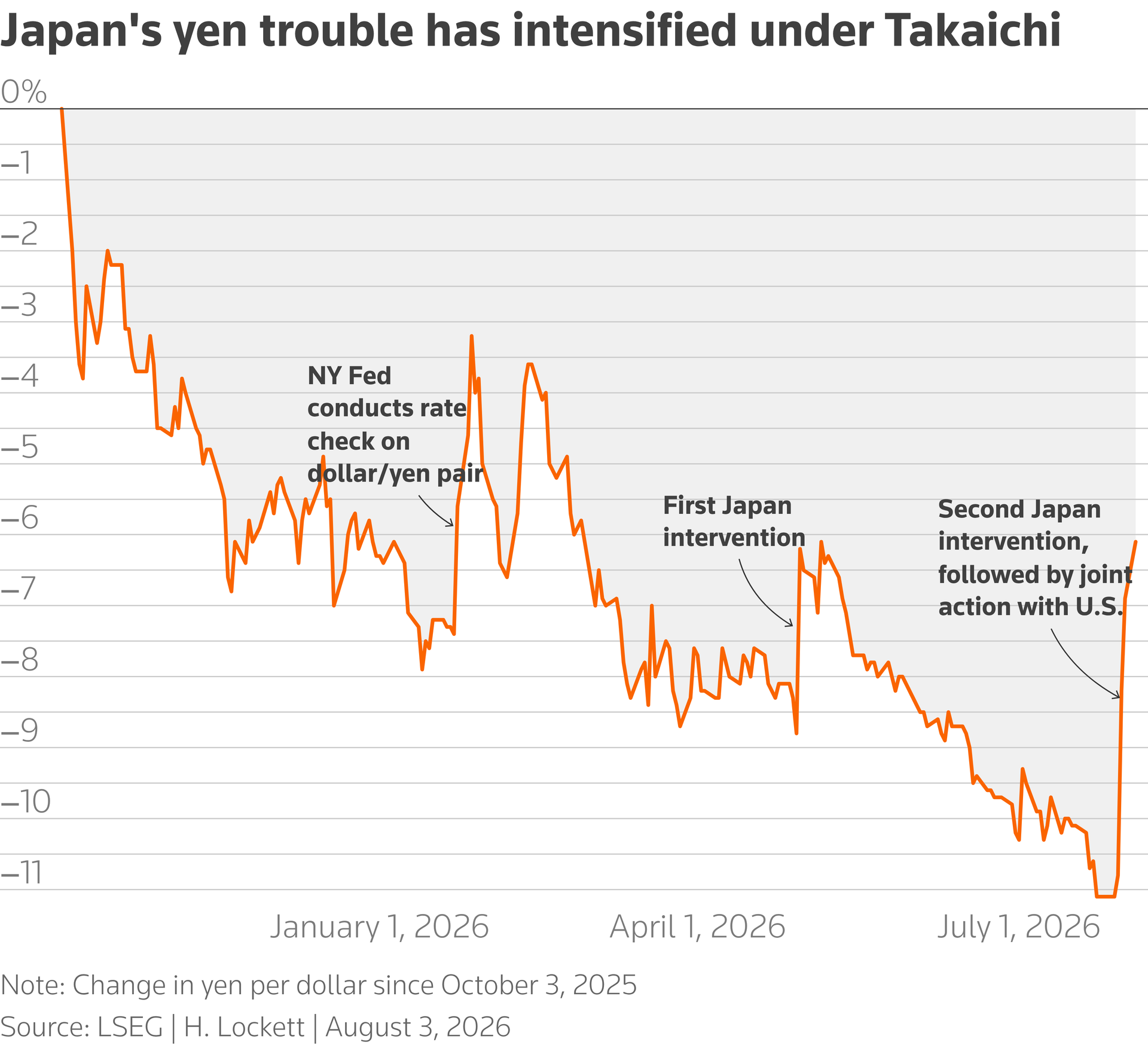
There are many questions about the timing of Friday's joint yen intervention. The Bank of Japan had delayed another interest rate rise last week, partly because of the recent earthquake in the country, and perhaps Tokyo and Washington fretted about how that decision could impact the yen. Then there's the real prospect of a Federal Reserve rate rise as soon as next month.
Either way, Japan sold almost $60 billion to support the yen and Scott Bessent's "to-do" list revealed U.S. plans to spend between $5 billion and $10 billion. Successful or not, the two sides have pledged to repeat the action as necessary.
The fallout may be aggravating U.S. bond yields on the assumption that Japan, the biggest single overseas creditor to the U.S. government, could liquidate Treasuries to raise the dollars to sell. Bessent, however, said that a Fed repo facility using Japan's bond holdings as collateral was activated.
Otherwise, Treasuries have caught something of a break from President Trump's latest pause in bombing Iran, which comes as he claims fresh talks between the two sides would take place on Monday. Oil prices fell over 5% on the development to below $84 per barrel.
In equities, Asia markets started the week in the red, with South Korea's volatile KOSPI sliding more than 5% after a record rally last Friday. Stateside, Wall Street futures were up before the bell.
This week the U.S. July employment report comes into view, while the U.S. earnings season rolls on, with companies set to report including Palantir, AMD and SpaceX.
There have been some eye-popping metrics so far, with aggregate annual S&P 500 profit growth tracking a whopping 47% in the second quarter, according to LSEG data. That's almost twice what was expected a month ago, as Big Tech's AI push combines with a bumper quarter for the big banks and Big Oil.
This level of growth has only been exceeded in recent decades during the bouncebacks from the banking crash and pandemic recessions. But, of course, there's been no recession this time.
This staggering earnings growth helps explain why both dip-buying and sectoral rotation are the preferred responses to recent volatility on Wall Street, rather than cashing out.
In deals news, AstraZeneca shares fell sharply on Monday as investors baulked at reports of merger talks with Bristol Myers Squibb - a mooted tie-up that would form one of the world's biggest drugmakers with a combined value of nearly $400 billion.