| | The value in previewing President Trump’s social media posts, and how SpaceX’s earnings report tonig͏ ͏ ͏ ͏ ͏ ͏ |
| |  | Business |  |
| |
|
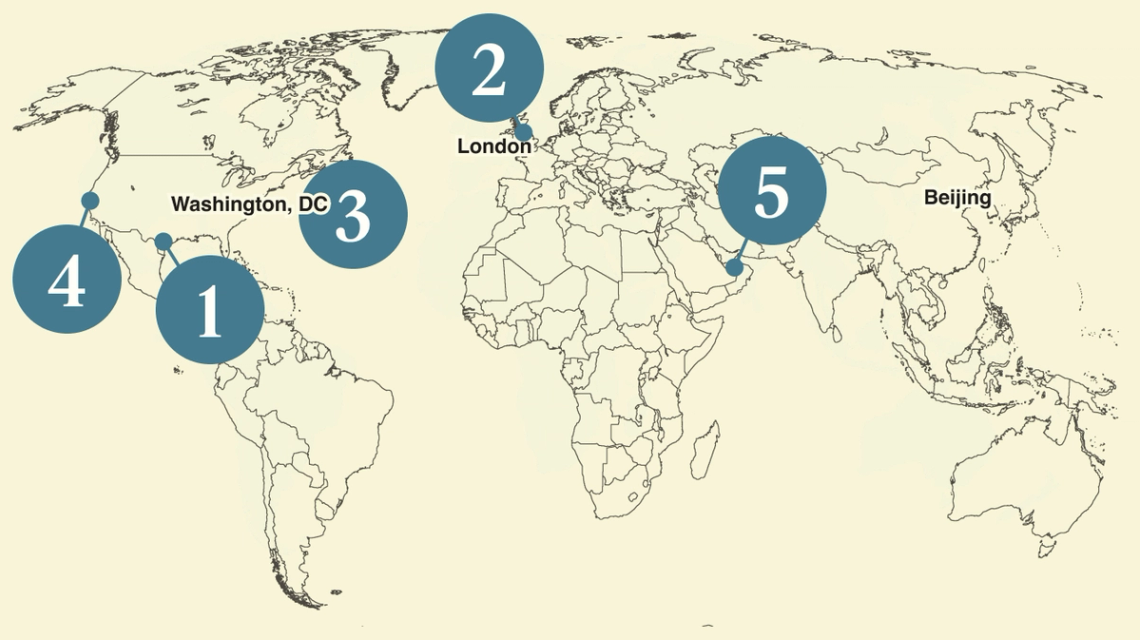 - SpaceX short squeeze?
- UK blues
- Pentagon snub
- SaaS down rounds
- Middle East deals
|
|
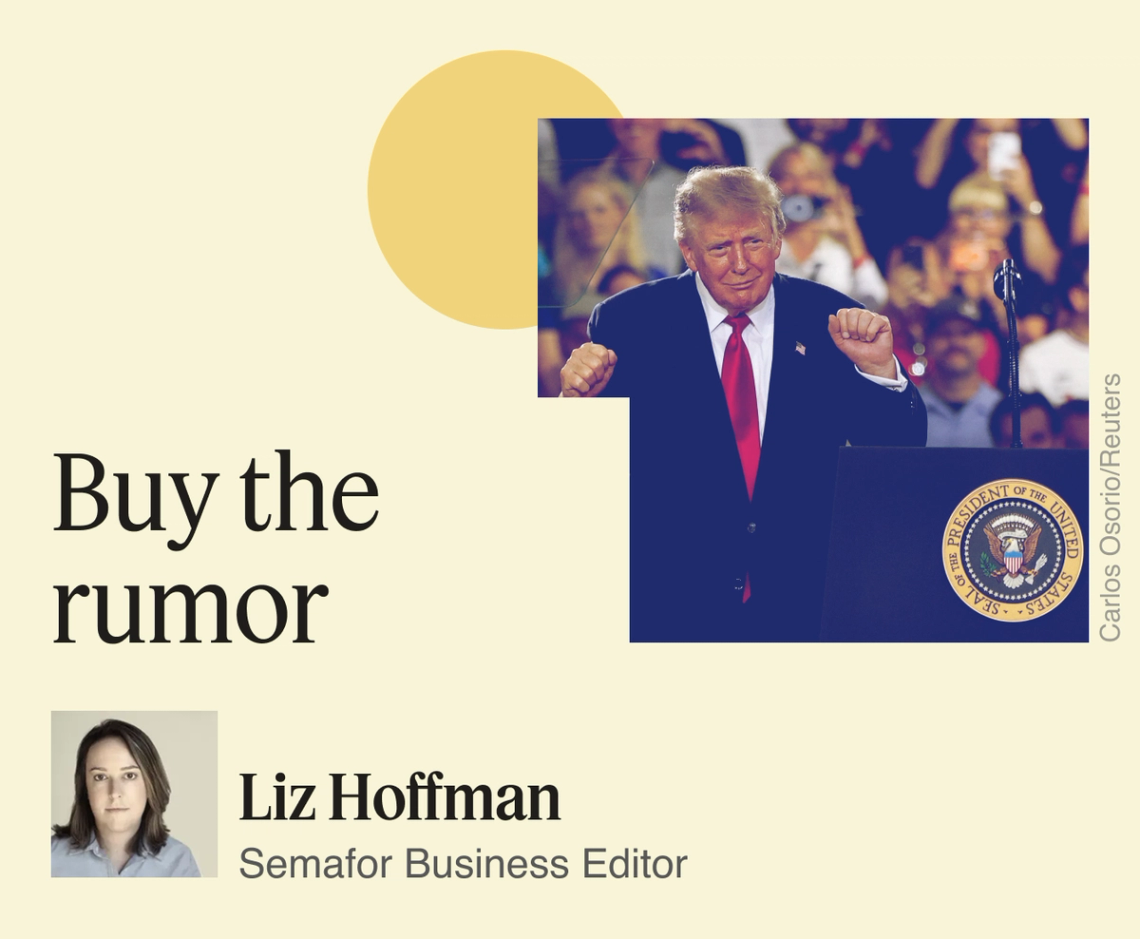 President Donald Trump has a social-media site. He says market-moving things on that site, which is now selling early access to those things for $100,000 a month. It’s a blatant bit of self-dealing, requiring none of the complicated flow charts that accompany most reporting about all the other ways the Trump family has cashed in on the presidency. But the investors I’ve talked to this week who are willing to admit they might sign up see a different kind of value. The real money to be made from the president’s online bleats isn’t in knowing what the US government is going to do. It’s knowing what the US government is going to pretend to do, then backtrack from doing. It’s a sneak peak at the TACO trade. The firms willing to shell out $100,000 a month ($60,000 a month if you’re willing to sign a three-year deal, though if Trump’s posts still have market-moving value in August 2029, there will be other things to worry about) are by definition more sophisticated investors than the average. They’ll be less likely to overreact and better able to distinguish the TACO stands from messages with longer-lasting market effects. It’s the oldest money-making trick on Wall Street, updated for a president whose mouth writes checks his policy apparatus can’t cash. Buy the rumor, sell the news. |
|
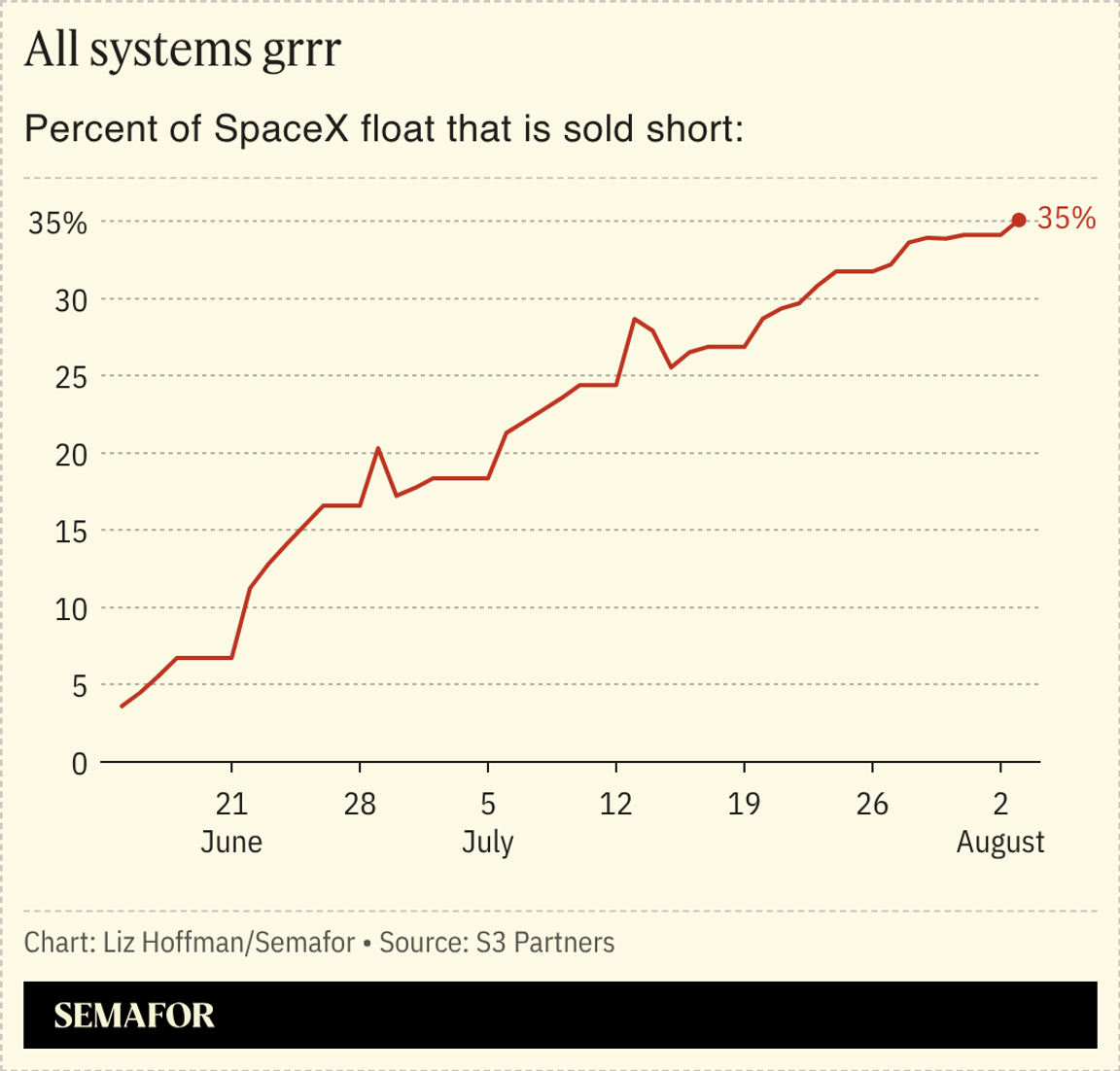 Beware the SpaceX short squeeze. Early investors and employees in Elon Musk’s rocket company will be able to start selling some of their stock on Thursday when the IPO lock-up lifts. More than one-third of shares in SpaceX, which reports earnings today, are sold short, according to S3 Partners, meaning investors are widely expecting a wave of selling (or other bad news that would weigh on the stock price). Will the wave materialize? One big risk to bears is overestimating how many of those 912 million eligible shares will actually hit the market. For one thing, SpaceX is down 40% from its listing price, and while early investors are sitting on huge pre-IPO gains, they might be reluctant to sell now. For another, they’ve been able to synthetically lock in gains thanks to Wall Street’s derivatives machine. And many of them are true Elon believers and may be in for the long haul. An undershoot would force a scramble to “cover” — buying shares to deliver stock to their counterparties and close out their bets. That kind of short squeeze could send shares sharply higher and blow short-sellers out of their positions — in August, no less, when market liquidity is thin and tinder is dry. |
|
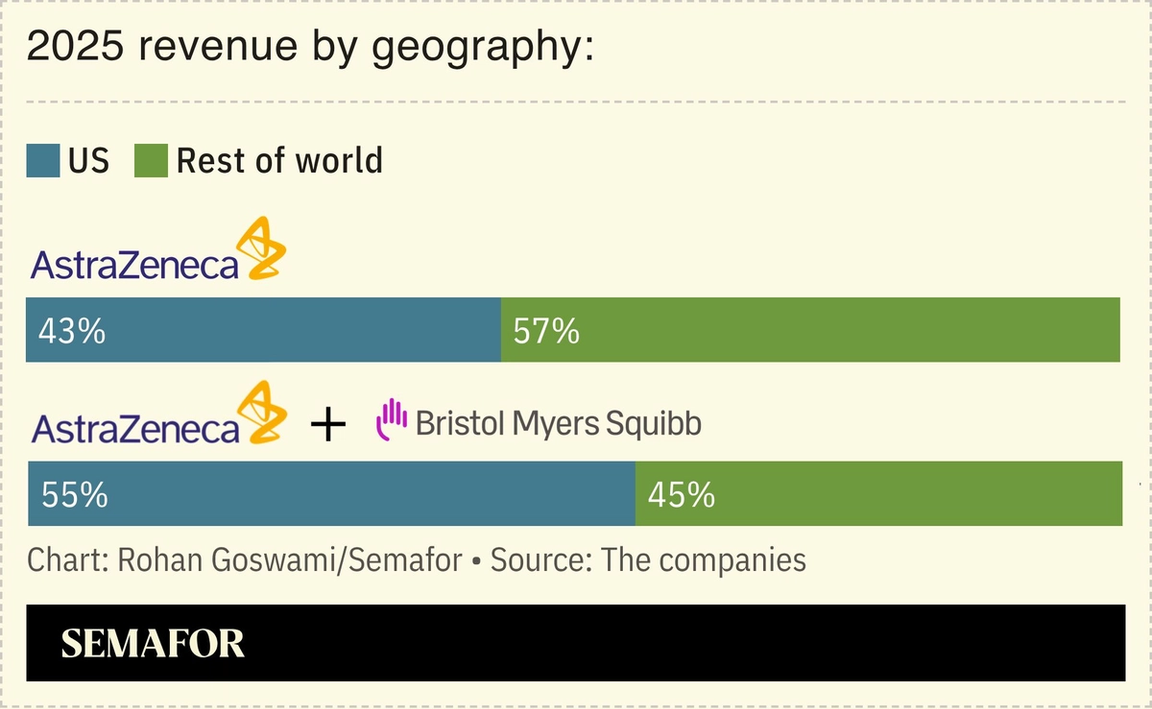 AstraZeneca’s deal talks with US-headquartered Bristol Myers Squibb, which Semafor confirms remain active, would strike another blow to the UK’s effort to keep hold of its corporate champions. A merger would tilt AstraZeneca’s revenues even further away from the UK and Europe and could portend a full relisting in New York, where the company — the second- or third-biggest member of the FTSE 100, depending on the day — elevated its secondary listing earlier this year. Expect, too, that any US regulatory review would probably require AstraZeneca to make hard commitments to the US on research dollars, manufacturing, and employment that would pull it further from its UK base. (A similar demand from US regulators has tripped up the sale of T-Mobile to Germany’s Deutsche Telekom, Semafor scooped last week.) Six former FTSE 100 companies have relisted in New York over the last five years, reflecting higher stock valuations and their increasingly global businesses. Those that remain in the UK are juicy takeover targets because they typically trade at much lower multiples than their US counterparts. Four FTSE 100 companies have been acquired by US rivals over that period; the latest, Segro, agreed to a $19 billion deal from US REIT Prologis today. — Rohan Goswami |
|
Pentagon loses in quantum fight |
 SkyWater’s manufacturing site. SkyWater Technology/Handout via Reuters SkyWater’s manufacturing site. SkyWater Technology/Handout via ReutersThe Pentagon usually gets what it wants. So it’s notable that US antitrust regulations allowed a $2 billion quantum-computing merger to go ahead last week over the objections of the military, which had privately pushed for tough restrictions on the deal, Semafor scooped. The Defense Department’s Silicon Valley-connected undersecretary, Emil Michael, argued that IonQ’s takeover of chipmaker SkyWater would choke off access by rival quantum companies — including many that the US government has stakes in — and wanted guarantees that SkyWater’s foundries would remain open to competitors. But a deadlocked Federal Trade Commission allowed the deal to close with no strings attached, showing the limits of the Pentagon’s sway over a key technology. — Liz Hoffman |
|
Airtable sale punctures SaaS bubble |
 Matteo Danieli, co-founder and CPO of Bending Spoons. Matteo Danieli, co-founder and CPO of Bending Spoons.This is what capitulation looks like: Airtable, a maker of workflow software, is being sold for just 10% of its peak valuation. It’s a sign that some companies hit hard by the SaaS selloff (or their venture-capital backers, as Airtable is still privately held) are bowing to reality and taking whatever money is available. But it’s one thing to swallow a final down-round, and another to be acquired by a company whose business model is creating an island for misfit tech toys. Bending Spoons buys software companies past their prime, like AOL and Vimeo, and aggressively cuts costs. It’s a tough landing place for a once fast-growing SaaS darling. The question now is whether the reality check will spread to larger companies and private-equity firms that would be eager to own software firms trading at beaten-down prices. — Rohan Goswami |
|
 Fred Greaves/Reuters Fred Greaves/ReutersOnly months after Iranian drones struck AWS data centers in the UAE and Bahrain, casting doubt on whether the region’s big bet on digital infrastructure could pay off, private equity firms are racing to deploy cash in the region. KKR this week closed a $19.2 billion global infrastructure fund, some of which is earmarked to address the Gulf’s growing need for more resilient energy and digital build-outs. The private equity giant is already pouring billions into data centers in the Gulf, committing $5 billion across the Middle East over the past 18 months. Its head of Middle East investing told Semafor the new fund will “support the region’s next phase of growth.” Last week KKR and Blackstone signed a roughly $16 billion lease on Kuwait’s national pipeline network. It’s a vote of confidence. — Kelsey Warner |
|
➚ BUY: Loafers. Italian luxury icon Ferragamo is seeing early signs of success in its turnaround bid, posting a 4.6% jump in second-quarter revenue from a year ago, helped by its direct-to-consumer business. ➘ SELL: Chauffeurs. Amazon’s Zoox will start offering paid rides in its robotaxis which, unlike Waymos, lack steering wheels and pedals. The company received a temporary waiver for federal regulations requiring driver-operated controls in commercial ride-share vehicles. |
|
 The Gulf now reaches far beyond the region, shaping energy markets, supply chains, and the global economy. Semafor Gulf is here to help you make sense of it. Five days a week, editor Mohammed Sergie and our team across Abu Dhabi, Dubai, and Riyadh will connect you with what’s happening on the ground, and how it affects business, energy, and diplomacy — bringing clarity to the most consequential story in the world. |
|
 Companies & Deals- McBummer: McDonald’s Corp. replaced the head of its US business after reporting weak sales. Its new $3 value menu hasn’t caught on with diners or franchise owners.
- A handsome wager: Polymarket is looking to raise new money at a $20 billion valuation, Bloomberg reports, which would leave NYSE parent InterContinental up 2x on its investment in the prediction-market platform.
- Time to build? Substacker Jasmine Sun’s road-trip examination of data-center NIMBYism is worth reading. “The numbers make no sense to anybody other than this industry,” says the broker trying to sell an industrial waste lot to a developer, over local opposition.
Watchdogs- The smell of money: Estée Lauder’s downturn has spilled over onto the campaign trail. Its chairman, a “one-man bank” for New York Republicans, has pulled back on donations, the New York Times reports.
- OpenAI claps back: The AI lab accused Apple of making an ongoing lawsuit — over alleged industrial espionage and poaching — “oddly personal.”
|
|
|


