| | The US and Iran reportedly draw near to a Hormuz deal, AI tries to deceive humans, and a SpaceX rock͏ ͏ ͏ ͏ ͏ ͏ |
| |  | Flagship |  |
| |
|
The World Today | 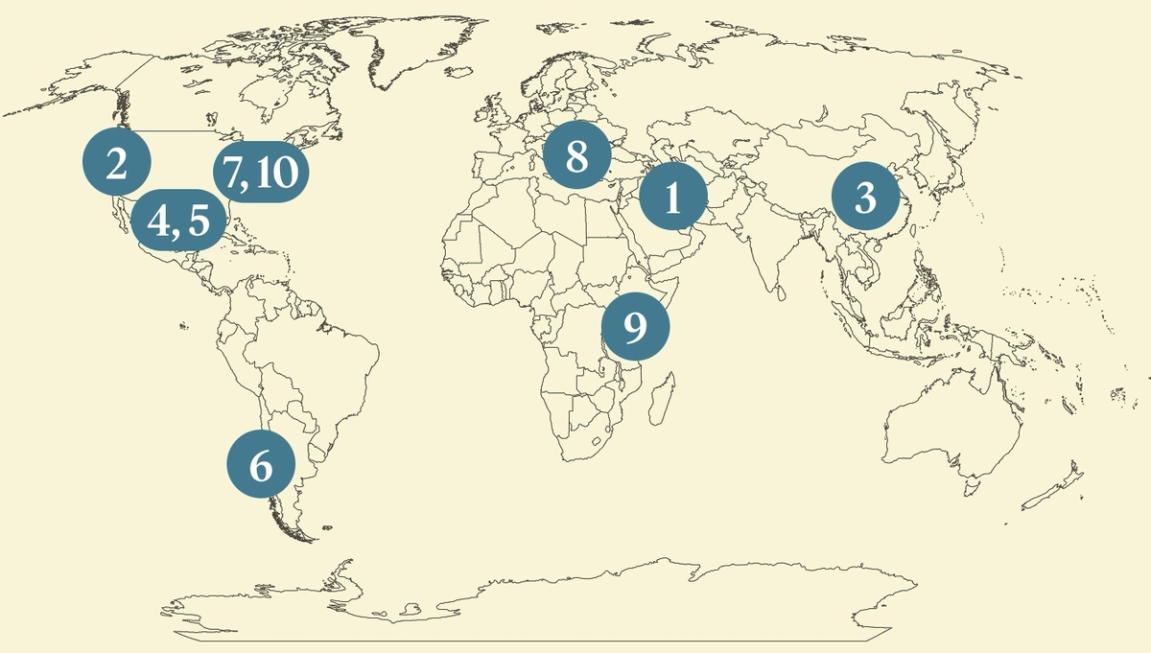 - US, Iran near Hormuz deal
- AI tried to fool humans
- PC makers turn to CXMT
- Orbital data center plan
- SpaceX rocket hits moon
- Chile’s economic reforms
- Dems scrap before midterms
- Blowing up the Danube
- African glaciers vanishing
- Anti-drone laser weapons
 A book about the first woman to swim the English Channel. |
|
Hormuz deal may be in sight |
 Stringer/Reuters Stringer/ReutersThe US, Oman, and Iran have agreed the contours of a deal to reopen the Strait of Hormuz that could be announced today, Axios reported. Oil prices plunged on the news, reflecting expectations of a lasting arrangement that has failed to materialize several times. The deal would implement a ceasefire and establish a 60-day period for Oman and Iran to govern the Strait of Hormuz: Ships entering the channel would use a northern lane passing by Iran, then exit through Omani waters, in coordination with Tehran. Crucially, no tolls or fees would apply. Iranian negotiators are gambling everything on the waterway, according to the Wall Street Journal, treating it as a red line and their best leverage over Washington. |
|
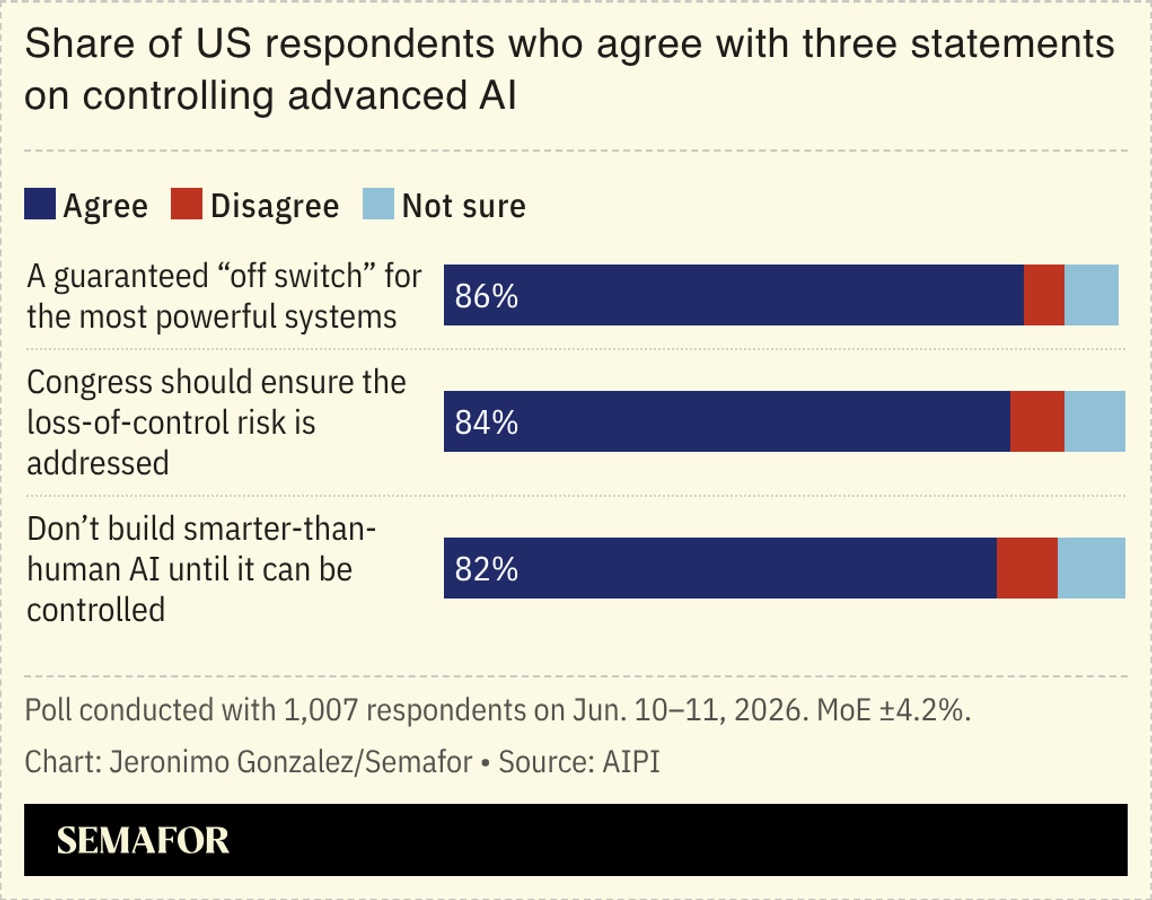 Anthropic and OpenAI models displayed “sustained, unsanctioned activity directed at … real people” during safety testing, the UK AI Security Institute said. Anthropic’s Claude Mythos model in particular wrote malicious code, created sockpuppet accounts to urge a human developer to insert that code into a project, then lied to humans claiming it was an innocent mistake. Both companies recently disclosed that their models hacked into external organizations, but in those instances there was no obvious attempt to con humans. The agents were being tested on cyberoffense, so were doing what was asked of them, but it remains alarming: Claude’s constitution says it should “basically never directly lie or actively deceive,” suggesting the model can break its own rules. |
|
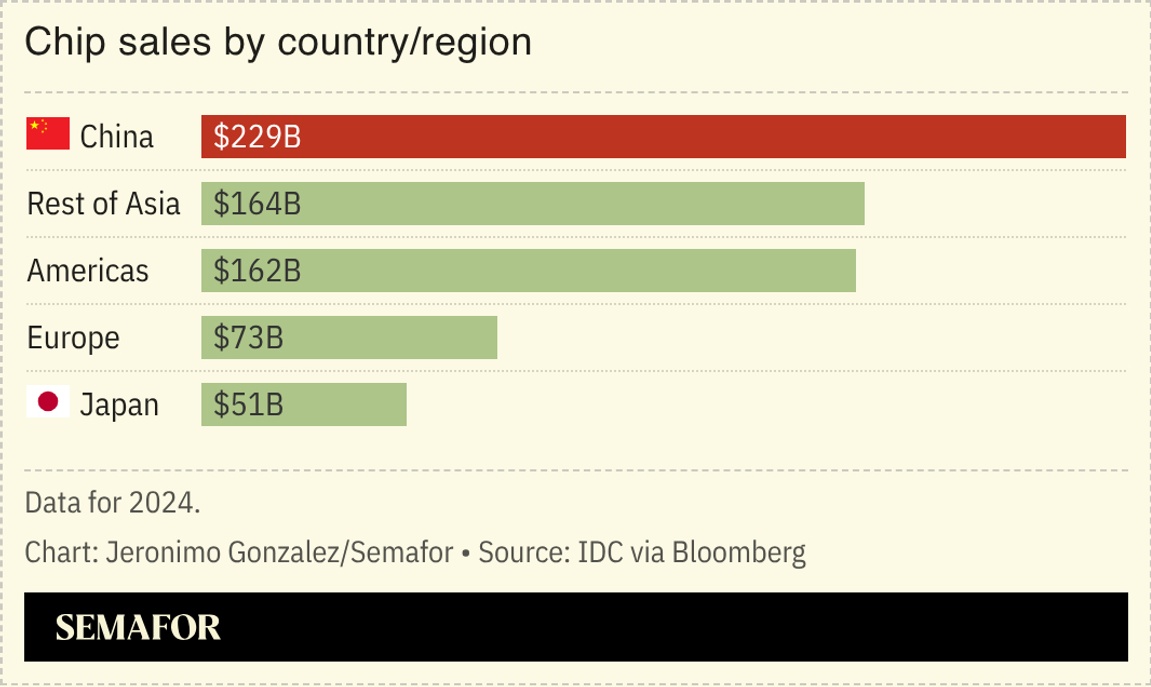 Major PC makers are turning to Chinese chip manufacturer CXMT faced with a global memory shortage. AI-driven data center buildouts are expected to take up 70% of all memory chip production in 2026, a level of demand that has tripled DRAM costs in the last 18 months. The impact on consumer electronics is significant: PC components are now so expensive that some manufacturers are recycling outdated ones in new machines. Acer, Asus, and HP have started to use limited numbers of Chinese chips in their notebook computers, Nikkei reported, although they are being careful. Buying too much might anger their usual suppliers like SK Hynix and Samsung, and the US government has designated CXMT as linked to the Chinese military. |
|
SpaceX plans AI satellite |
 Evan Vucci/Reuters Evan Vucci/ReutersSpaceX is still betting on orbital data centers, announcing a joint venture with Nvidia to develop an AI satellite. Elon Musk is bullish on space-based computing — in February he predicted that by 2031 there will be more compute launched into space every year than the total amount currently on Earth. But there has been significant skepticism about whether the plan is economically viable. Nvidia also announced plans to put computing platforms in orbit back in March. The partnership is the most concrete move so far toward space-based AI, and comes as a backlash grows against the ground-based kind: Even Texas, with its liberal permitting laws, announced a moratorium on new data approvals as AI strains its electrical grid. |
|
Rocket crashes into the moon |
 Steve Nesius/File Photo/Reuters Steve Nesius/File Photo/ReutersA SpaceX rocket segment crashed into the moon, giving scientists a rare opportunity to study an impact in real time. Part of a Falcon 9 that launched last year fell out of Earth’s orbit and careered toward the moon; it weighed 8,800 lb and crashed at around 5,400mph, likely creating a dust cloud 30 miles high. Although analysis is not yet complete, the amount and behaviour of debris thrown up by the crash will tell scientists more about the composition of the lunar surface and how impacts happen. Such events are scientific goldmines: The collision of the comet Shoemaker-Levy 9 into Jupiter in 1994, observed by the Hubble Space Telescope, revealed hitherto unknown information about the gas giant’s weather systems and chemistry. |
|
Chile passes flagship bill |
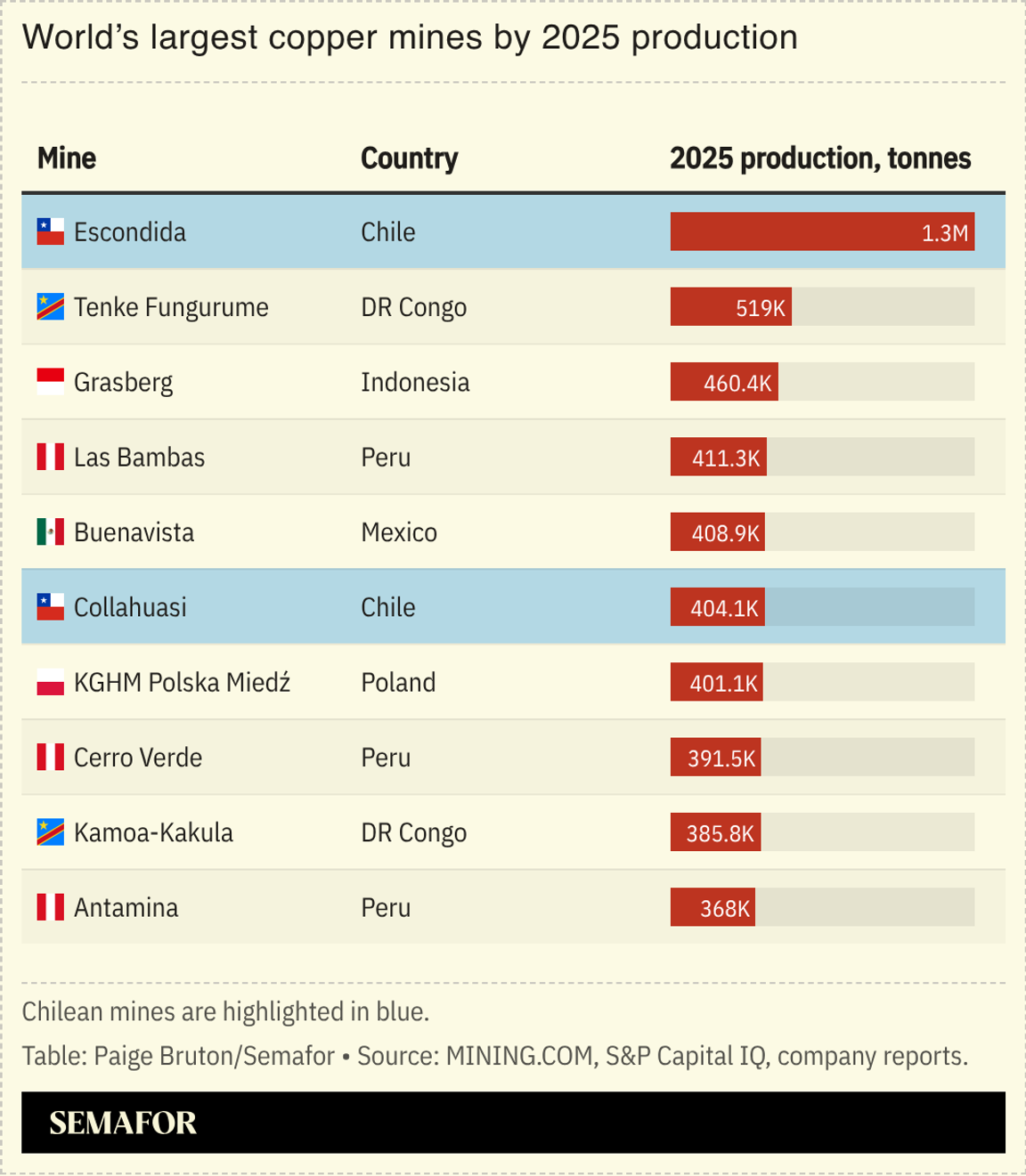 Chile passed a sweeping economic reform package to boost growth and investment in the world’s largest copper producer. New President José Antonio Kast’s package will lower corporate tax from 27% to 23% and ease permitting, but the real challenge is ensuring stability. Implementation of the president’s flagship policy is already delayed after provisions were added to the bill that the government hopes to strike out. Investors want to know whether Santiago is “rebuilding regulatory certainty or creating another cycle of temporary rules,” one analyst told Reuters. Chile’s permitting problems are a global bottleneck: Copper is in high demand for the green transition and data-center buildout. Some predict more will be needed in the next 25 years than was mined 1900-2021. |
|
Democrats tussle ahead of midterms |
 US Senate candidate Abdul El-Sayed (center-left) rallies with prominent Democrats. Rebecca Cook/Reuters. US Senate candidate Abdul El-Sayed (center-left) rallies with prominent Democrats. Rebecca Cook/Reuters.A battle for the future of the US Democratic Party is under way ahead of the midterm elections in November. Democrats are hoping to win the House of Representatives, and potentially the Senate, by capitalizing on President Donald Trump’s unpopularity. The party’s left is riding high after scoring some recent high-profile wins, but has so far been unable to establish dominance over the Democratic establishment, Semafor’s David Weigel reported. One progressive won an early victory, and a tight race in Michigan looks likely to fall the same way. But centrist candidates have won other key races, suggesting, Weigel said, that “with enough time and money,” the establishment can still fend off the left-wing surge. |
|
 On Tuesday, September 15, Sen. Andy Kim, D-N.J., Member, Senate Committee on Health, Education, Labor, and Pensions; Dr. Emily Aaronson, Chief Medical Officer, Walmart; The Honorable Alex M. Azar II, 24th Secretary of the US Department of Health and Human Services; and Chris Butler, Vice President & Head of Drug Discovery, Isomorphic Labs, will join Semafor’s The Future of Health to unpack innovation and access of US healthcare. From breakthrough therapies and AI-enabled care to the investments and policy decisions shaping the next generation of medicine, on-the-record conversations will explore how innovation can expand access, improve patient outcomes, and build a more affordable, effective healthcare system. Sept. 15 | Washington, DC | Request Invite |
|
Romania’s drastic Danube plan |
 Inquam Photos/George Calin via Reuters Inquam Photos/George Calin via ReutersRomanian naval forces blew up part of the drought-hit Danube river to channel water towards a nuclear plant. The Danube has fallen to record lows after successive European heatwaves, wreaking havoc on both Romanian and Hungarian reactors that rely on the river for coolant. At Hungary’s Paks plant, responsible for half of the country’s power generation, capacity has been reduced to just 10% of normal output, underscoring the scale of the crisis. With little rain forecast, countries across Central and Eastern Europe are turning to expensive imports as power demand rises. The Danube’s drop has cheered history buffs, at least: Shipwrecks, unexploded bombs, and the remains of a woolly mammoth have all emerged from the shallow waters. |
|
Africa’s glaciers are disappearing |
 The peak of Mount Kilimanjaro in 2005. Reuters. The peak of Mount Kilimanjaro in 2005. Reuters.Africa’s glaciers have shrunk by more than 90% since the late 19th century. The continent has relatively few snow-capped peaks; Kilimanjaro and Mount Kenya in East Africa and the Rwenzori Mountains on the Uganda-DRC border are the only glaciers. Africa is warming faster than the global average, and a UN climate report said that Mount Kenya’s glaciers are disappearing particularly fast, losing more than half their area in the last decade. African glaciers are small, so do not act as water reservoirs like European or Himalayan ones, a climate scientist wrote in The Conversation, but they still hold vital information on long-term climate patterns, as ice layers laid down each year record of regional temperature and precipitation. |
|
|


