|
|
 
| |
 |
| (NurPhoto/Getty Images) |
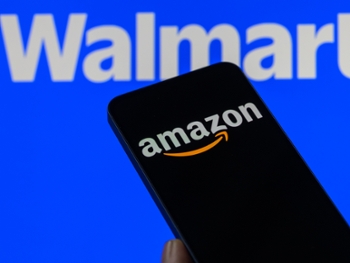
Amazon, Walmart and other retailers are leveraging AI assistants to enhance shopping experiences and drive sales. These AI tools, such as Amazon's Alexa for Shopping and Walmart's Sparky, have been linked to increased order values and conversion rates. For instance, Walmart reports a 35% higher average order value for Sparky users, while Amazon sees a 48% increase in conversion and a 21% rise in spending from sponsored prompts. However, the widespread adoption of these assistants remains uncertain, with early success attributed to tech-savvy consumers.
|
|
|
|
|
Choosing the right scheduling software isn't just about features. It's about fit. This buyer's guide walks through what retail organizations across grocery, auto, apparel, and more should evaluate before investing in employee scheduling software. Get the guide » |
|
|
|
|
|

| |
 |
| (Kevin Carter/Getty Images) |
Target is enhancing its focus on AI by appointing Chandhu Nair, an executive who oversaw Lowe's AI innovation, as its first chief AI officer. This move is part of Target's strategy to rebound from sluggish performance, with a $6 billion investment aimed at leveraging AI for trend forecasting and improving customer experience. The retailer's initiatives, including the Target Trend Brain and collaborations with OpenAI and Google, mirror similar efforts by Walmart to integrate AI into retail operations.
|
|
| |
 |
| (SOPA Images/Getty Images) |
Japan-based Rakuten Group has returned to profitability for the first time in six years, achieving $49 million in profit for the June quarter, driven by significant growth in its ecommerce and fintech divisions. The online shopping mall operator's AI services have boosted user spending, contributing to this turnaround. Despite past challenges from entering Japan's saturated wireless market, which led to losses and debt, Rakuten is addressing its financial obligations through bond sales and asset liquidation.
|
|
|
Instacart reported a 14% year-over-year revenue increase to more than $1 billion in the second quarter, driven by a 9% rise in orders and strategic partnerships. The grocery technology company secured AI Solutions partnerships with grocers like Harmons, Stew Leonard's, The Save Mart Companies and Woodman's. "Our AI assistant doesn't simply recommend recipes or generic product pairings," said Instacart CEO Chris Rogers, adding, "It understands a customer's preferences, recent purchase history, what's actually available at nearby stores, and current promotions."
|
|
|
|
Amazon's fulfillment facility in Kent, Wash., utilizes advanced automation and robotics to handle over 1 million parcels daily. The center combines the efforts of 3,500 associates with technology-enhanced workstations and Hercules robots to efficiently stow, pick and pack items. The process begins with parcels arriving by truck, which are then moved to inventory pods via conveyor belts. These pods are transported by robots to semi-automated workstations where employees pick items for orders, and finally, packaged items are sent to the ship dock area for delivery.
|
|
|
|
A survey by Incogni reveals that 48% of US adults are less certain about online content's authenticity due to AI slop, and 27% want to spend less time online because of it. Emplifi reports that 85% of consumers in the US and UK are willing to pay more for authentic brands. Amazon's recent policy requiring third-party sellers to disclose AI use aligns with consumer expectations of transparency and authenticity.
|
|
|
|
Meta CEO Mark Zuckerberg has proposed a vision for "personal superintelligence," in which people use AI agents to make decisions and take action. This concept suggests a shift in customer experience, with personal AI agents acting as intermediaries between customers and brands, requiring brands to provide clear and accessible information for AI systems relating to services, product details, pricing, policies and availability. While the initiative aims to empower individuals by decentralizing AI capabilities, critics express concerns about increased platform dependence and privacy issues.
|
|
|
Retail sales increased in July for the 10th consecutive month, according to the CNBC/NRF Retail Monitor powered by Affinity Solutions. Total retail sales, excluding auto dealers and gas stations, rose 0.32% from June and 5.15% year over year, while core retail sales increased 0.3% monthly and 4.72% annually. NRF President and CEO Matthew Shay attributed the growth to low unemployment, steady wage gains and strong consumer response to midsummer promotions and early back-to-school sales. Get more data. |
|
According to NRF's 2026 back-to-class insights, electronics continue to be the most important spending category for students and families, reflecting the growing role of technology in education. Consumers are prioritizing laptops, desktop computers, tablets and related accessories as essential tools for learning, driving higher overall back-to-school and back-to-college spending. Explore more. |
|
|
 |
|
| |
| I hope you'll remember that there's always another way of seeing things: that's the beginning of wisdom. |
John Barth,
writer |
|
| |
 |
|
|
| | |


.png)