What matters in U.S. and global markets today

Start the day with Reuters on the stories moving U.S. and global markets. Subscribe for $1/week.


Morning Bid U.S.

Morning Bid U.S.

A Reuters Open Interest newsletter

What matters in U.S. and global markets today


By Mike Dolan, Editor-at-Large, Finance & Markets

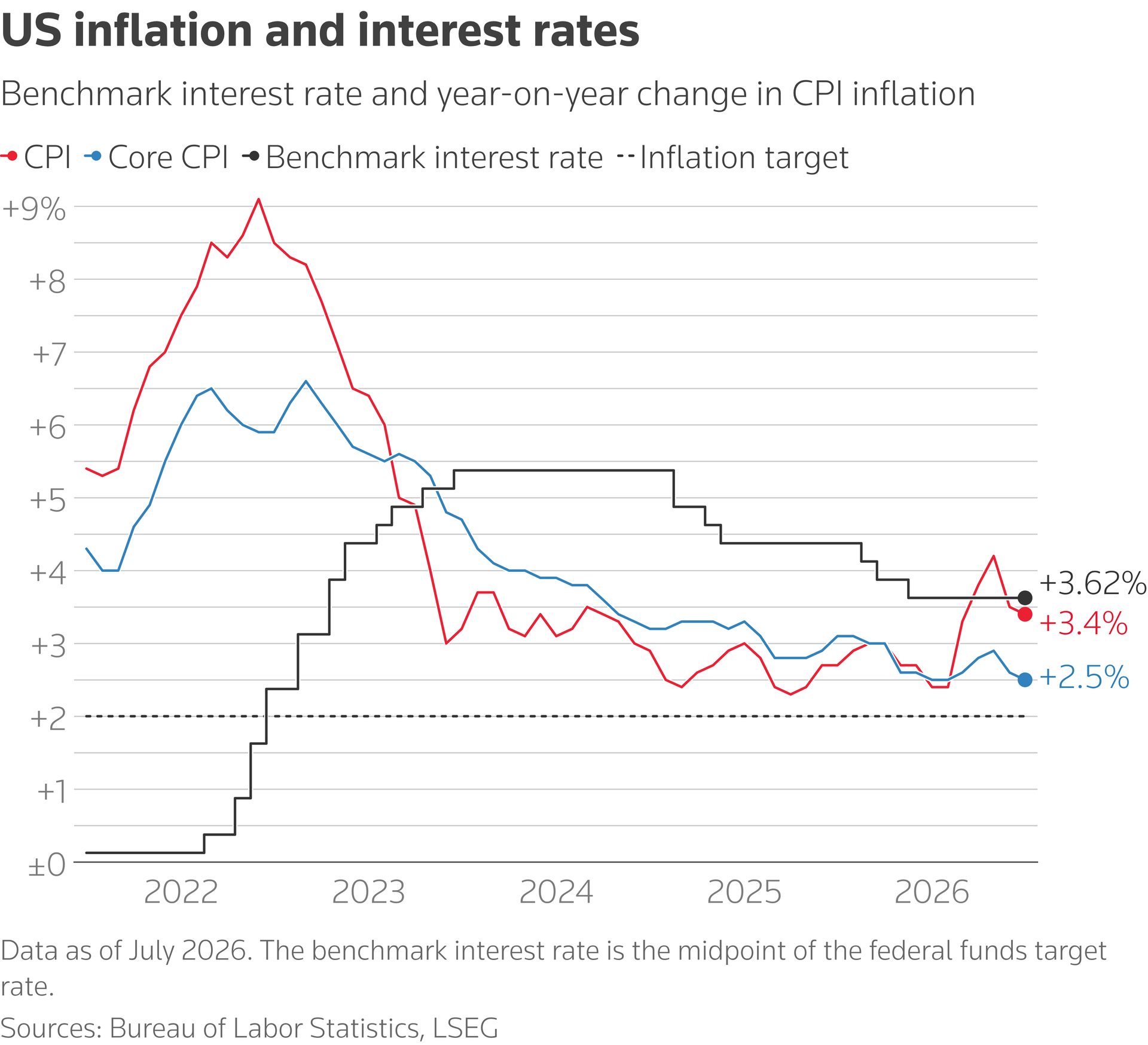
There were no fireworks in the July consumer inflation report, offering marginal relief to markets wary of an upside surprise.

Annual headline and core rates ticked down as expected, although the monthly core price gain was a touch hotter than forecast.

I'll get into that and more below.

But first, check out my latest column, probing AI's impacts on inflation and jobs so far.

And listen to the latest episode of the Morning Bid daily podcast. Subscribe to hear Reuters journalists discuss the biggest news in markets and finance seven days a week.


Data refreshes every time you open this email. For more U.S. market news, click here. Please send any feedback to morningbid@thomsonreuters.com.


Today's Market Minute

  • Iran and the U.S. remain at loggerheads over efforts to agree a permanent end to the war in the Gulf, according to a senior Iranian source, who ‌said there had been no progress in talks to revive the interim deal agreed in June.
  • Britain's economy unexpectedly grew in June as companies benefited from the World Cup, hot weather, and a respite from the energy price surge caused ‌by the Iran war, official data showed on Thursday.
  • Cisco Systems forecast fiscal 2027 revenue above Wall Street expectations on Wednesday, signaling confidence that strong demand for its AI networking gear will continue to power growth.
  • Just how much oil is leaving the Strait of Hormuz? ROI Asia Commodities Columnist Clyde Russell takes a closer look.
  • Even as investors hedge against the risk of U.S. hyperscalers defaulting on their mushrooming debt, the chances of a "credit event" remain remote, argues ROI Markets Columnist Jamie McGeever.
 

Brief relief

Interest rate markets exhaled a bit after the CPI print, knocking the chances of a Federal Reserve rate hike next month just below 50%.

Short-term Treasuries took some solace too, although that didn't prevent the government having to sell 10-year debt at the highest yield in almost 20 years in yesterday's auction. The yield curve from two to 30 years steepened slightly.

A game changer? Hardly. That's partly because the next instalment of the overall inflation picture is due today, with the producer price report containing important components of the Fed's favored PCE gauge, such as airfares.

And both core and headline PCE inflation are expected to have remained above 3% in July. What's more, the rebound in oil prices since July could aggravate August inflation readings, and the Fed will have that month's CPI report in hand before it meets in September.

On the energy front, Brent crude was still hovering under $90 per barrel on Thursday amid the ongoing impasse in the Gulf, albeit a tad down from the week's peaks.

Elsewhere, Japan's wholesale inflation picture looked angry too, with annual rates still running above 7% in July amid big energy price gains. Monthly rates were softer than expected, though, and the jury is out on how the data could impact the Bank of Japan's decision making.

Otherwise, world markets have slipped into the August doldrums, with major stock indexes little changed and Wall Street still near records after Wednesday's earnings-day surges in AI-related firms CoreWeave and Super Micro.

With that, onto today's column.


AI creeps onto Fed radar, but footprint is small so far

AI is storming through markets, construction and corporate planning. But its imprint on the inflation and jobs data the Federal Reserve watches most closely remains too small and contradictory to move the policy dial - at least for now.

For most financial markets, it's hard to ignore the AI boom. Chip stocks around the world have surged and swung wildly this year. Tech earnings growth has exploded, while so-called AI hyperscalers have embarked on a corporate borrowing spree and marshalled hundreds of billions of dollars in ‌financing for the buildout.


Graphics are produced by Reuters.

Read the full column