Hello!
With an ongoing heatwave, drought and rising water bills, today’s focus simply had to be one that is closer to home – Britain.
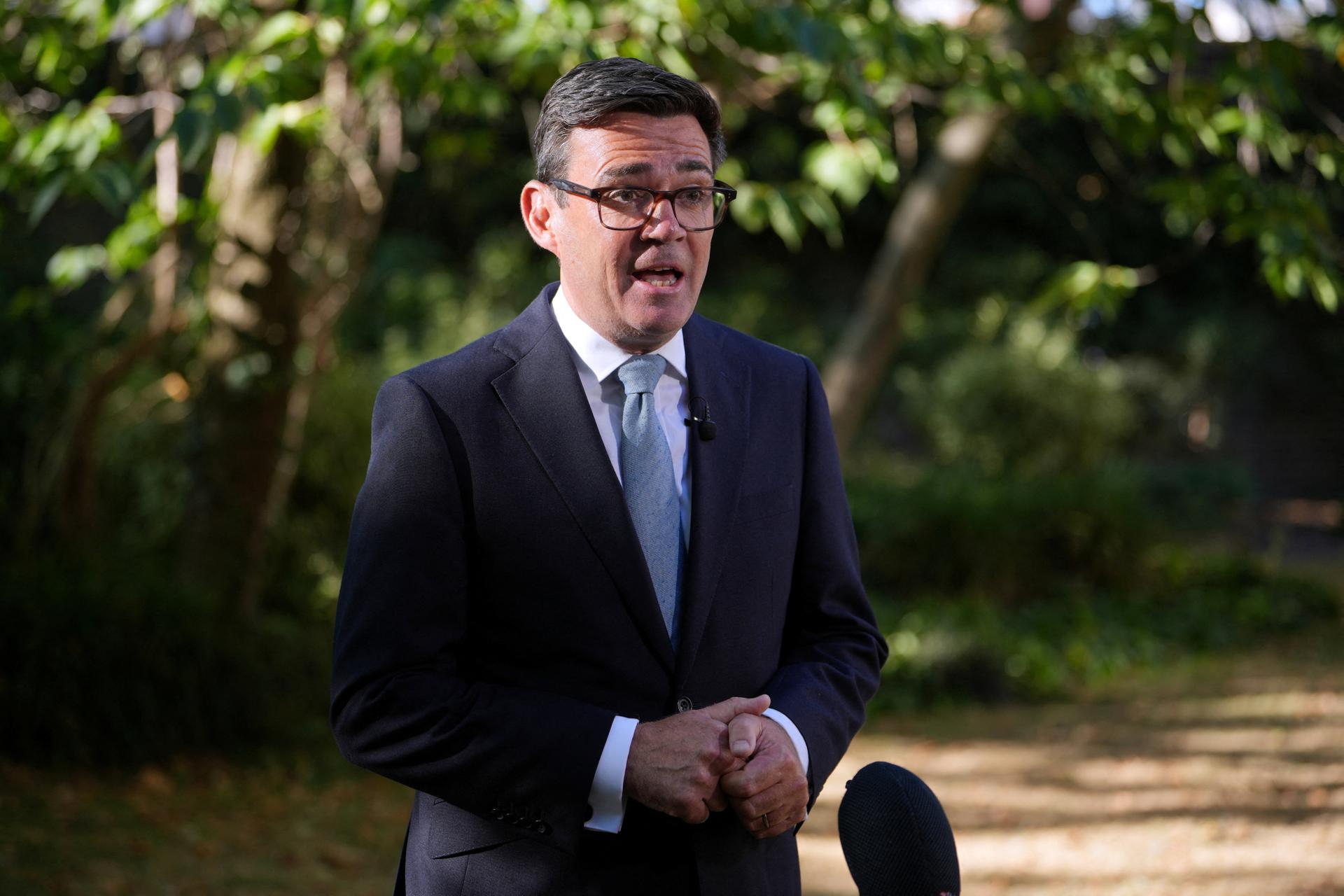
Britain’s Prime Minister Andy Burnham called an emergency meeting to discuss measures to tackle extreme heat, wildfires and drought, his office said, as Britain faces its fifth heatwave this year.
Today’s temperature is currently 36 degrees Celsius (96 degrees Fahrenheit) in London, which is 15.4 C above the historical norm, according to the Reuters Climate Monitor.
The nation’s Met Office has issued an amber extreme heat warning for much of England, covering parts of the south and east, as well as swathes of the Midlands. For me, it means staying home, closing the blinds and popping the fans on their maximum settings as there’s no air conditioning. But what about everyone else? Also on my radar today: |
|
|
Britain's Prime Minister Andy Burnham after chairing a meeting at Downing Street on the UK's ongoing response to extreme heat in London, Britain. Kin Cheung/Pool via REUTERS |
Hosepipe bans and rising bills |
An estimated 865 million people, 11% of the global population, are forecast to experience a high temperature 5 C or more above the historic norm today, as shown by the Reuters Climate Monitor.
An estimated 2,877 people in Britain have died from heat-related causes this year, UK health authorities said last month.
Almost three-quarters of England is now in drought as conditions worsen following a dry start to August, according to the Environment Agency and Department for Environment, Food & Rural Affairs.
The National Drought Group has warned all regions of the country are experiencing pressure on their water resources - with increasing impacts across agriculture, public supplies, navigation, and the environment.
This looks like hosepipe bans, lowering water use, livestock farmers beginning to feed winter forage stocks earlier than normal due to poor grass growth, or the Environment Agency carrying out dozens of fish rescues due to dried up waterways.
It also looks like many residents across the country will be receiving yet another set of rising water bills after regulator Ofwat gave the green light to five British water companies that will be allowed to raise customer bills to spend it on infrastructure and environmental measures.
For context, Thames Water, one of the companies allowed to raise its bills, is already embroiled in multiple scandals from its financial woes to sewage spills in rivers. Burnham has flirted with the idea of nationalisation as a potential solution for Thames Water. |
|
|
|
Making better use of our water |
I also wondered what people in the water industry and environmental activists thought about Britain’s heatwave and drought.
“Britain is boiling. Nurses are fainting on the job, firefighters are stretched to their limits, and other essential workers like paramedics and bus drivers are being forced to work in dangerously hot conditions,” said Angharad Hopkinson, political campaigner at Greenpeace UK.
Tuija Pohjolainen-Hiltunen, executive vice president of chemical manufacturer Kemira's Water Solutions business, said that the UK can make far better use of the water it already has by combining new supply, water reuse, infrastructure investment and smarter industrial water management.
“As droughts become more common, the answer cannot simply be asking people to use less water. Restrictions can ease pressure in the short term, but they are no substitute for building a more resilient water system,” she added. Global environmental group Friends of the Earth’s head of policy, Mike Childs, said that we need to tackle the cause, not just the consequences of the drought and heatwave. “The government must do more to cut the pollution driving climate change by accelerating the shift to clean energy and ruling out new oil and gas developments like Rosebank and Jackdaw, and a third runway at Heathrow,” said Childs. Keep scrolling for more insight on our food and agriculture as temperatures rise in today’s ‘In Conversation’. |
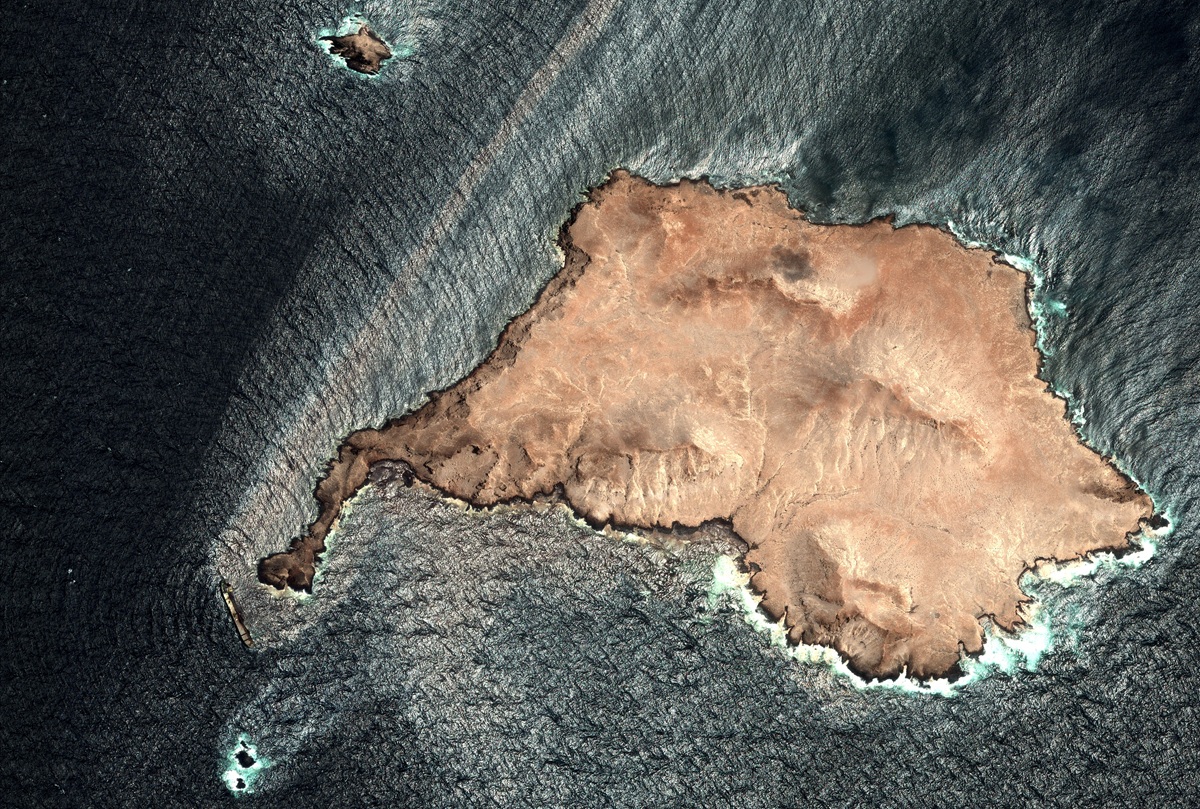
Satellite image shows the damaged vessel Caroline Bezengi and an oil slick off Oman. Pléiades © CNES 2026, Distribution Airbus DS/Handout via REUTERS |
-
Gulf oil spill: Leaking crude oil from a tanker grounded off a nature reserve in Oman has created a slick covering almost 2,000 square kilometres, said John Amos, an oil spill specialist who reviewed satellite imagery obtained by Reuters. The oil spill in the Gulf is quickly becoming one of the world’s worst in years after being allowed to spread almost unchecked for weeks, according to international agencies, satellite imagery and environmental groups. Click here for the latest on the oil spill.
-
China’s Typhoon Dolphin: Before making landfall over the weekend, Typhoon Dolphin, the strongest storm to hit China this year, packed an unusually resilient storm system that travelled nearly 6,000 km (3,700 miles) drenching the country's eastern coast and bringing with it a sprawling cloud field. The National Meteorological Center renewed an orange alert for heavy rain on Tuesday, the second-highest warning level.
-
China weather tracking tech: Chinese-developed systems, including Shanghai AI Laboratory-developed Fengwu, Huawei's Pangu and Fudan University's Fuxi, are among a handful of AI forecasting models that researchers say can generate forecasts much faster than conventional systems while matching or surpassing them on some measures of accuracy. Click here to find out more about China’s latest weather forecasting tech.
-
India’s low monsoon: India has received 12% less rainfall than average so far this monsoon season, which began on June 1, with some states, including southern Andhra Pradesh, recording deficits of as much as 34%, two senior weather officials said. The rainfall deficit is likely to widen by the end of the month as a strengthening El Nino is expected to reduce rainfall in the coming weeks, said another weather department official.
-
Colombia earthquake: Colombia's President Abelardo De La Espriella announced an economic emergency in the country to address damages caused by Monday’s earthquake which killed 265 and left nearly 500 people unaccounted for, but did not clarify what measures that would entail.
|
|
|
|
Lena Thiede, general partner and co-founder at early-stage investment fund Planet A, shares her thoughts on agriculture and food security: “Heatwaves, the Strait of Hormuz, El Niño, Ukraine and Covid are not unrelated one-off shocks: they are symptomatic of a new system of volatility.
“They have shown that our food system depends on a handful of climate-exposed, complex and vulnerable supply chains. The UK, for example, imports about half of its food, depending heavily on foreign trading partners, just as its wheat and barley yields plummet.
“Modern agricultural production and land degradation are trapped in a vicious cycle. Agriculture drives a third of all anthropogenic greenhouse gas emissions, 60-80% of global biodiversity loss from deforestation and habitat destruction, and consumes 70% of the world’s freshwater resources.
“To fix this, we must recognize nature as the asset underwriting every harvest, bringing it onto balance sheets. Opportunities now sit in the crisis: ingenious and exciting technological solutions in precision agriculture, alternative proteins, biological inputs, supply-chain intelligence and novel farming.” |
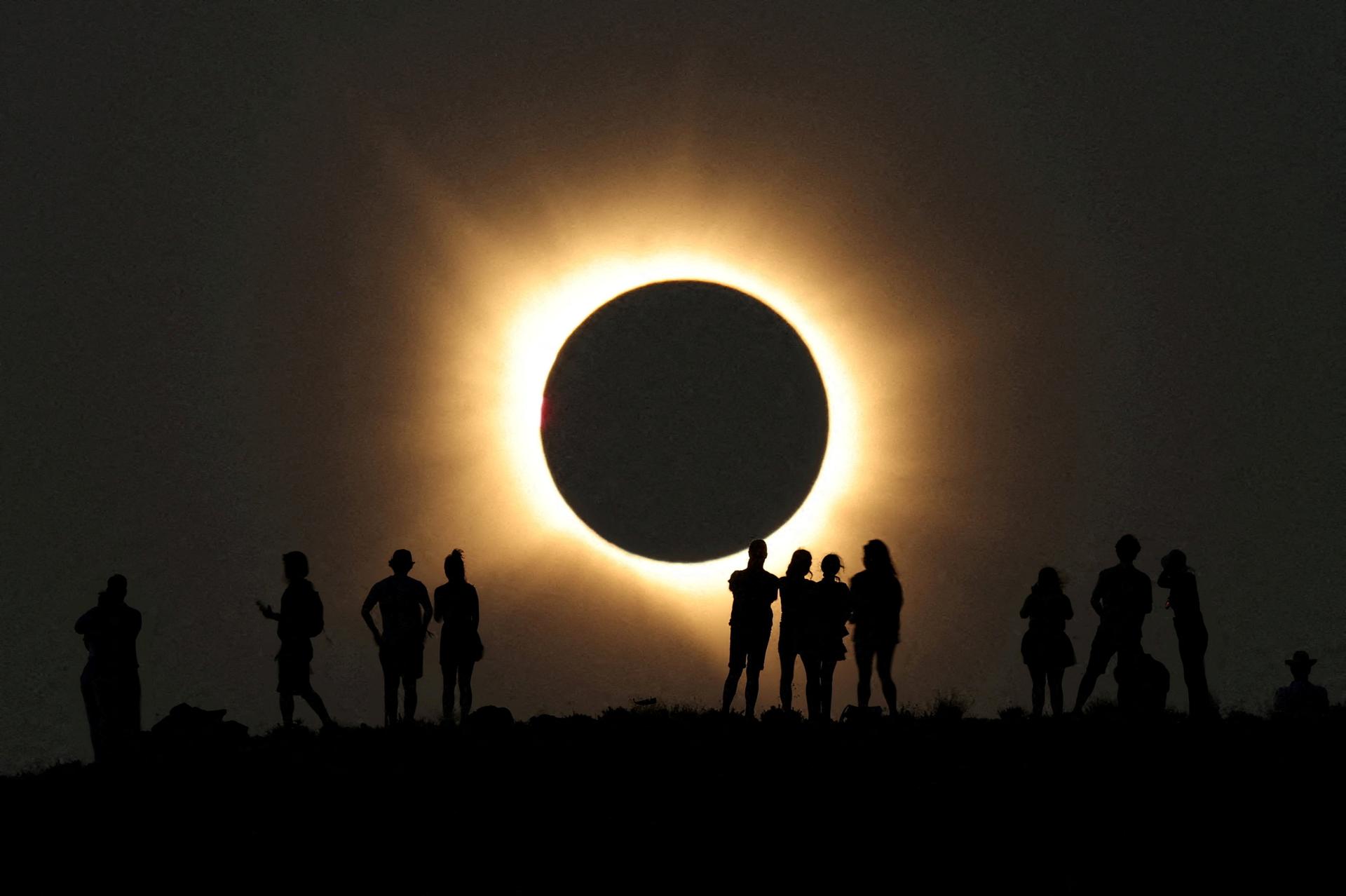
The moon completely covers the sun |
|
|
|
|