Hello Power Up readers,
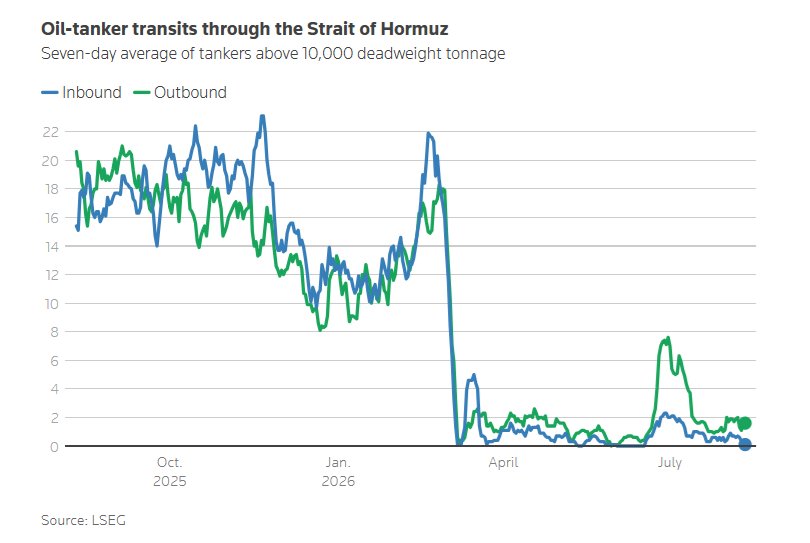
The situation around the Strait of Hormuz may be entering a new phase after Iran and the U.S. both made competing claims over who controls the vital waterway within hours of each other.
One day after U.S. President Donald Trump declared that the United States had "total control" of the Strait, the new head of Iran's Basij Paramilitary unit announced that the Strait is "under the management and control of the Islamic Republic."
So what should we expect next? More threats of escalated attacks? More promises of imminent peace talks? Probably a bit of both.
In addition to the impasse in the Gulf, oil markets are still digesting a double whammy of key recent oil market releases: a downbeat assessment of the state of demand by OPEC - which lowered its oil demand growth forecast for the fourth straight month - and projections for a deepening oil supply shortfall from the International Energy Agency.
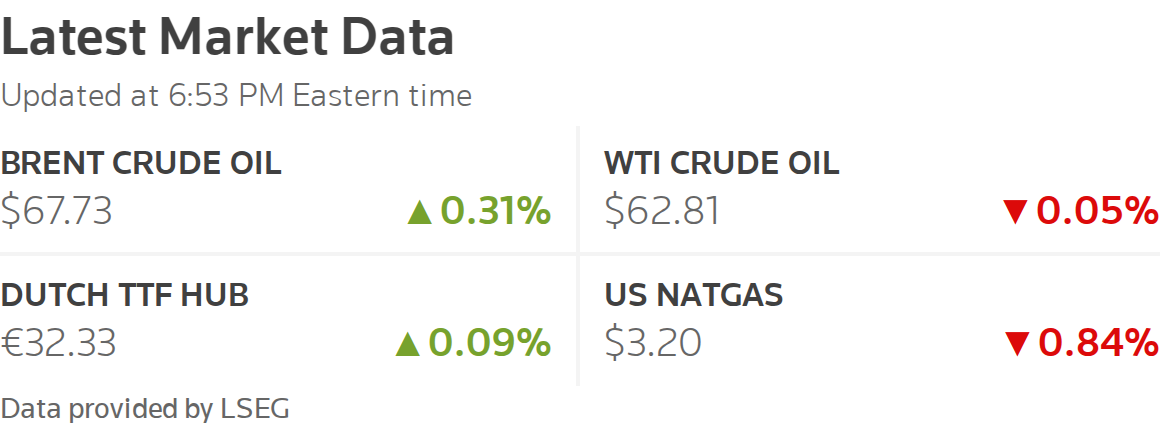
Oil prices are still trying to decide what to make of it all, and are trading around 2% to 3% lower so far on Thursday.
Natural gas prices have taken on a more bullish posture, pressing higher in Europe on the assumption that a durable peace deal is still a way off. European gas market sentiment is also being underpinned by another heatwave, which is curbing regional nuclear power output, and by below-average natural gas inventories.
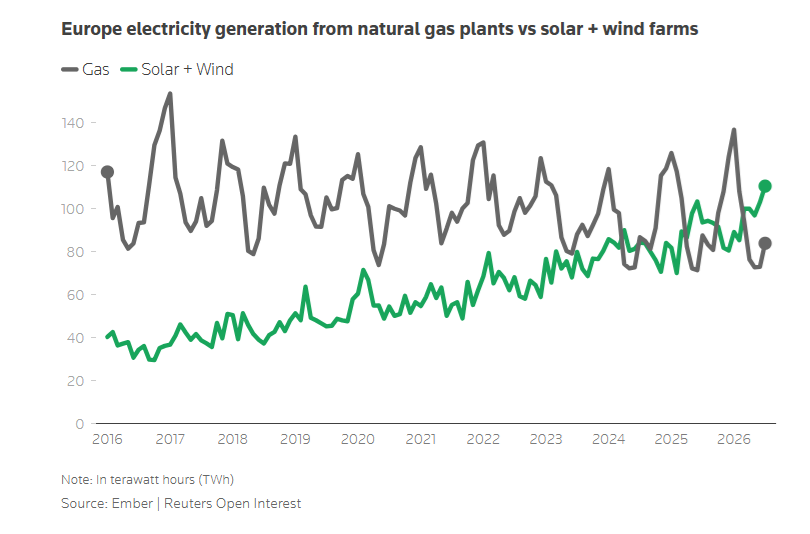
But given the combination of rapid supply growth of renewables and reduced use of gas by power producers, does Europe need as much gas on hand as it used to? I dig into that question more deeply below.
Up first, though, some other key articles and columns to check out: