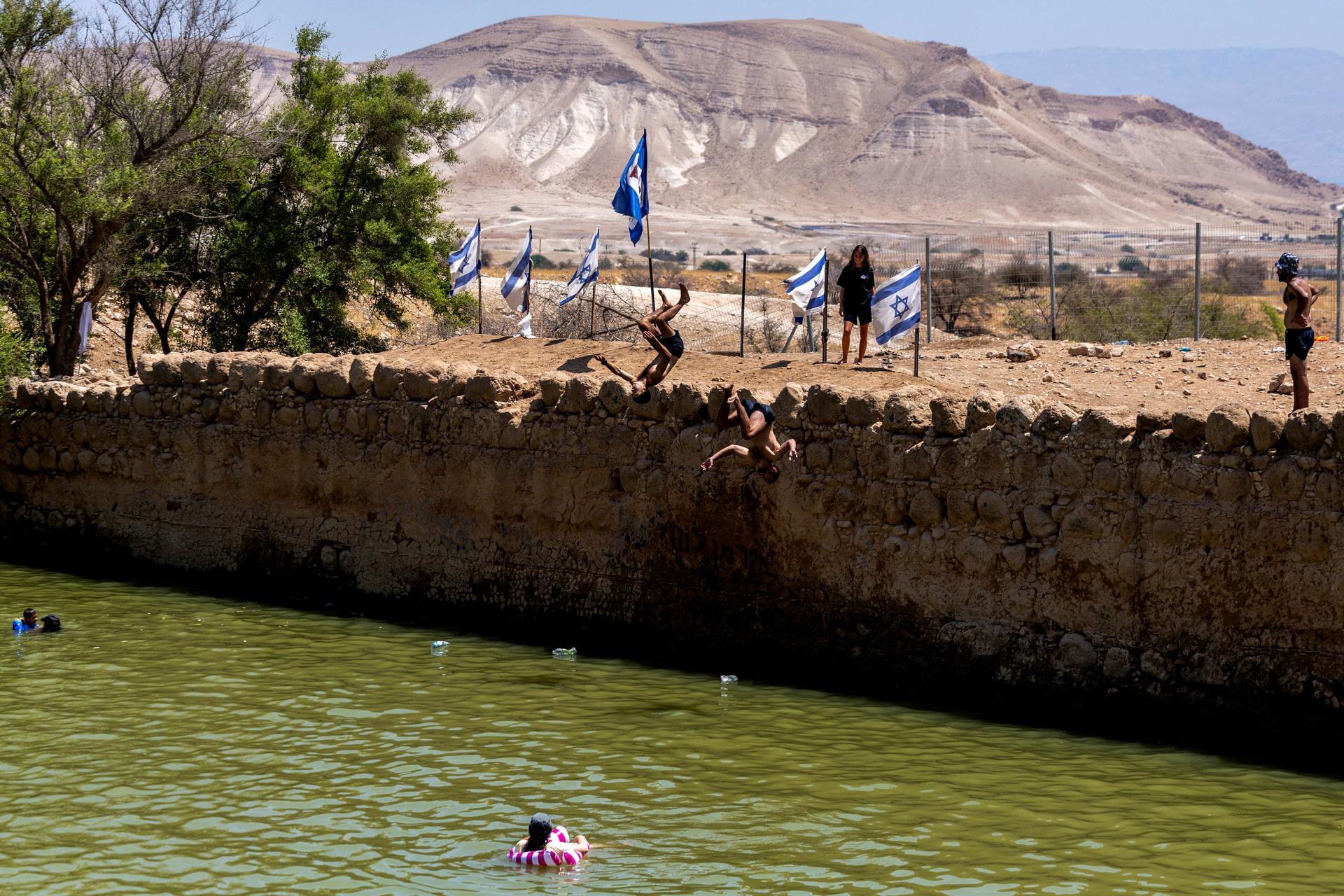
And Israeli settlers divert Palestinian water to fill a pool.

See how companies and governments are responding to climate change and social challenges. Subscribe to Reuters.com for $1/week.


Sustainable Switch

Sustainable Switch

Climate Focus

By Sharon Kimathi, Energy and ESG Editor, Reuters Digital

Hello!

Wildfires hit parts of Croatia, Germany, France and Greece this week, prompting evacuations and injuries in tourist towns at the peak of the holiday season.

Hot weather and drought that scientists link to climate change have created ideal conditions for wildfires across Europe, especially in France, Spain and Greece. The Balkans have also endured several heatwaves.

A wildfire in Croatia descended on the tourist town of Omis overnight, engulfing houses, forcing about 1,000 people to evacuate to emergency shelters which opened in several towns on the stretch from Omis to Split, fire brigade ‌and health officials said on Friday.

Around 36 people were treated by ambulance services in the city of Split, about 25 km (15.5 miles) to the north, 14 were hospitalized and seven had ⁠life-threatening injuries, health officials said.

Meanwhile, more than 2,000 people evacuated their homes in western Germany on Friday, after a ‌wildfire near the Belgian border spread towards a village, local authorities said.

Additionally, French authorities have evacuated 525 people from the village of Luglon after a wildfire broke out in the southwestern Landes region, not far ‌from an area already devastated by major blazes this summer.

Luglon is about 100 km (62 miles) southeast of the tourist area of Arcachon Bay, where two major wildfires destroyed more than 50,000 hectares (124,000 acres), spurring the evacuation of as many as 220,000 people in late July.

In Greece, hundreds of holidaymakers fled a beach town in the northern region of Halkidiki on Thursday as a wildfire raced towards the shore.

Have you recently been on a holiday and endured extreme temperatures or wildfires? Have you cancelled a trip because of the heat? Let me know via email to sharon.kimathi@thomsonreuters.com or click here to reach me on LinkedIn.


Climate Buzz

1. Israeli settlers divert Palestinian water to fill West Bank pool

A spring water resource which served as a lifeline for the nearby Palestinian village of Fasayil in the fertile Jordan Valley has been seized by Israeli settlers who channeled the water to an ancient pool in an archaeological site in the West Bank. Soon after, settlers advertised it as an Israeli tourist attraction and Israel's far-right finance minister pledged financial support. Click here for the full Reuters story.


Israelis jump into an ancient water reservoir in the Jordan Valley in the Israeli-occupied West Bank. REUTERS/Ronen Zvulun

2. Japan's record rains strand thousands at Narita airport, kill eight

During one of Japan's busiest holiday weeks, more than 360 mm (14 inches) of rain fell in 24 hours in parts of the Chiba area adjoining Tokyo, inundating roads and railways, with soldiers sent to help with rescue efforts. The record rainfall left thousands of travellers at ‌Tokyo's Narita airport stranded on Friday, bringing floods to the surrounding area that disrupted transport, knocked out power to 20,000 homes and killed eight people.

3. Venezuelans brace for more severe power, water cuts as El Niño looms

Venezuela’s interim President Delcy Rodriguez has called on the nation’s residents to conserve power and water less than two months after devastating twin earthquakes left more than 6,000 dead. El Niño was already hitting the OPEC country and could bring drought before year-end. Click here to read more about the water and energy saving measures.

4. Colombia earthquake response enters grim phase as hope for more survivors fades

Just days after a powerful earthquake rocked Colombia’s third-largest city, Cali, crews have turned their attention from a search-and-rescue effort to debris removal at most sites, a sign the disaster response was entering a grimmer phase after the crucial first 72 hours.

5. U.S. storms cut power to 540,000 Midwest homes and businesses

Weather forecaster AccuWeather said in a statement that rounds of severe thunderstorms have been threatening the Plains, Midwest and East with damaging wind gusts and repeated downpours that triggered dangerous flash ⁠flooding. Power supply was cut on Thursday to about 540,000 homes and businesses across the U.S. Midwest as severe storms battered the region, data from ‌PowerOutage.us showed.


What to Watch

 
Play 
 

Click here to watch a video about the Democratic Republic of the Congo’s rising waters in Lake Tanganyika which has forced families out of their homes, such as Faida Mahombi and her neighbours, as the waters continue to encroach on the eastern Congolese city of Uvira, forcing people to adapt to nearly a year of flooding. 


Climate Commentary

  • As the world grapples with rising temperatures and water shortages, Kirsten Schuijt, director-general of WWF International, shares her thoughts with Ethical Corp Magazine on why food systems should be a priority in the upcoming COP 31 climate conference. Click here for the full piece.
  • A new trend is emerging across Europe’s power system. Click here to learn more about whether Europe still needs as much gas as it once did in a piece by Reuters global energy transition columnist Gavin Maguire.
 

Climate Lens


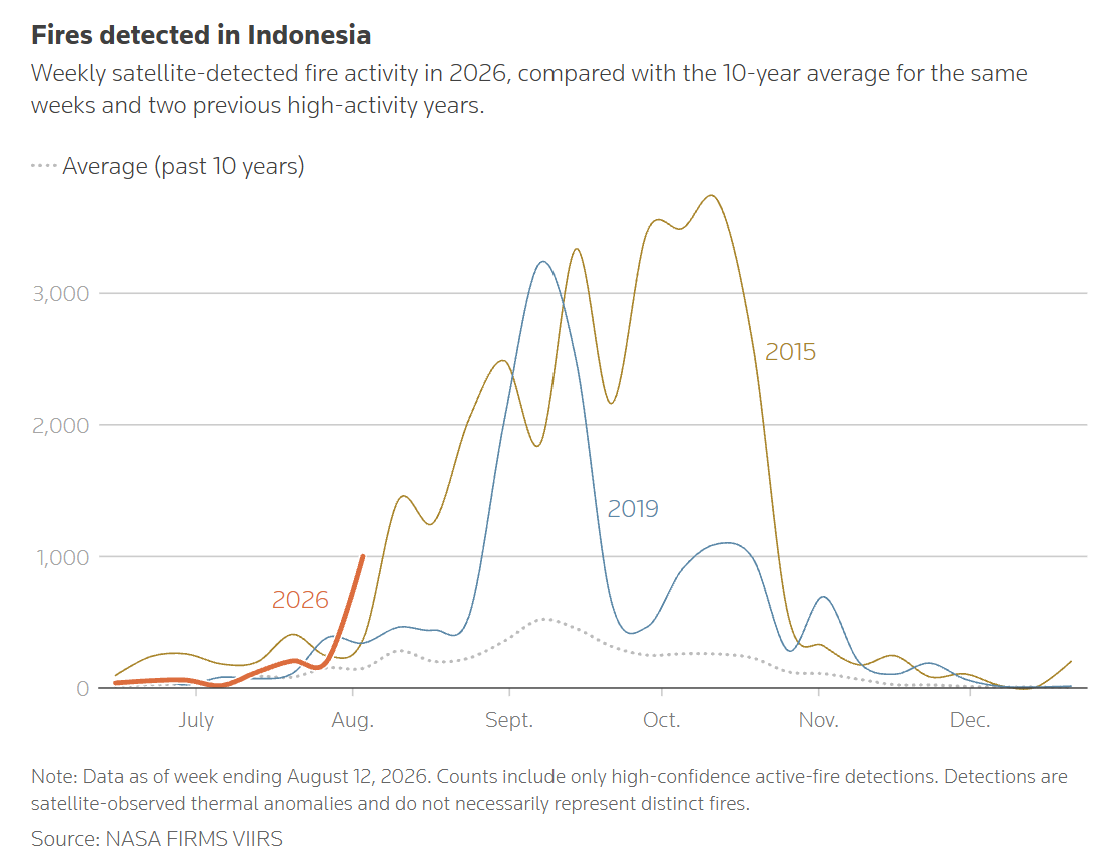
Indonesia is facing a longer and more severe dry season this year as El Nino intensifies, raising the risk of drought, forest fires and air pollution. Forestry Ministry data showed that 107,465 hectares (265,552 acres) of land were hit by fires from January to June, a 110% increase compared with the same period in 2023, when El Nino last affected Indonesia. Click here for the full analysis.