
|


Week Twelve!
Last week was the twelfth week of videos from the 250 to 250 Project that we’re producing to honor the 250th anniversary of the Declaration of Independence.
Our hope was for the videos to emphasize the agency of Americans—mostly everyday Americans—to change the country. Each falls into a category that defines what it means to be an American, including community, democracy, innovation, mobility, civil rights, education, conservation, and creativity. Once again this week, some of our narrators chose their own topics adding wonderful new stories.
Even more, though, it is clear that the narrators themselves represent the innovation, talent, and civic-mindedness we were hoping to celebrate.
You can follow the project at the sites listed below, or under “videos” at my own YouTube page: Heather Cox Richardson. Or just wait until I send out the week’s roundup.
Follow Along | #WeAreAmerica250
Substack | YouTube | Facebook | Instagram | TikTok | Bluesky | Threads
Julia Child, Narrated by Jacques Pépin
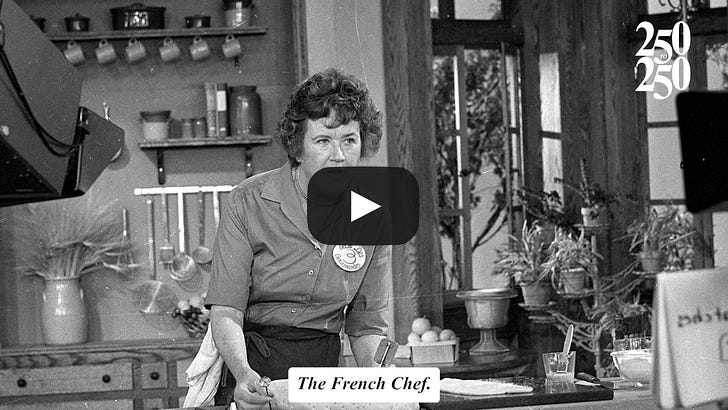
Jacques Pépin is a legendary chef, culinary educator, PBS television host, and author whose work revolutionized American home cooking. He is best known for starring with his dear friend and fellow icon, Julia Child, in the Emmy-winning TV series Julia and Jacques Cooking at Home. In 2016 he and his family created the Jacques Pépin Foundation, which is dedicated to improving lives through culinary education. Here, Pépin celebrates Julia Child’s enthusiasm for making fine cuisine accessible to all.
Stamp Act, Narrated by Joanne Freeman
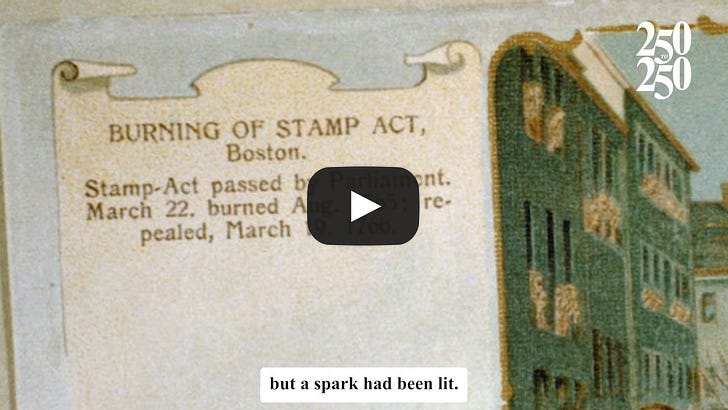
Dr. Joanne B. Freeman is an award-winning historian, who studies the politics and culture of America’s past to better understand our history. She is Professor of History and American Studies at Yale University. Freeman tells the story of the Stamp Act, which ignited the resistance that led to American liberty.
Native American Code Talkers, Narrated by Latham Nez
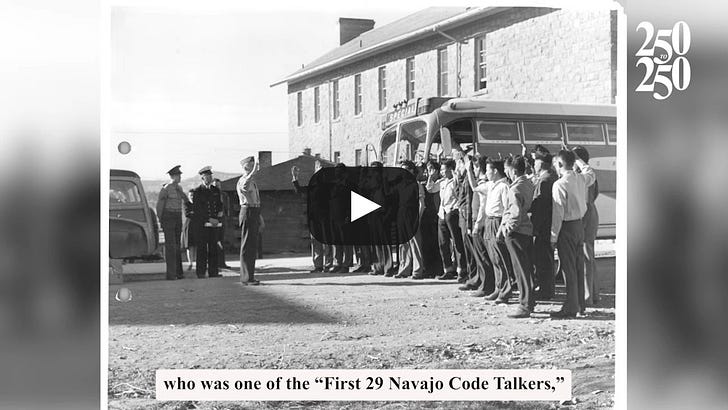
Latham Nez is a contemporary Navajo artist, jewelry creator and cultural advocate from New Mexico and the grandson of the late Chester Nez, the last surviving member of the original 29 Navajo Code Talkers. Nez remembers the Native American Code Talkers, whose Indigenous languages became unbreakable codes that helped win both World Wars.
Hockessin Colored School #107, Narrated by Senator Chris Coons
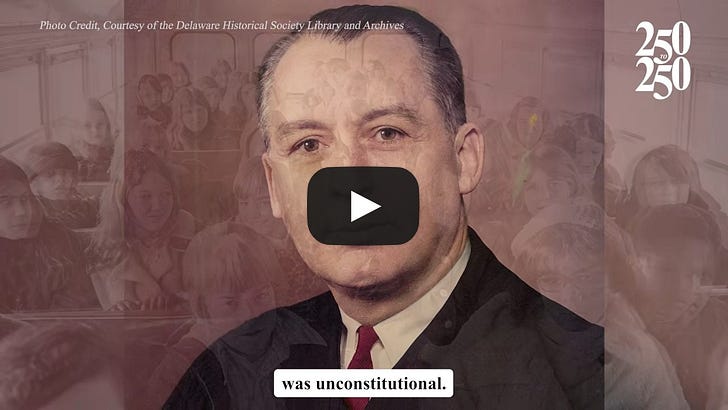
Senator Chris Coons of Delaware is an American lawyer and former Chair of the Senate Ethics Committee, who is recognized for his work in legislature and oversight. Coons tells how Shirley Bulah’s walk to a segregated school led to a Delaware ruling that helped pave the way for Brown v. Board of Education.
Fort Mose, Narrated by Chip Storey
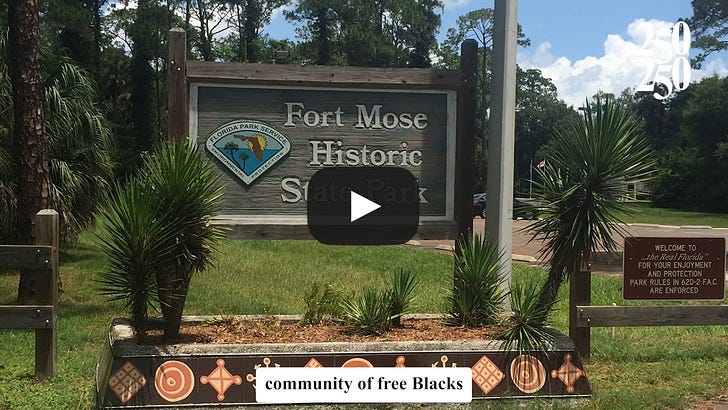
Charles “Chip” Storey is a board member and historian for the Fort Mose Historical Society. The society advocates for public education and historical accuracy on the nation’s first legally sanctioned free Black settlement. Storey tells the story of Fort Mose, the first legally sanctioned free Black community in America, founded by fugitives from slavery in Spanish Florida.
Washington’s Letter to Newport’s Hebrew Congregation, Narrated by Laura Freedman Pedrick
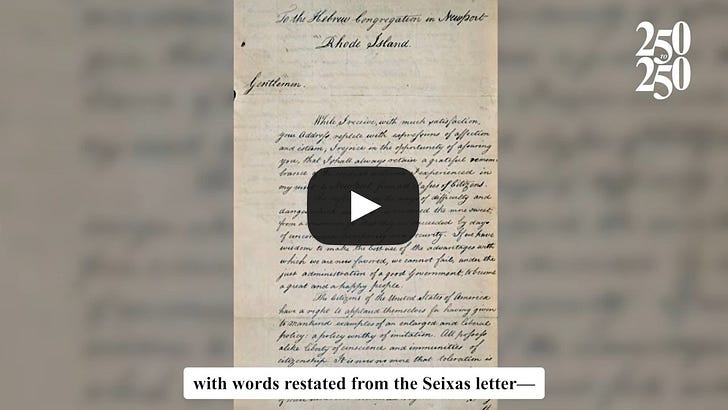
Laura Freedman Pedrick formerly served as a trustee of St. George’s School, and on the Board of Governors at Newport Hospital. She is a current board member of the Newport String Project. As the former chair of TSF Newport, dedicated to Teaching the history of the Separation of church & state and religious Freedom in the United States, Laura now serves as ex-officio on that board in Newport, Rhode Island. Pedrick recounts George Washington’s 1790 letter to Newport’s Hebrew congregation, a founding promise of religious liberty that “gives to bigotry no sanction.”
Morrill Act, Narrated by Josh Cowen
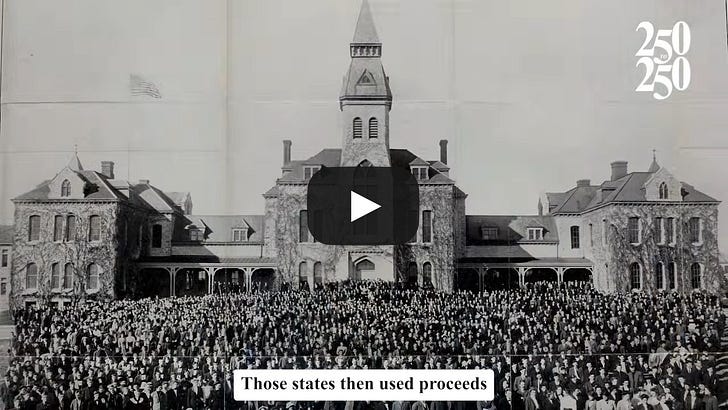
Josh Cowen is a professor of education policy at Michigan State University, where he founded the Education Policy Innovation Collaborative. Cowen focuses on bringing research and evidence to public policy decision-making. Cowen describes the impact of the 1862 Morrill Act, which gave us our state colleges and universities.
Bill Mauldin, Narrated by Garry Trudeau
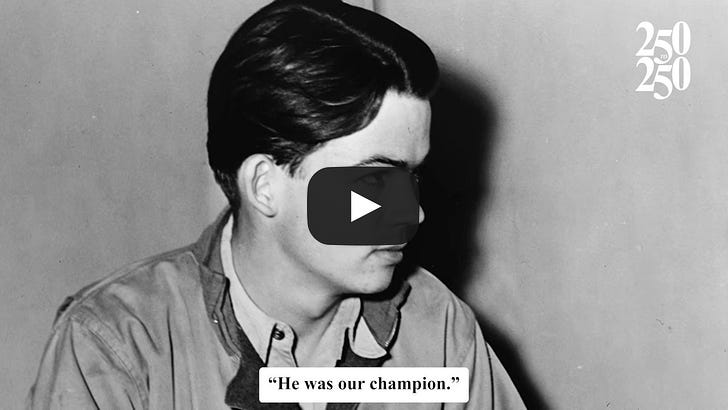
Garry Trudeau is an American cartoonist and satirist best known for bringing sharp, countercultural political and social commentary to the funny pages with his Pulitzer Prize-winning political comic strip Doonesbury. Trudeau profiles World War II cartoonist Bill Mauldin, whose infantrymen Willie and Joe gave weary American soldiers a champion and a laugh when they needed it most.