|
|
|
|
Good morning. We’re start to learn more about Canada’s tentative trade deal with the United States – although many critical details are still being hashed out. |
|
|
|
|
As Canadians obsess over the tariff standoff, Americans have been far more focused on skyrocketing yields in the bond market. Today, Andrew Galbraith helps us break down why everyone should care about what’s happening in the fixed income world. |
|
|
|
|
|
|
|
|
|
|
|
|
|
|
|
|
Trade: Prime Minister Mark Carney has asked the Premiers to restock U.S. booze and end procurement rules that exclude American companies, as part of a broader trade deal. But major aspects of an agreement – namely, tariffs on key Canadian industries – are still being negotiated. |
|
|
|
|
|
|
|
|
|
|
Explained: What’s on the table? Donald Trump’s talk doesn’t sound quite like Canada’s. Campbell Clark analyzes how victory may mean something different to both sides. |
|
|
|
|
|
|
|
|
|
|
|
|
|
|
|
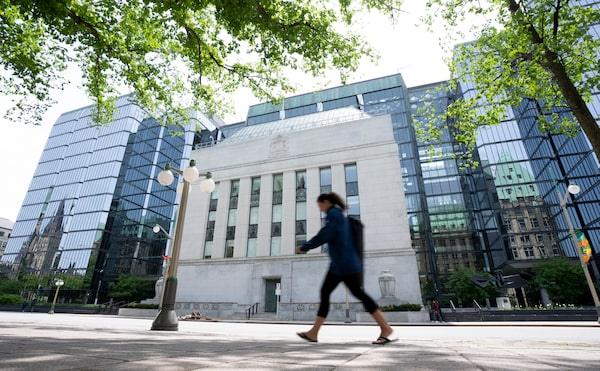
Although Canadian bond yields haven’t risen as much as U.S. yields, what happens in Washington doesn’t stay there. Adrian Wyld/The Canadian Press
|
|
|
|
|
|
|
|
|
|
|
‘Man fights forest fire with water pistol’ |
|
|
|
|
|
|
|
|
|
|
But the market the Treasury is trying to tame is worth roughly US$30-trillion, hence the analogy. It is trying to fight something very big with something comparably teeny tiny. |
|
|
|
|
|
|
|
|
As the rest of the Globe newsroom deftly covered the tentative trade deal that could bring our latest economic crisis to an end, investment reporter Andrew Galbraith and I chatted about a possible source of the next one. |
|
|
|
|
Simply put, higher bond yields make borrowing money more expensive. And for those who have already done a lot of borrowing (such as the U.S. government, with a total debt load that literally just crossed the US
$40-trillion threshold). |
|
|
|
|
The key question in all this, of course, is why does this matter to you and me? Andrew has reported extensively on major bond market moves. Here is how he answers that question: |
|
|
|
|
“For starters, although Canadian yields haven’t risen as much as U.S. yields, what happens in Washington doesn’t stay in Washington. Analysts have told me most of the rise in U.S. yields leaks into Canadian bonds. |
|
|
|
|
“From there, you need to think about which yields are rising. What we were seeing with the sell-off was most pronounced in longer-term debt, particularly 30-year U.S. Treasury bonds. A rise in 30-year yields isn’t going to hit your mortgage directly but it may start to weigh on economic growth. |
|
|
|
|
“In Canada, provinces have been financing their deficits at 30-year maturities, so higher long-term yields mean they have to spend a lot more money to service that debt. |
|
|
|
|
“It also makes life harder for companies borrowing to invest in long-term growth. Think of hyperscalers, the big tech companies that have been borrowing hundreds of billions of dollars to build AI data centres. Any highly leveraged business is going to see its cost of debt service rise, which doesn’t bode well for an AI-heavy stock market rally. |
|
|
|
|
“Investors could also be hit with a double whammy if they hold fixed-income funds with longer-term bonds in them. Higher yields mean lower bond prices, and that effect is more pronounced the further into the future your cash flows stretch.” |
|
|
|
|
|
|
|
|
|
|
|
|
|
|
|
|
|
|
|
|
|
|
|
|
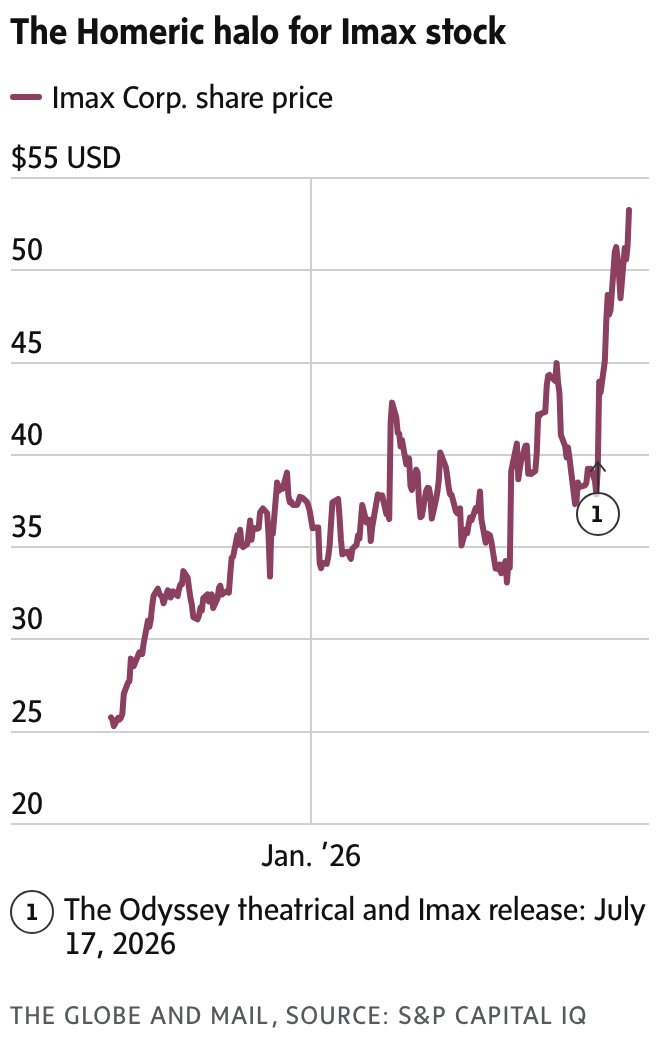
Christopher Nolan’s latest epic film revitalized Imax Corp., which enjoyed the biggest opening weekend in company history when The Odyssey hit screens. |
|
|
|
|
|
|
|
|
|
|
|
|
|
|
|
|
 |
He praised the new GO team that will lead the existing shareholders. If he loves them so much, why will he own zero of the combined company? — Cole Smead, CEO of fund manager Smead Capital Management |
|
|
|
|
|
H&R REIT investors are questioning founder and CEO Tom Hofstedter’s role in a complex takeover transaction, including why he’s cashing out his family’s 44-million-unit stake. |
|
|
|
|
|
|