Hello Power Up readers,
Welcome to President Donald Trump’s “economic D-Day” on Iran, Washington’s latest attempt to reopen the Strait of Hormuz and end the six-month-long conflict in the Middle East. U.S. Treasury Secretary Scott Bessent is scheduled to unveil today at 1 p.m. EDT what he had called "the greatest financial offensive ever marshalled."
The U.S. has imposed multiple rounds of punishing sanctions on Tehran over the past five decades, so what more is there to do? It is possible that the Trump administration could roll out new measures that would target Iran's trade partners, in particular China, which has historically bought most of Iran’s oil. That would be a big gamble in itself, given the tense trade relations between the world’s two largest economies.
But here’s another problem for Bessent: the U.S. has already implemented what is likely its most dangerous economic weapon against Tehran: the Navy blockade on Iran’s oil exports. This has sharply restricted its main source of revenue. Iran’s crude oil exports have dropped by nearly 90% in August from their 2025 levels to 259,000 barrels per day, according to Kpler data.
Yet Tehran shows little sign of backing down.
Iran dismissed the U.S. threat, vowing to shut down all oil exports from the Gulf "if the economic war continues" and issued a new warning that ships cannot pass through the Strait of Hormuz without its permission.
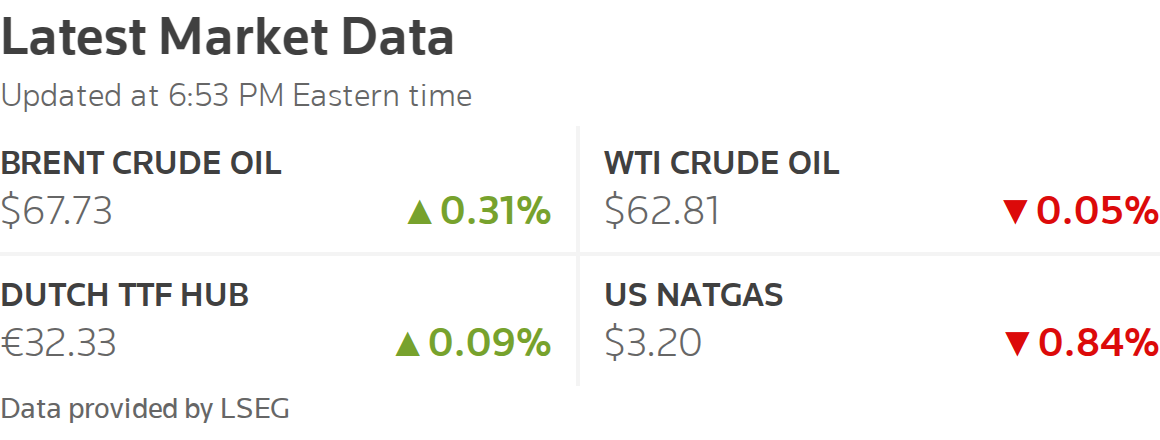
In the meantime, the oil market remains under heavy pressure. Oil prices fell slightly early on Monday but are still above $90 a barrel. Traders continue to worry about crude supplies, largely dismissing claims by the Trump administration that flows through the Strait of Hormuz are far closer to their pre-war level of around 20 million bpd than data shows.
But this focus on crude volumes may actually be the wrong debate. Traders should instead look more at the constrained flows of refined products around Asia, writes ROI Asia Commodities Columnist Clyde Russell.
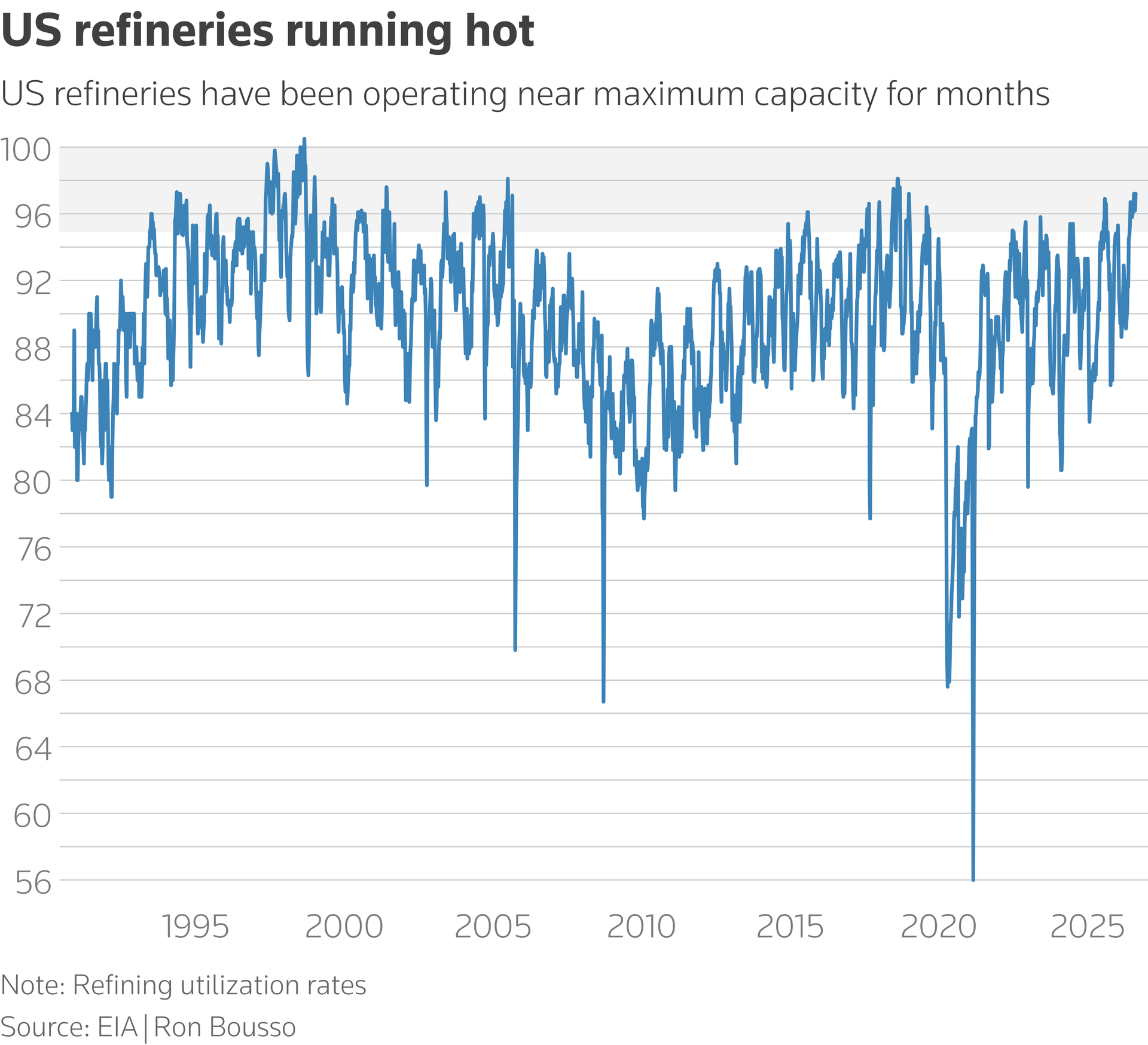
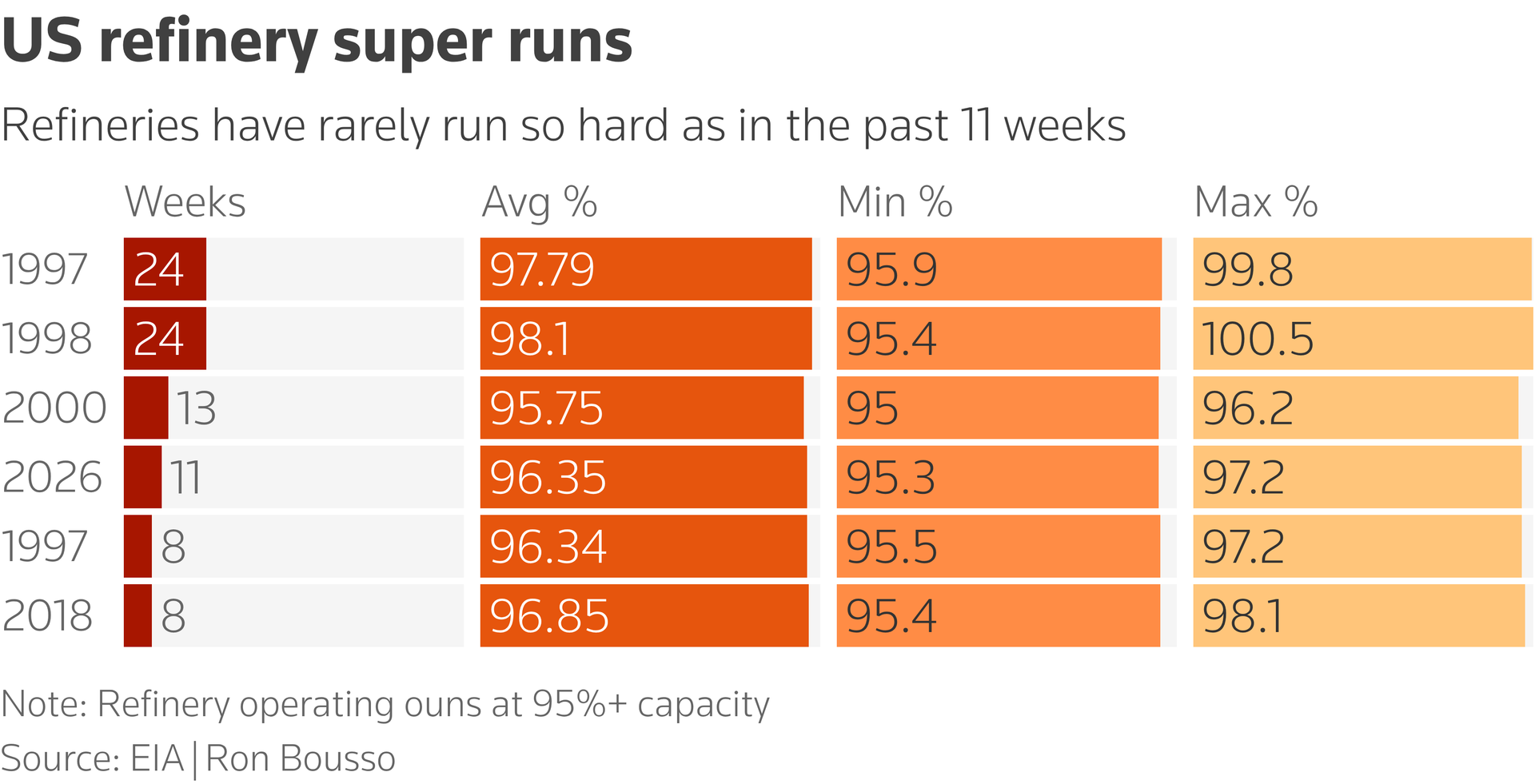
The global refining system is under enormous pressure, particularly in the United States, which has sharply increased its exports of refined fuels to the global market since the start of the war. U.S. refineries have been operating near maximum capacity for the longest sustained period in over a quarter century, scrambling to capture windfall profits. But history offers a cautionary tale: “Super refining” runs that push plants too hard can cause major failures. More on this below.
Here are a few more headlines: