The UK’s continued support for Ukraine, the scent of summer and humans still on top against ultra-fast robots
|
Wednesday 26/8/26
|

|
|
London
Paris
Zürich
Milan
Bangkok
Tokyo
Toronto
|
|
|
|

Good morning from Midori House. For more news and views, tune in to Monocle Radio. Here’s what’s coming up in today’s Monocle Minute:
THE OPINION: Seeing Greenland through a new lens
IN THE BASKET: The UK is sharing long-range-missile blueprints with Ukraine
DAILY TREAT: Smell great this summer with Perfumer H’s Bergamot
TECHNOLOGY: Robots aren’t ready to give humans a run for their money
THE LIST: Stories that you might have missed
|
|
How Greenland is investing in its film industry to tell its own stories
By Michael Booth
|

|
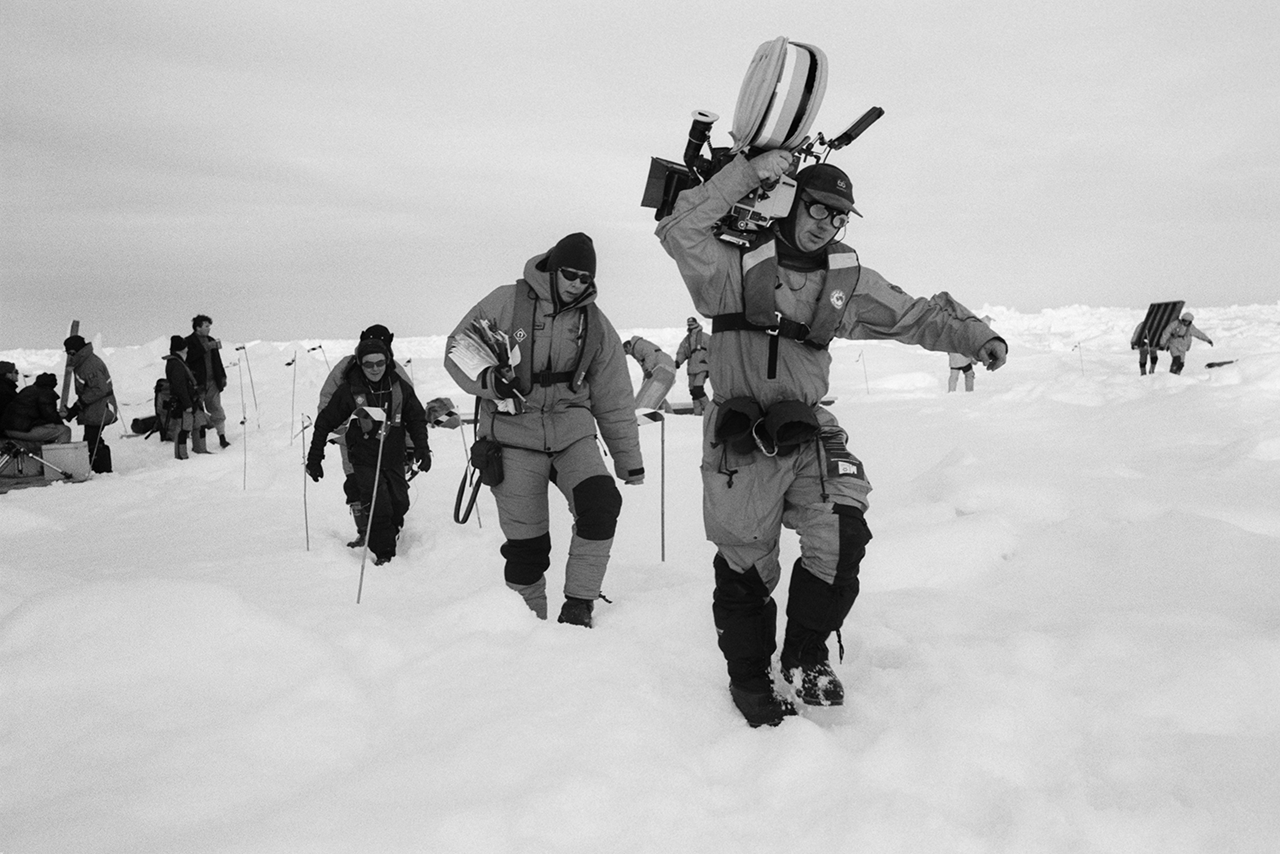
In January the new Film Institute of Greenland was launched, while this September the Nuuk International Film Festival will be celebrating its 10th anniversary. The autonomous Arctic nation, which is part of the Kingdom of Denmark, is bolstering its cinematic credentials for good reason. It sees film as a tool to reclaim the story that’s being told about it globally.
“We think of it as taking back narrative sovereignty,” Inunnguaq Petrussen, the Film Institute of Greenland’s CEO, tells Monocle when we visit his office in central Nuuk. “For about 100 years, other nations, especially Denmark, have been making films about Greenland, our culture, our nature and our environment, and it’s very important for us to tell our own stories.”
| |
|
Crew cut: Greenland’s film industry reclaims the narrative
|
|
Of late, that narrative has revolved around a story not of Greenland’s making: Donald Trump’s takeover plans. “We have never had so much focus as we’ve had recently,” says Petrussen. “The timing is a coincidence because the institute has been in the pipeline for some years. But many film festivals have already been in contact to say that they want Greenlandic films and want me to come and talk.” That interest resulted earlier this year in a trip to Cannes, where short-film auteur Inuk Jørgensen, the country’s most awarded film-maker, was featured prominently.
The capital’s film festival originally emerged from the initiative of local film-makers and the new institute is considered a natural progression. It has three aims: to network with other similar organisations to help develop the domestic industry; to fund locally made films; and to promote Greenland as a destination for foreign film companies by offering a 25 per cent “refund” of money spent here. The organisation’s initial budget is DKK5.8m (€775,000); a significant portion of this will go towards administration costs, while the rest will be used to help fund films. The Danish government has also contributed a one-off sum of DKK10m (€1.3m) to fund productions that share stories about the territory.
“I have been talking a lot with the Canadian film-makers’ organisation and especially the International Sámi Film Institute, which has been a huge inspiration, and also the Danish Film Institute,” says Petrussen. The Indigenous Cinema Alliance is another ally. “We see being labelled as makers of Indigenous films as a big opportunity because it gets us to the festivals, which gets us seen by the industry, then the public.”
Petrussen has always had one foot in the institutional political world and another in the arts: he has worked both as a political adviser to several Greenlandic political parties and as a singer-songwriter in indie band Inuk. He explains that Greenland’s film scene is particularly strong when it comes to two genres: documentaries (often about climate change) and low-budget horror (most notably by director Malik Kleist). In 2023, Greenland received its first Oscar nomination in the Live Action Short category for Ivalu by Anders Walter and Pipaluk Kreutzmann Jørgensen. “Local people are really supportive of the industry,” says Petrussen. “Every time a Greenlandic film comes out, more people will go to see it than watch Spider-Man.”
Greenland might only have a couple of cinemas, with about 30 or 40 people working full-time in the industry. It typically makes just one full-length feature a year and budgets are small. But Petrussen’s ambitions go far beyond telling domestic stories for domestic audiences. “We want to co-produce films with international film-makers. Canada has been so successful in attracting film companies. We want to work with HBO, Netflix and Disney. That’s the kind of level.”
Michael Booth is Monocle’s Copenhagen correspondent. For more analysis and insights, subscribe to Monocle today.
Further reading:
- If Donald Trump’s threats have made anything clear, it’s that Danes don’t care about Greenland
- Meet the daredevil stunt performers helping Europe’s film-making industry to reach new extremes
- Hollywood is undergoing an economic revolution. Is cinema’s future on course for a plot twist?
|
|
In the basket: UK & Ukraine
The UK signals its unwavering support for Ukraine by sharing long-range-missile blueprints
In the basket: Blueprints for missile components
Who’s buying: Ukraine
Who’s selling: United Kingdom
Price: Free
Delivery date: TBC
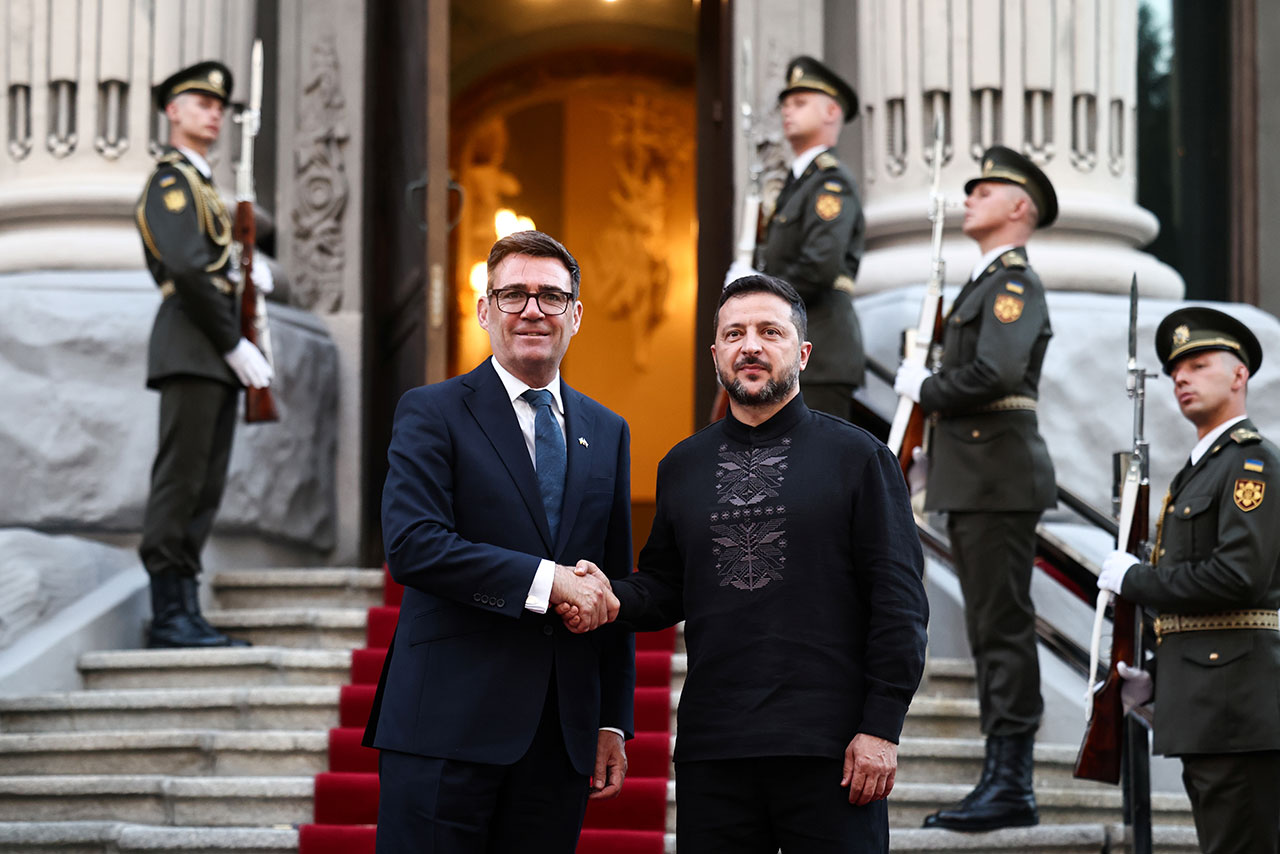
The headline event of UK prime minister Andy Burnham’s visit to Ukraine this week was the handover of Storm Shadow missile blueprints. But Burnham didn’t step off the train in Kyiv with a folder of blueprints under one arm. Instead, the UK has agreed that MBDA, the company that builds Storm Shadow, can release details of its British components to enable Ukraine to make its own missiles.
| |
|
Stepping up: Andy Burnham and Volodymyr Zelensky
|
|
Storm Shadow is a Franco-British design, known to the French as Scalp. It’s a potent weapon that’s capable of delivering its payload over a range of 550km at nearly the speed of sound. Ukraine has already done considerable damage with missiles of this type that have been supplied to it, including against targets in Russia. So far, Ukraine’s Storm Shadows have been launched from modified Soviet-built Su-24s, though the country’s newer, French-made Mirage fighter jets are also Storm Shadow-ready.
The UK’s release of these details is an important demonstration that its support for Ukraine has survived another change of prime minister. But Burnham’s visit has also been tied to an announcement that the UK will become the first international partner of Ukraine’s AI battlefield platform Avengers Labs. After more than four years of war, Ukraine has become a military partner worth cultivating.
|
|
• • • • • DAILY TREAT • • • • •
Spritz yourself with Perfumer H’s summer scent Bergamot
When the mercury climbs, Lyn Harris, the founder of Perfumer H, reaches for the citrus scent of the brand’s Bergamot range.
“I have always loved the freshness of old Italian colognes and wanted to capture that feeling in a way that felt natural and effortless,” says the British perfumer, who added sprinklings of clove, frankincense and lavender to the bergamot to achieve this nostalgic scent. “It reminds me of swimming in the sea.”
perfumerh.com
|
|
technology: china
Should we fear the Bolt-beating robots? For now, not really…
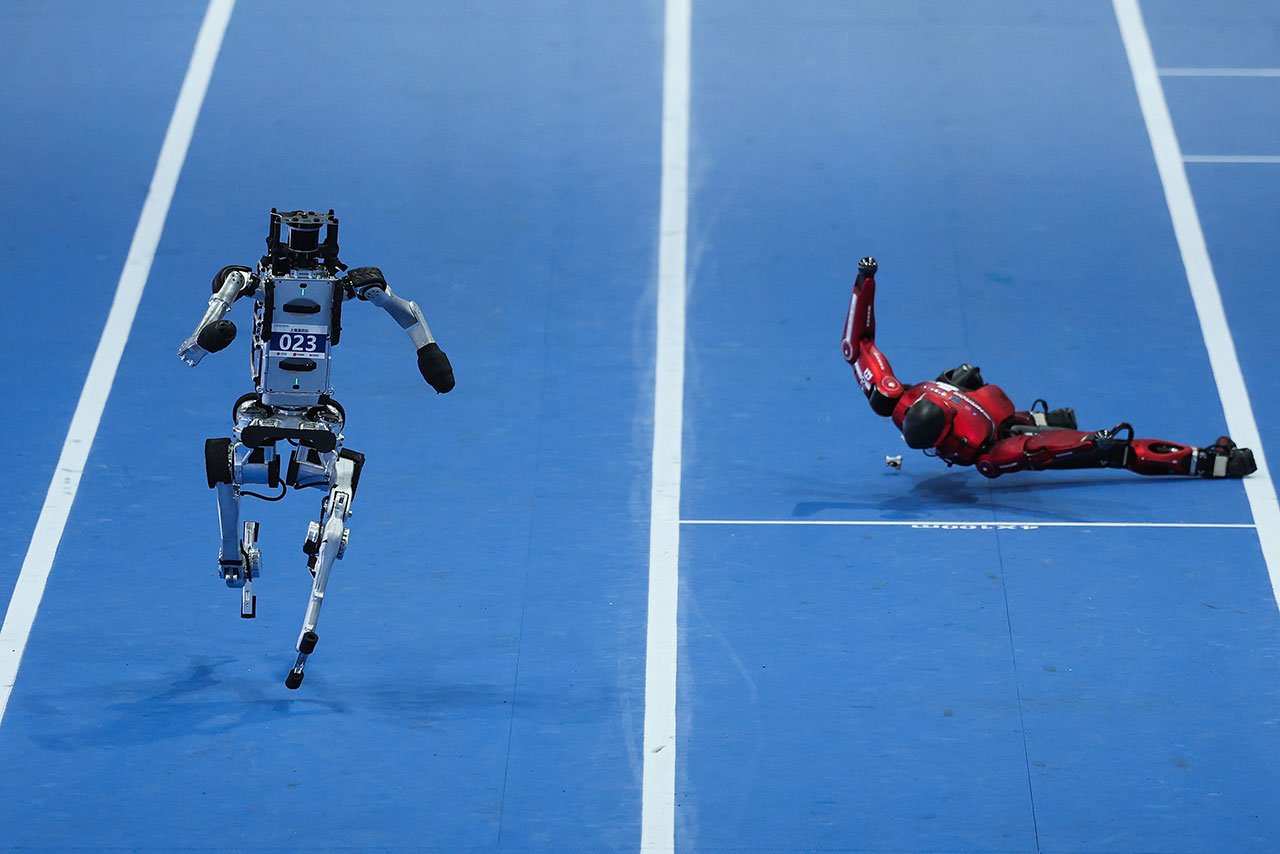
China’s technological development has long been perceived as an existential threat to the global order but perhaps Shenzhen’s spooks, America’s TV hawks and the ambassadors of Beijing’s diplomatic quarter have it all wrong (writes Jack Simpson). You might have read the headlines this week: “Humanoid robot beats Usain Bolt’s 100-metre record” or “Robot smashes human 400-metre record”. But have you seen the World Humanoid Robot Games? Moments after “smashing” Bolt’s record by 0.19 seconds, the faceless metallic form also smashes into a padded wall, before being doused with a fire extinguisher and stretchered away (by humans). It’s not quite as cool as Bolt’s victory lap at the 2009 World Championships. Rather than being scrapped for parts, he also picked up gold in the 200-metre and four-by-100-metre relay that week too.
| |
|
Stay in your lane: Robots haven’t yet caught up with human ingenuity
|
|
While China’s technological and military prowess is altogether more complicated than this charade, we can take some solace from this event. Just as AI can’t replace the art of a Studio Ghibli film, nor write journalism worth reading, humanoid robots can’t better the spectacle of athletes. We will not be watching droids joust, fence or shoot hoops any time soon. That’s a relief.
Creating humanoid forms capable of sprinting into a heap or even pouring a cup of coffee feels a lot like a big waste of time. We invented machines long ago that are quicker than us over roads, seas and assembly lines. Drones have already begun to offer devastating defence capabilities. Coffee machines are in every home and office. (Indeed, at Dubai’s Museum of the Future, an automated mechanical arm called Café X once made me a coffee in twice the amount of time it would have taken a machine in any hospital waiting room.) China’s robotic and technological capacity will define much of the next century but it needn’t take human form. Morgan Stanley bets that, by 2030, China will produce 450,000 humanoids a year. Whichever Silicon Valley start-up inevitably decides to invest in these dumb droids over human interns or baristas deserves the liquidation that’s surely headed its way.
|
|
| | |