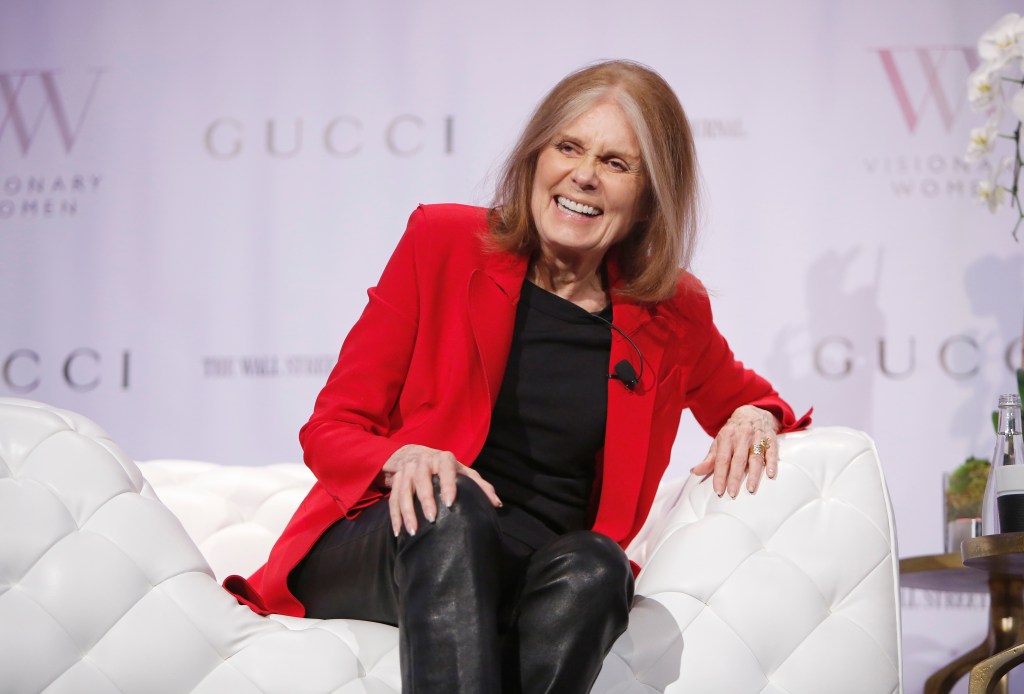
The first time I met Gloria Steinem was on the sidelines of the 2017 Women’s March. It was a loaded day—the day after Donald Trump’s first inauguration as president—and a glamorous one, with celebrities mingling alongside us in the press pit. But none of that phased me. What caused me to stop in my tracks was Steinem.
Without her, none of us would have been there—not any of the journalists, movement leaders, nor the nearly 500,000 people who gathered in Washington that day. Steinem was an architect and one of the faces of the modern women’s movement, and her decades of work made it possible for women to fight for their rights, loudly and on their own terms.
We learned this morning that Steinem
died yesterday at 92 years old. She was surrounded by people who loved her at her longtime home in Manhattan, her foundation
said on social media. And there are millions more around the world who will be offering their own outpourings of love and admiration in the days to come.
Her influence extended to every realm of women’s lives. She made women more powerful and visible across society. She made it possible for women to pursue ambitious, dignified careers, advocating for (and providing) common-sense accommodations like on-site child care. Her work led to greater equality between spouses at home. She was a journalist, the founder and editor of Ms. Magazine, who changed how women were viewed in media and popular culture. She was funny, always ready with a quippy comment. And, perhaps most importantly, she helped so many women develop their own sense of internal self-worth. As the New York Times
wrote in her obituary: she “believed fiercely that women should be able to live whatever life they chose.”
In recent years, Steinem had expanded her community in New York, hosting a steady stream of gatherings of women in her living room. These are her famed “Talking Circles,” a format where women come together to discuss an important issue without hierarchy. Steinem brought together women to discuss issues ranging from her go-tos—things like child care and abortion rights—to ones new to her, like the impact of AI. We at Fortune Most Powerful Women were lucky enough
to co-host a talking circle with her on that last topic earlier this year. The room was filled with some of the most powerful tech execs in the U.S., from companies like Meta and Microsoft. And yet everyone is equal in front of Steinem; her presence brought out a kind of reflection and collaboration that doesn’t always accompany these kinds of conversations.
Throughout her life, Steinem was eager to learn. I also attended a talking circle last fall that Steinem
hosted for girls from ages 9 to 18. She treated that conversation with as much seriousness as she did one about the future of technology. While girls were eager to ask her questions about leadership and dealing with doubters, she wanted to know more about their lives.
This newsletter follows in the footsteps of what she created with Ms. magazine, which was the first glossy national periodical to be created, owned and run entirely by women, per the NYT. It covered stories that weren’t being covered anywhere else in mainstream media—abortion, domestic violence, sexual harassment, the battle for equal pay. Every day, it’s my honor to try to live up to that legacy in a small way.
Without Steinem, none of us would be here—writing a newsletter about women’s leadership, or at our desks at work, reading one.
Emma Hinchliffeemma.hinchliffe@fortune.comThe Most Powerful Women Daily newsletter is Fortune’
s daily briefing for and about the women leading the business world. Subscribe here.