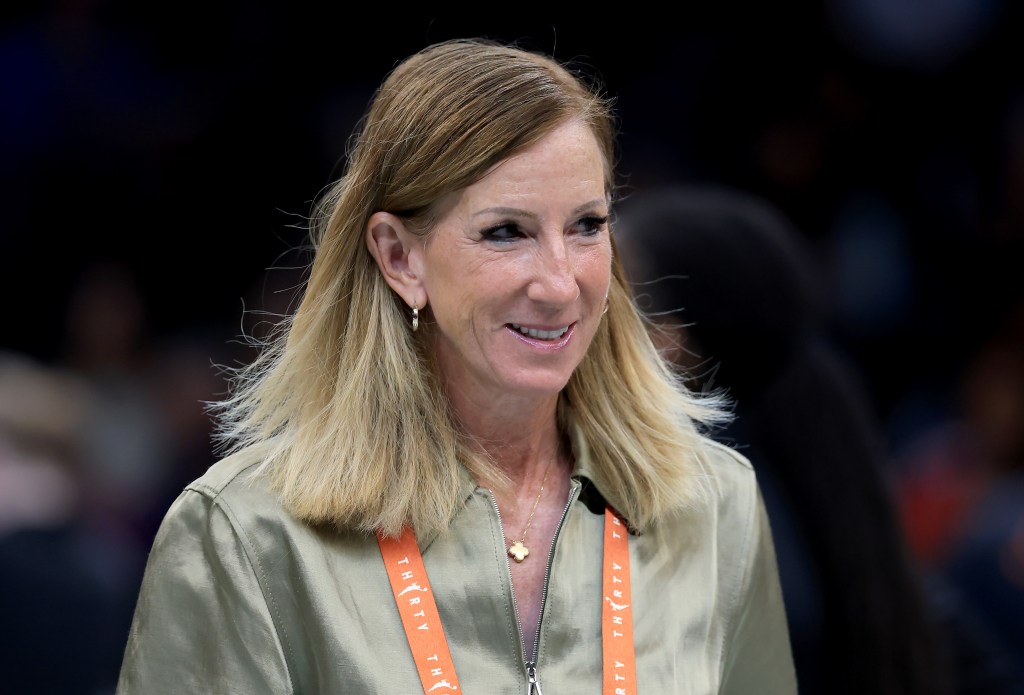
For the past seven years, Cathy Engelbert has been
at the helm of the WNBA through its explosive growth. The league she inherited in 2019 is unrecognizable to the one she’s been running this season. It had its own full-time staff of just 12 people and was on the brink of financial collapse during the pandemic. Today, the WNBA is a thriving league of 15 teams—with at least one
valued as high as $1 billion—with more on the way.
By the numbers, it’s an extraordinarily successful tenure. Engelbert oversaw historic growth of women’s basketball, ushering it into the mainstream with record-setting media deals, sold-out games, and two landmark
collective-bargaining agreements with the players.
And yet, it hasn’t all been smooth sailing. Hyper-growth of the sport set off long-simmering tensions in women’s basketball, and the years it took players’ compensation to catch up to the sport’s new prominence had a cost. The most challenging part of the commissioner’s job could probably be termed “stakeholder management;” between star athletes, new flashy billionaire owners, longtime owners whose pockets aren’t as deep, coaches, agents, and the NBA itself (which owns much of the WNBA). It’s not easy.
I explored all of this in
an award-winning 2024 feature in
Fortune that landed just as some of these issues were starting to rise to the surface. Since then, this has all broken out further into public view. And after a year in which players openly rebelled against the league amid tense negotiations (Napheesa Collier
said last year that the league had the “worst leadership in the world”), Engelbert today announced her plans to retire.
“Over the years, it has been amazing to watch WNBA players thrive and lead the massive cultural surge around women’s sports,” Engelbert
said in a statement today. “I retire knowing we have built something bigger, stronger and more enduring than we could have imagined.”
From a business perspective, the WNBA is thriving like never before. It is a top-tier sports property, with incredible demand from both sponsors and fans. That’s where Engelbert’s track record has been so key—she came in as the former U.S. CEO of Deloitte, with years of experience running a $20 billion business.
By a broader definition of the league’s success, there are challenges. If 2024 was the
growing-pains season, when Caitlin Clark and Angel Reese entered as rookies and were still paid around $75,000, 2025 was defined by impending CBA negotiations. 2026 should have been a season to celebrate that success, with players finally earning something closer to their value—but the league has instead dealt with more concerns about
harassment toward players and a growing bad-faith effort to make the WNBA the center of a culture war
over trans athletes. The next leader of the WNBA will need to stake out a position on these high-stakes issues and, many argue, take a more proactive approach.
When I profiled Engelbert in 2024, she told me she would stay on at least three more years. She didn’t quite hit that estimate—but then again, little in the WNBA’s three decades of high highs and low lows has gone exactly as planned. For now, we still have playoffs and finals to look forward to throughout October. And hopefully, years of more growth ahead for women’s basketball.
Emma Hinchliffeemma.hinchliffe@fortune.comMPW Daily will be off on Monday for Labor Day in the U.S. See you on Tuesday! The Most Powerful Women Daily newsletter is Fortune’
s daily briefing for and about the women leading the business world. Subscribe here.