Dear Educator,
Every September, the United Nations General Assembly (UNGA) convenes in New York to discuss, debate, and make recommendations on subjects pertaining to international peace and security. With so much to cover at the start of the school year, the UN General Assembly might not be an obvious teaching opportunity, but it’s actually a great way to engage students with a current event.
In this newsletter, you will learn why UNGA should be incorporated into your curriculum or syllabi and tips on how to do so with a new perspective-taking activity and a new lesson plan on the Sustainable Development Goals.
Happy learning, Caroline Netchvolodoff
Vice President, Education
Council on Foreign Relations |
|
|
|
For updates and expert commentary about the UN General Assembly, as well as recorded events from world leaders, explore the United Nations hub on the Council on Foreign Relations website. |
|
|
|
Why You Should Teach About the UN General Assembly
|
The UN General Assembly can be an easy topic to overlook when navigating a packed curriculum, but it offers more than it might seem. It's a natural fit for civics curricula, touching on key topics like the importance of international cooperation, international organizations, and the Sustainable Development Goals.
It also shows that governments can collaborate on shared challenges while also revealing the tensions and flaws in the current system — and it connects naturally to issues students already care about, such as climate change, inequality, and human rights. |
|
|
|
New! UN General Assembly Perspective-Taking Activity
|
Through this structured role-play, students will identify how countries at different income levels approach international agreements, articulate the challenges of reaching consensus, and evaluate how broad participation strengthens global decision-making.
Students are invited to assume the roles of different sets of countries and discuss a current UN General Assembly topic from their respective countries' perspectives. Because the topic is interchangeable, the activity can be used year after year or adapted for different international summits. |
|
|
|
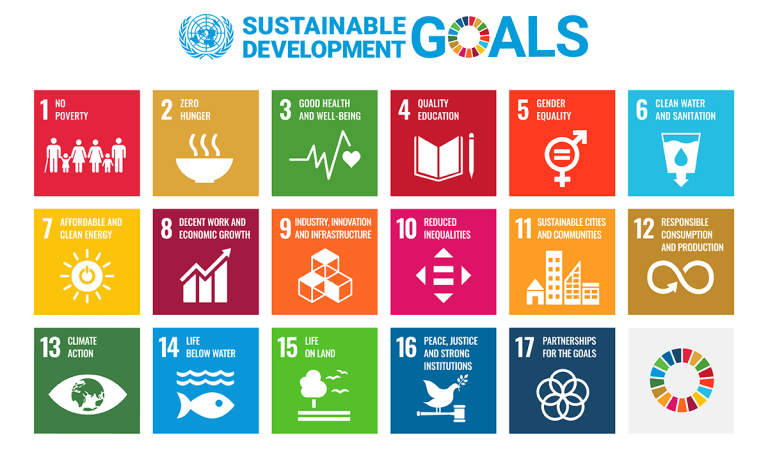
New! Sustainable Development Goals (SDGs) Lesson Plan |
In this lesson plan, students explore the 17 UN SDGs by ranking them from most to least achievable, then comparing their reasoning with peers through a gallery walk. The activity builds toward a deeper discussion of what the SDGs are, why achievability is contested, and how the goals are interconnected. Students leave with a clearer understanding of global priorities and the real-world obstacles that make international cooperation so challenging. |
|
|
|
UN Security Council Reform Simulation |
The UNGA elects the 10 non-permanent members of the UN Security Council (UNSC), the organization’s most powerful body responsible for maintaining international peace and security. It can issue sanctions and even authorize military force.
The need to reform the UNSC is an ongoing topic of conversation, as its structure, particularly the veto power held by the five permanent members, can stall progress on critical international issues. This simulation puts students in the role of U.S. decision-makers as they deliberate on whether the United States should lead efforts to reform the Council.
|
|
| |
|
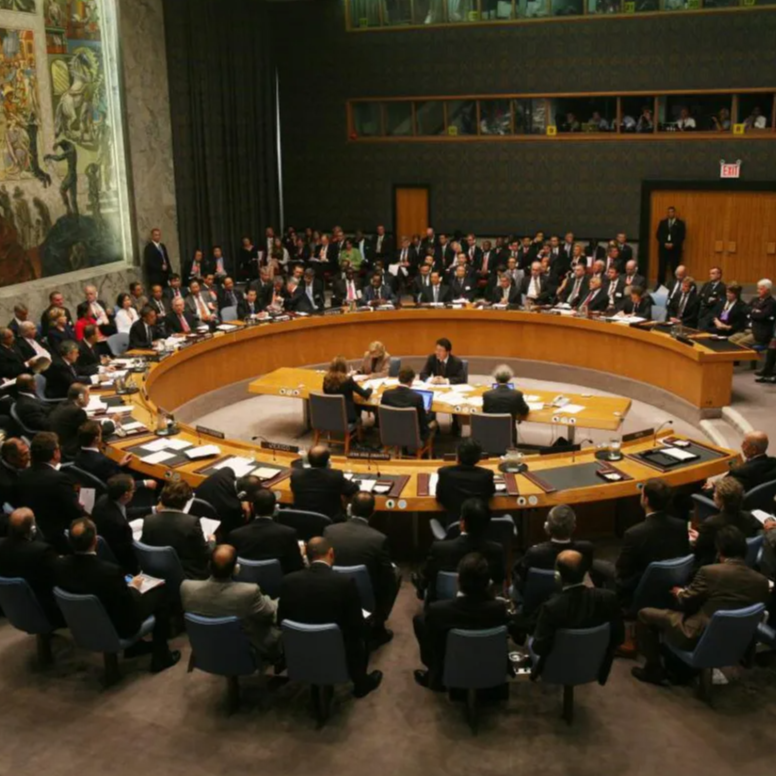
The Security Council holds an open debate at the United Nations Headquarters in New York City on March 25, 2009. (Devra Berkowitz/UN Photo) |
|
|
|
58 East 68th Street, New York, NY 10065 |
1777 F Street, NW, Washington, DC 20006 |
|
|
|
|