Democratic state parties are launching an operation they're calling the "New Battlefield Project,” intended to recruit 10,000 volunteers to guard midterm election polling places in case armed federal officers show up. Activists are planning mass protests if the Trump administration tries to interfere with voting or ballot counting, and legal scholars are distributing white papers advising judges on what they should do if the government tries to seize ballots.
Those unprecedented efforts are in response to President Donald Trump's equally unprecedented moves to interfere in this year's voting, including attempts to impose proof-of-citizenship requirements to register to vote and directing the Postal Service to play a central role in deciding which voters should get a mail ballot. Plus, Speaker Mike Johnson on the president's "dividend," Trump consents to a crypto ethics proposal and the final midterm primary of 2026. |
|
|
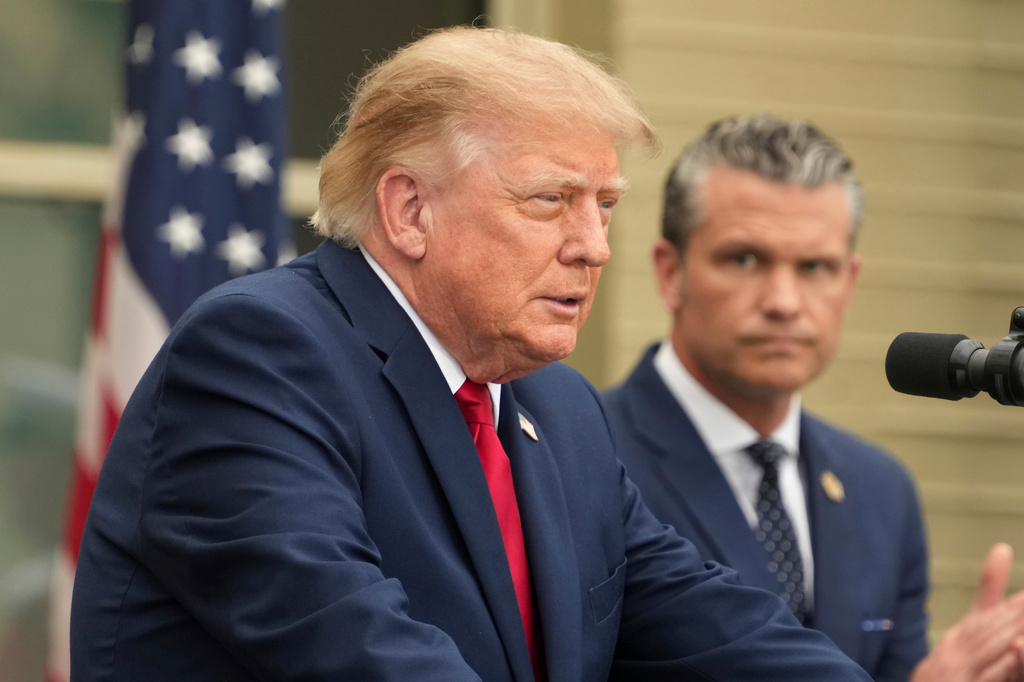
President Donald Trump speaks as Secretary of Defense Pete Hegseth listens during an observance ceremony on the 25th anniversary of the 9/11 attacks, Friday, Sept. 11, 2026, at the Pentagon in Washington. (AP Photo/Mark Schiefelbein) |
Democrats and activist groups plan to push back if Trump tries to interfere in midterm elections — By Nicholas Riccardi and Matt Brown The anxious contingency planning as voting gets underway has become a marker for how fraught democracy has become in the country that once stood as an example to the world.
Trump has given Democrats plenty of reasons to organize a resistance
Democrats say they have reason to plan for doomsday scenarios. During his first term, Trump refused to accept his 2020 loss to Democrat Joe Biden and attempted to overturn the vote, only to be defied by career officials and more establishment Republicans.
Upon returning to power, Trump has stocked his administration with those who helped his 2020 efforts, has used the federal government to target his political enemies and pardoned more than 1,000 people prosecuted for the Jan. 6, 2021, attack on the U.S. Capitol that was intended to halt the certification of Biden's win.
Incumbent presidents' parties usually lose ground in the midterms, but Trump has pulled out the stops to try to keep that from happening this time. He's demanded Republicans redraw maps to create more safe seats for themselves in the House of Representatives, held last week's unusual midterm convention and tried to change election rules even as states begin to send out ballots. Read more from Riccardi and Brown about Democrats' midterm moves. |
|
|
|
Johnson says Trump's $5,000 'dividend' needs congressional OK |
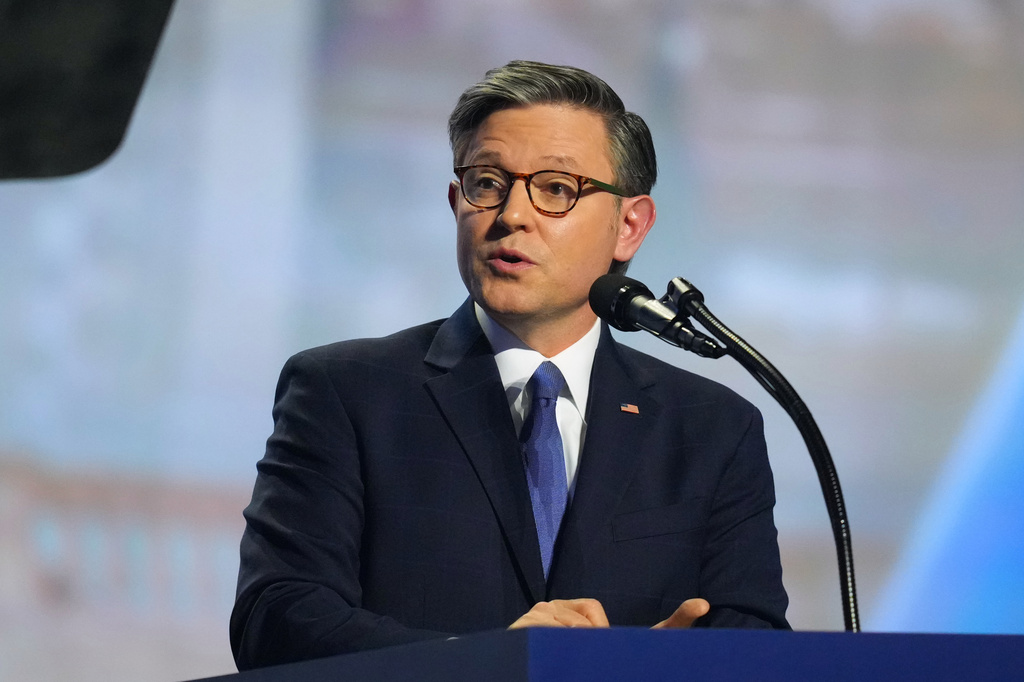
Speaker of the House Mike Johnson of Louisiana, speaks at the Republican convention Thursday, Sept. 10, 2026, in Dallas. (AP Photo/Julio Cortez) |
House Speaker Mike Johnson says Trump's $5,000 'dividend' needs congressional approval — By Didi Tang
Trump's proposal to send $5,000 to every American adult if his Republican Party maintains control of the House and Senate in the November election needs congressional approval, House Speaker Mike Johnson said Sunday, while pledging to try to make it happen.
Trump made the unusual pitch at the party's midterm convention in Dallas last week, promising a “Trump Dividend” if voters keep the GOP in power on Capitol Hill. The president later told CBS News Texas that he did not think Congress would need to authorize the payments, though he did not specify how he could spend more than $1 trillion without lawmakers' authorization. But Johnson, R-La., says congressional approval is needed, calling the idea "creative" and that he would work to get Trump's proposal through Congress despite a small Republican margin. Read more from Tang on the latest about Trump's dividend idea. |
|
|
|
Trump ethics issues threaten crypto bill up for vote on Tuesday |
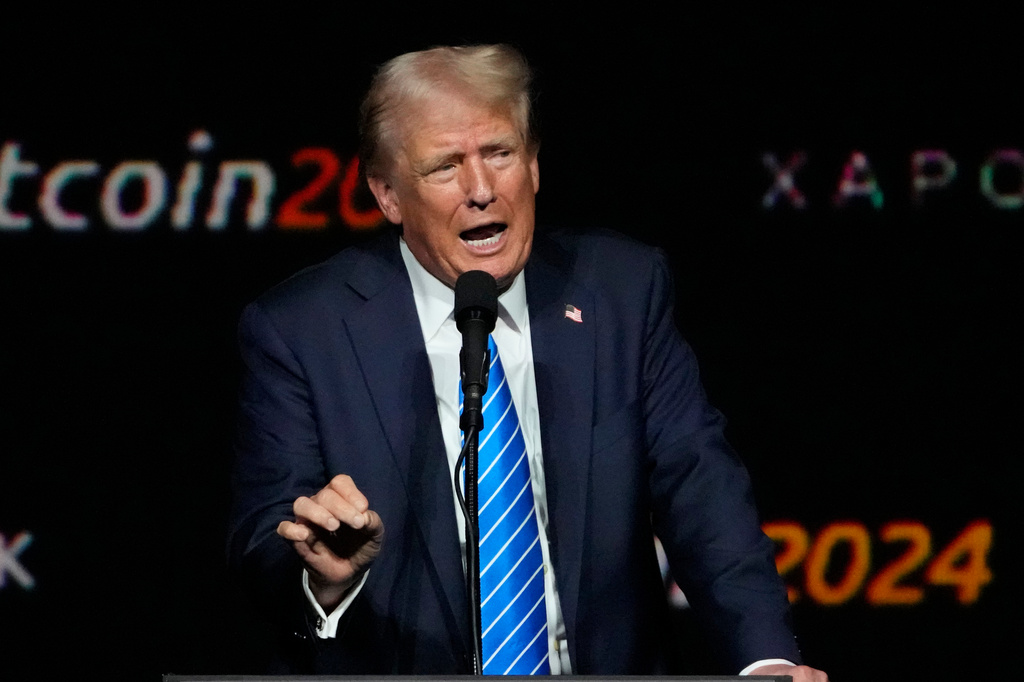
Republican presidential candidate former President Donald Trump speaks at the Bitcoin Conference, July 27, 2024, in Nashville, Tenn. (AP Photo/Mark Humphrey) |
Trump agreed to new ethics rules to get a crypto bill across the line. But that might not be enough — By Seung Min Kim
Trump had been hearing the message loud and clear for weeks about the sweeping cryptocurrency bill being written in the Senate: to get it across the line, he would have to agree to ethics provisions that apply to him, too.
First, Trump agreed to a measure that would bar him and his wife from issuing the types of meme coins that they swiftly launched as he prepared to return to the White House for a second time. And then another concession came late Sunday, when Republicans said Trump consented to a tougher ethics proposal that several key senators had demanded.
Now, a pivotal Senate vote on the cryptocurrency bill on Tuesday could mark a watershed moment for the $2.3 trillion market — but it hinges mainly on whether those sign-offs from Trump go far enough.
That vote could determine whether Washington cements crypto legitimacy into law or whether a frustrated, deep-pocketed industry could unleash even more campaign cash in the midterm elections.
Read more from Kim on Trump's stake in the crypto bill debate. |
|
|
|
AP Elections Spotlight: 2026 primaries come to a close |
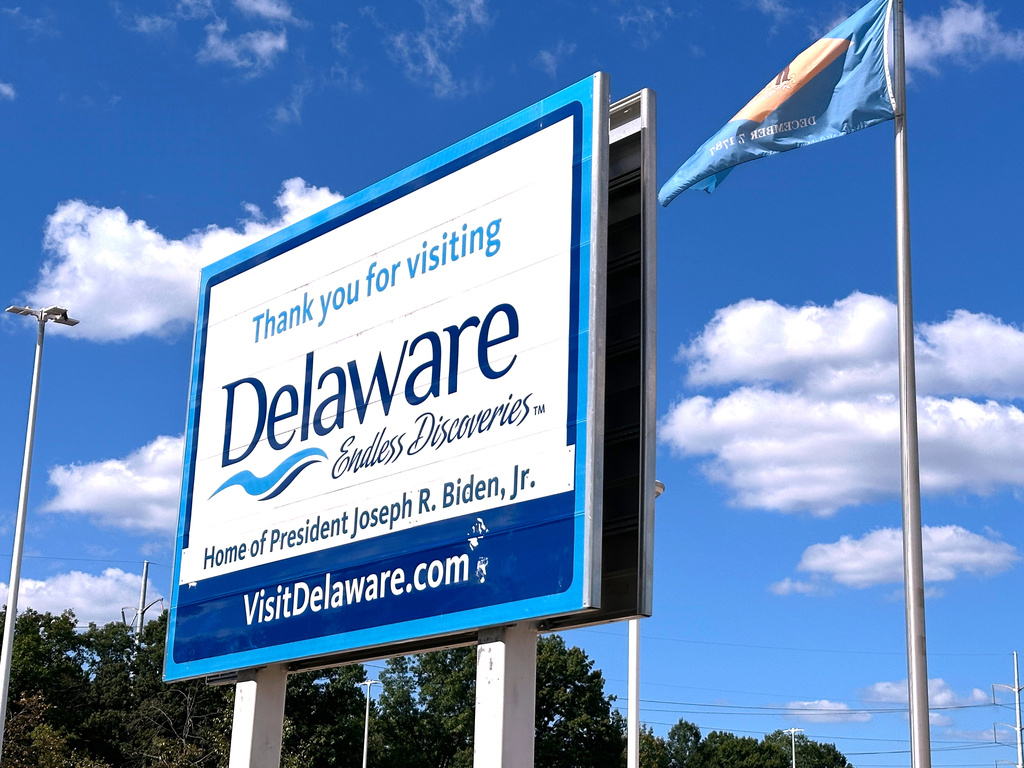
A sign greets visitors at the Biden Welcome Center in Newark, Del., Monday, Sept. 7, 2026. (AP Photo/Robert Yoon) |
The big picture: It's time for the final state primary scheduled before the November midterm general election, which is in 49 days. On Tuesday, Delaware's Democratic U.S. senator, U.S. representative and state attorney general go before voters in a state primary as they seek reelection. The primaries will set the stage for the November general election, when Republicans will try to break a Democratic lock on Delaware’s statewide offices against the backdrop of a midterm cycle that tends to punish the president’s party. Senate showdown: Democratic U.S. Sen. Chris Coons faces three primary opponents in his bid for a third full term. His challengers are University of Delaware history professor Jeff Appelhans, naval architect Mary Louve, and former business executive Eric Hansen. Hansen was the Republican U.S. Senate nominee in 2024. He is now running as a Democrat and will appear on the ballot under the name “E. No-Trump Hansen.”
Coons reported raising about $6.9 million for his campaign, compared to about $1,500 for Appelhans. Neither Hansen nor Louve have filed any campaign fundraising reports this cycle.
Former state Sen. Michael Katz and U.S. Army Reserves Col. John Shulli are competing for the Republican nomination. Katz has raised about $159,000 for the campaign, compared to about $118,000 for Shulli.
U.S. House: Democratic U.S. Rep. Sarah McBride is unopposed in her primary as she seeks a second term as Delaware's sole representative in the U.S. House. Republicans Joseph Arminio, Earl Cooper and John Whalen are competing to face her in November. Voters will also choose nominees for state Legislature and for an open seat for state treasurer.
Read more from Robert Yoon on the final 2026 midterm primary. |
|
|
|
|