What matters in U.S. and global markets today

Start the day with Reuters on the stories moving U.S. and global markets. Subscribe for $1/week.


Morning Bid U.S.

Morning Bid U.S.

A Reuters Open Interest newsletter

What matters in U.S. and global markets today


By Mike Dolan, Editor-at-Large, Finance & Markets

The nervous start to the week for world markets has seen 10-year U.S. Treasury yields top 5% to hit their highest in 19 years, just as Treasury Secretary Scott Bessent prepares to address Congress and the Federal Reserve starts its critical two-day meeting today.

The prospect of interest rate rises along with climbing energy prices remain the primary aggravators of government bonds, which sold off across the world overnight, with Japanese 10-year yields rising back above 3%.

I'll get into that and more below.

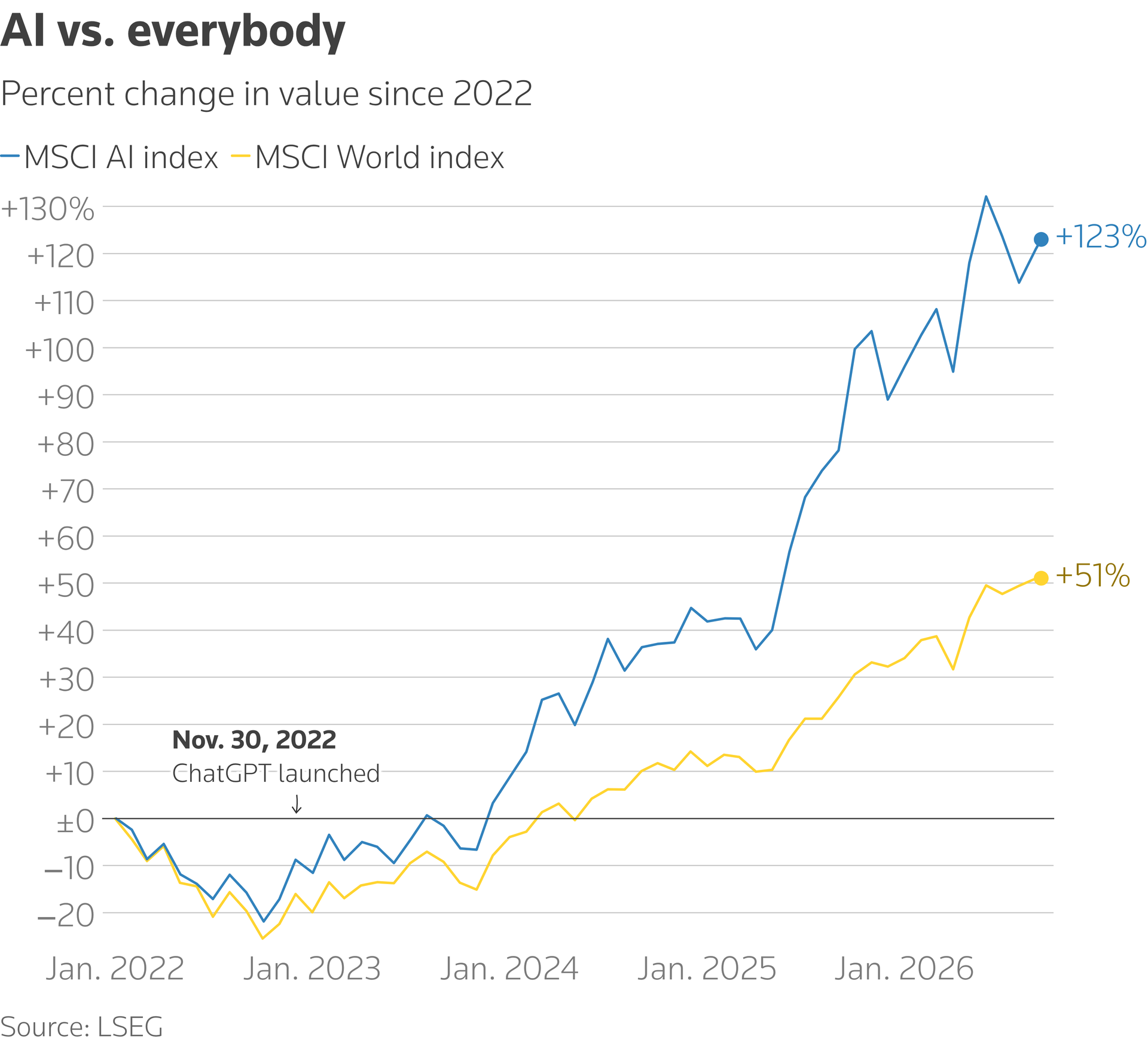
But first, check out my latest column on why AI may be too big to slow.

And listen to the latest episode of the Morning Bid daily podcast, where we discuss everything on Scott Bessent's plate as he heads to the Hill later today.

Subscribe to hear Reuters journalists discuss the biggest news in markets and finance.


Data refreshes every time you open this email. For more U.S. market news, click here. Please send any feedback to morningbid@thomsonreuters.com.


Today's Market Minute

  • AI-linked stocks plunged worldwide on Monday after AI leaders' warnings of potentially existential risks, shaking confidence in an industry whose vast infrastructure spending has driven ‌world stock markets to record highs.
  • Yemen's Iran-aligned Houthis launched a new wave of attacks on Saudi Arabia on Monday and were digging into positions on the western coast of Yemen along the Red Sea, Yemeni officials said.
  • President Volodymyr Zelenskiy said on Monday that Kyiv was ready to support a U.S. proposal for a Russia-Ukraine ceasefire on energy sites only if Washington could ensure ‌Moscow was genuinely ready to end its war on Ukraine.
  • A Russia-Ukraine energy infrastructure truce could reduce one of the global diesel market's biggest threats, but it's unlikely to reverse the severe supply crunch that has emerged this year, argues ROI Energy Columnist Ron Bousso.
  • Bond investors may already be looking beyond likely Fed rate hikes and bracing for the economic slowdown that could follow, writes ROI Markets Columnist Jamie McGeever.
 

"The house" visits the House

Intense fighting in the Middle East saw Brent crude push above $107 per barrel once more on Tuesday, after prices briefly retreated on Monday following President Trump's suggestion of a Russia-Ukraine agreement to spare energy infrastructure in their war.

Bessent's appearance in front of the House Financial Services Committee later today will likely deal with a host of thorny issues: his seemingly failed attempt at capping Treasury yields, his joint intervention with Japan to lift the yen, the economic war with Iran and the president's promise to give Americans $5,000 checks in a total $1.3 trillion cash injection.

Bessent's view on what markets expect will be a quarter-point Fed rate hike on Wednesday will also grab headlines, with U.S. bond markets now attempting to price up to four rate rises over the next year.

Elsewhere, the doomsday AI narratives and calls for a slowdown in AI development spilled into chip stocks on Monday, with the SOX semiconductor index falling more than 5% for the first time since July, dragging the overall S&P 500 and Nasdaq into the red.

Trump rejected calls for more restrictions, claiming guardrails on AI were already sufficient.

Elsewhere, a sweep of Chinese economic numbers was a mixed bag, with industry numbers beating forecasts in August, but retail sales missing and house prices still declining.

Coming into Tuesday's open, world stocks and Wall Street futures are in the red.

With that, onto today's column.


AI is too big to slow in a geopolitical race

If cutting-edge AI is truly powerful enough to end humanity, it may already be too powerful to slow down.

With the technology now locked in a strategic arms race tied to national security, warnings about its risks may only speed up the dash for hegemony - and bring far greater government control with them.