



 |
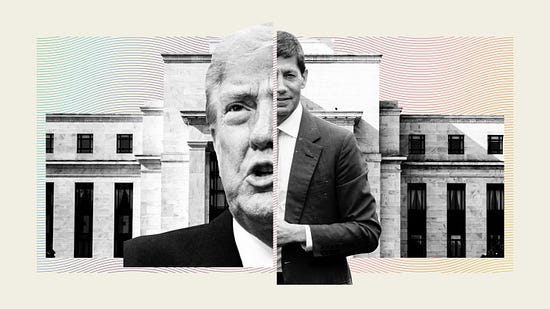
THE FEDERAL RESERVE RAISED interest rates today, and Donald Trump is Big Mad. After all, his litmus test when choosing a new Fed chair was a pledge to cut rates, and Kevin Warsh delivered the opposite.
But if Trump doesn’t like how things turned out, he has only himself to blame.
Most of the time, Trump is a master marketer and a manipulator of media narratives, someone who can flood the zone with shit and then sculpt from that shit whatever he likes. Just think back to everything he promised as he ran for president in 2024: In Trump’s telling, as soon as he re-entered the White House, prices would immediately come down. All his tariffs would be paid by foreigners. Cleansing the country of our brown immigrants would usher in a hiring boom for “heritage” Americans. Allowing coal plants to pollute more (among other “deregulatory” moves) would precipitate a surge of economic investment. Somehow, we’d pay off the national debt and also get new tax cuts. And by sheer force of his political will, we’d all bask in his new economic “golden age.”
Before January 20, 2025, maybe some of this seemed plausible. Twenty months later, reality has finally caught up with him.
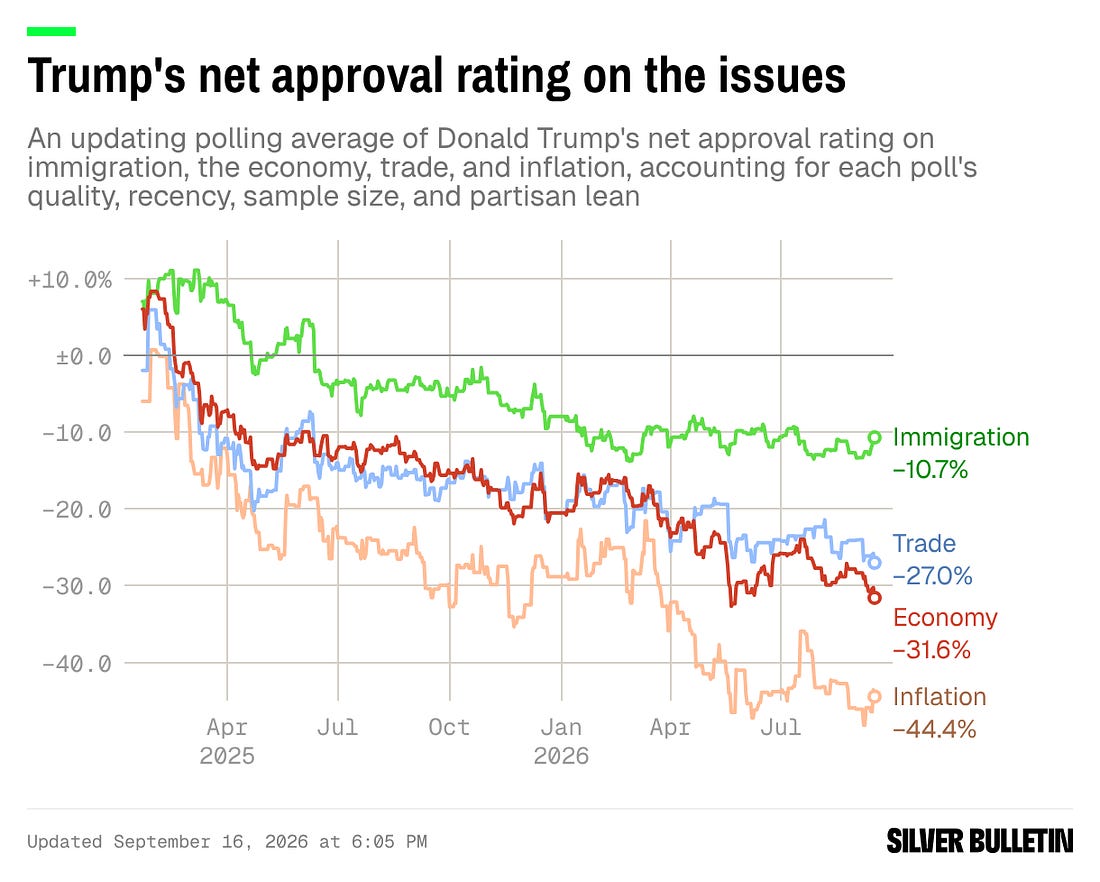
It caught up with him via his approval numbers; he’s deeply underwater on the economy and (nearly) every other issue.
 |
It’s also caught up with him in the economic data.
Inflation had been cooling when Trump first entered office, then began heating back up around “Liberation Day” (April 2025). But his one-two punch of tariffs and the Iran war sent prices surging for steel, oil, fertilizer, tomatoes, you name it.
Which brings us back to the Fed. Trump has basically boxed them in.
If Trump had done literally nothing when he entered office—just played golf each day—we probably would have achieved our “soft landing” on inflation and not needed additional rate hikes.
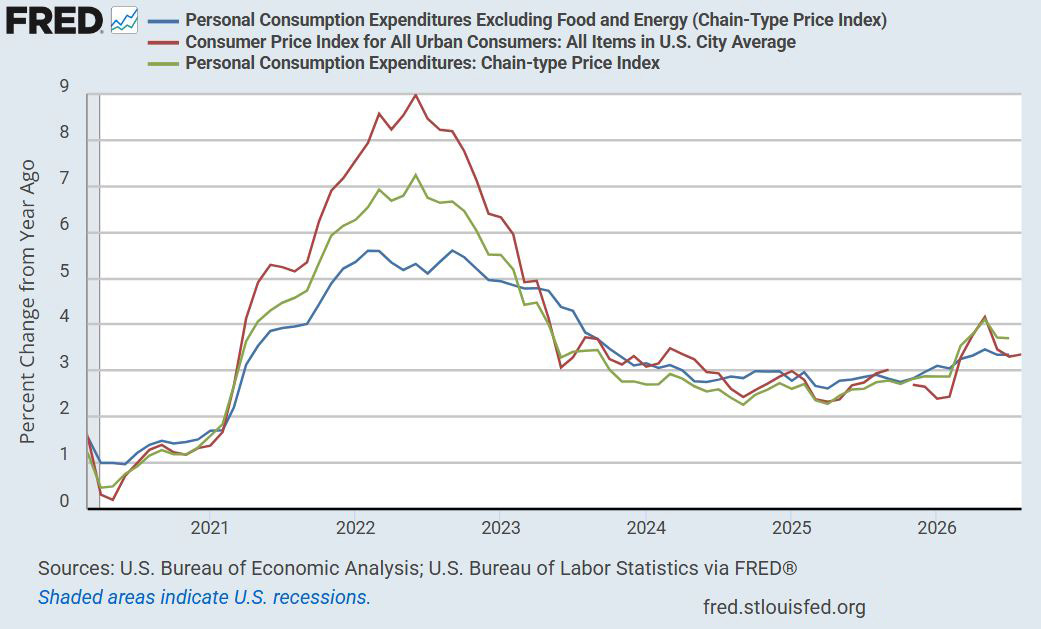 |
Instead he has set into motion all those forces that drove up prices. Perhaps worse, he has also led the public to expect higher prices in the years ahead, which can become a self-fulfilling prophecy. This month, for example, consumers said they expected prices to rise by 4.6 percent over the next year; in the six months before Trump took office, that number had been in the high 2’s.
These are conditions under which the Fed has little choice but to show they’re serious about inflation by raising rates. And perhaps not just raising them once; based on anonymized projections the Fed released today, most Fed officials expect at least one more rate hike between now and the end of the year.
Receipts With Catherine Rampell—a new companion podcast to Catherine’s weekly Receipts newsletter—is launching September 18. Join Catherine, JVL, and other Bulwarkers and guests on YouTube or wherever you get your podcasts. Follow the Receipts:
Apple Podcasts | Spotify | YouTube | More
TRUMP APPEARS TO BE BOTH FURIOUS and confused about why the Fed is doing this. He’s furious because he wants lower rates to juice the economy ahead of the midterms. And he’s confused because, well, he’s a moron.
He thinks that America is the biggest and bestest and golden-age-iest economy in the world, with the “best credit,” so therefore we “should be paying the lowest interest rate in the world.” This is an argument you might expect a real estate developer to make about why they should get a low rate on a commercial loan.
But it is not how the Fed sets rates.
In fact it’s close to the opposite of how the Fed sets rates.
The Fed doesn’t lower interest rates because an economy is strong and booming. It lowers interest rates when an economy is weak and needs a boost.¹ Inversely, it raises rates when it worries the economy is running a little too hot and price growth is getting out of hand. The central bank’s job is to take away the punch bowl just as the party gets going.
This is precisely why the Fed felt compelled to act. As Christopher Waller, one of the seven Fed governors, put it this summer: “Sternly staring at inflation until it melts before our withering gaze is not an option.”
The Fed actually kinda tried that “withering gaze” thing for a while. (Waller m