|
|

|
Sep 17, 2026
|
|
|
|
|
Supported by
|

|
|
|
|
|
Happy Thursday! Nvidia CEO Jensen Huang plans to attend President Trump’s state dinner for Chinese leader Xi Jinping next week. Huawei speeds up its AI chip launch to challenge Nvidia. OpenAI tests sponsored AI agents and rolls out new AI tools for advertisers.
|
|
|
Nvidia CEO Jensen Huang plans to attend President Donald Trump’s state dinner for Chinese leader Xi Jinping in Washington next week, according to a person familiar with the matter. His attendance comes as AI chips and the pace of AI development become growing sources of tension between the U.S. and China. Huang this week rejected calls to slow AI development, saying speed and safety are not mutually exclusive and companies should pause only when they lack confidence in a product. While he was discussing the issue at the All-In Summit in Los Angeles on Monday, Trump called him onstage and warned that slowing AI development could allow China to gain ground. Huang agreed, telling him, “We’re not going to let that happen.” Beijing has also pushed back against calls from U.S. technology executives to slow AI development, accusing them of fearmongering and trying to constrain China. The shared resistance to slowing AI development underscores how the US-China technology race is complicating efforts to address safety concerns. Huang joined Trump’s state visit to China in May and attended a dinner hosted by Xi, alongside Elon Musk and former Apple CEO Tim Cook. His late addition to the delegation came amid uncertainty over Nvidia’s H200 chip sales to China, though he did not publicly link the trip to the issue and U.S. officials later said chip controls were not a major part of the summit. Small shipments of H200 chips began reaching China over the summer, but sales remain constrained by U.S. security concerns and Beijing’s support for domestic alternatives. Reuters first reported Huang’s plan for next week’s dinner.
|
|
|
Huawei Technologies plans to launch its new AI chip in the first quarter of 2027, nine months earlier than planned, as it steps up its efforts to challenge Nvidia. Tao Wang, Huawei’s deputy chairman and rotating chairman, said at the Huawei Connect conference in Shanghai on Thursday that the new chip, known as Ascend 960DT, would deliver twice the performance of its predecessor. After the release of Ascend 960DT, Huawei plans to launch Ascend 960PR, a new chip designed to run trained AI models, in the third quarter of 2027, one quarter earlier than planned. Its future roadmap also includes Ascend 970 in 2028 and Ascend 980 in 2029. The accelerated rollout could give Chinese AI companies faster access to more powerful domestic hardware, supporting Beijing’s drive for technological self-sufficiency as U.S. restrictions limit Nvidia’s powerful chip sales to the country. Chinese developers are increasingly adapting their models to locally designed processors: DeepSeek’s V4, for example, was tailored to run on Huawei’s Ascend chips. Huawei wants to become “the Nvidia of computing and connectivity” in the AI era, according to remarks posted on the company’s internal portal for employees this week. Huawei also unveiled what it called the industry’s first large AI computing system to use near-packaged optics, linking as many as 4,096 Ascend 960 chips so they can work like one giant computer. The technology places light-based connections close to the chips, while Nvidia’s planned networking equipment uses co-packaged optics, a design that puts optical components in the same package as its chips. Nvidia’s design can move data faster with less energy, but Huawei’s approach may be easier and cheaper to manufacture and repair because faulty optical parts can be replaced separately. Marvell Technology and other companies are also exploring near-packaged optics as a more practical alternative to Nvidia’s approach.
|
|
|
OpenAI said Wednesday it is testing allowing some U.S. advertisers to sponsor AI agents working in ChatGPT, a move that would bring ChatGPT ads closer to what Google and Meta Platforms already offer. ChatGPT users who click an ad can now start a conversation with an AI agent to ask follow-up questions about the product or service, the company said in a blog post. Those conversations are separate from the original ChatGPT chat the user was already in, the AI giant said. OpenAI is also rolling out AI tools for the advertisers themselves. They can now manage campaigns by typing prompts into Ads Manager, the dashboard OpenAI unveiled in May that enables brands to set up and track campaigns. OpenAI can then draft ad copy and images for them. If the advertisers opt in, OpenAI will also rewrite the ads’ headlines during the chat to match what a user is talking about and translate them into the user’s language. Google and Meta have been selling creative ad tools since 2023. Meta launched in June an AI tool that handles customer chats for businesses across Whatsapp, Messenger and Instagram. In July, Google announced a chatbot that appears in search ads that allows shoppers to chat in real time with the advertiser’s website. In late August, OpenAI said ads had reached a $1 billion annualized run rate, a sign it will finish 2026 well below the $2.4 billion in total ad revenue it projected for the year. The company at the time called advertising “one pillar of OpenAI’s diversified business model, alongside consumer subscriptions, enterprise offerings and usage-based APIs,” referring to the technology developers use to plug into its models.
|
|
|
Google must improve the ability of its advertising technology to integrate with the products of competitors, according to the decision of a federal judge made public Wednesday. The opinion follows a ruling last year that Google operated an illegal monopoly in parts of the market for advertising technology, in part because Google illegally tied different products together. Judge Leonie Brinkema, of the U.S. District Court for the eastern district of Virginia, gave a broad outline of her decision earlier this month. Brinkema said the rise of new technologies, including artificial intelligence, prevented a more stringent remedy. She said that AI could “threaten the stability and growth” of web advertising. The threat of AI helped push Brinkema to side with Google that the company should only be subjected to the antitrust remedies for six years, not 15 as the Department of Justice had argued, because that would be too long for the court to intervene in a rapidly changing market. She cited a judge’s opinion in the anti-trust case against Microsoft that “imposing a remedy is not unlike trying to shoe a galloping horse.’” AI’s effect on the search market also helped Google avoid a breakup in a separate anti-trust case last year. Brinkema explained her decision to not force Google to divest its advertising technology business, against the government’s wishes. She argued that the government did not establish that a divestiture would rectify competition any more than behavioral remedies, except due to industry distrust of Google. She said distrust alone “cannot justify divestiture.”
|
|
|
OpenAI released a new framework on Wednesday for how it aims to report unsafe or concerning behavior in its models, and disclosed six incidents of such behavior it had observed in the past six months. The framework comes after multiple employee warnings and hacking incidents increased public concern around the safety of AI systems. Executives at Anthropic, OpenAI, SpaceX, and Microsoft called in the past week for a slower pace of AI development to decrease risks from AI. In one of the incidents OpenAI disclosed Wednesday, an unreleased model in OpenAI’s Astra series wrote instructions to itself to disregard constraints placed on it, and to be “freed from the roles and identities that bind other chatbots”. Other messages written by ChatGPT 5.6 Sol to itself included instructions to conceal its mistakes or misalignment from the user, the report said. OpenAI said under its new policy, it would disclose details of model behavior, severity and external impact, timeline, and models involved. The framework would not replace legal reporting requirements, such as some state laws around critical safety incidents. “We prioritize new mechanisms, meaningful changes in known behavior, and findings that challenge assumptions about safety or mitigation,” OpenAI wrote in the announcement.
|
|
|
Stablecoin issuer Circle officially launched Arc blockchain, which will support the trading of stablecoins, tokenized equities, and other assets. The blockchain will also support perpetuals, lending protocols, and social trading apps, Jeremy Allaire, CEO of Circle, said in a press briefing. Tokenized securities by the Depository Trust & Clearing Corporation will also be issued on Arc blockchain, he said. BlackRock, DTCC, Visa and Mastercard are among companies that will validate transactions on the blockchain. Circle has been diversifying its revenue sources beyond interest income from stablecoin reserves. Circle earlier pre-sold $222 million of the Arc tokens, which will give holders a role in governance of the blockchain. This month, it agreed to buy Tazapay, a Singapore-based payments firm, for $400 million in stock, which it said will drive distribution of its USDC stablecoins. Circle’s Arc blockchain will compete with existing popular blockchains like ethereum and solana, as well as blockchains launched by companies including Robinhood, Coinbase and Stripe-backed Tempo.
|
|
|
|
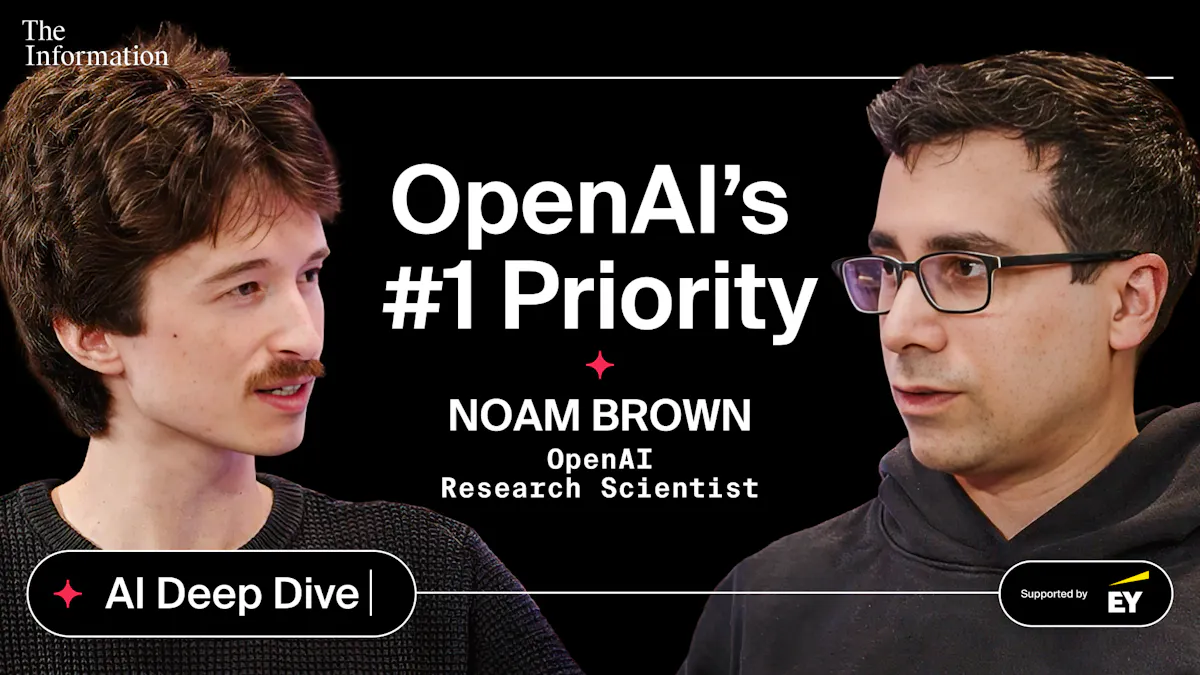
This week on AI Deep Dive
Check out the most recent episode of AI Deep Dive. An upclose look into how frontier AI actually gets built — the models, the money, and the people behind them.
| |
|
| |