Lumina Foundation is working to increase the share of adults in the U.S. labor force with college degrees or other credentials of value leading to economic prosperity.
Campus tours have long been an important way for institutions to capture the interest of students and parents. But during the COVID-19 pandemic, when many Americans weren’t traveling or attending in-person events, some campuses launched virtual versions of their tours, raising questions about whether in-person visits would become obsolete.
Six years on, families and institutions alike seem to agree: In-person campus tours are more important than ever. Today’s juniors and seniors were in elementary school when COVID-19 shut down their schools, leaving much of their generation with social deficits and, in some cases, mental health struggles, whose impact still lingers. That means the amorphous campus vibe—the pure energy of a normal day on campus that every tour seeks to capture—carries special weight.
After years of debate and lobbying and wrangling, Workforce Pell Grants are finally here. It’s considered a watershed moment for higher education, a game-changer, and a giant opportunity for students and institutions alike.
But since the official opening of applications on July 1, there hasn’t been an explosion of workers taking advantage of the new form of aid, and applications for program approval haven’t come rushing in. Even states and institutions that were working on submitting programs right out of the gate are just now beginning to see the first fruits. Instead of a gusher of program applications, there’s been a trickle, relatively speaking. Why?
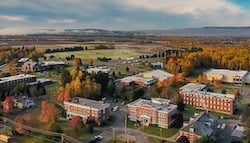
Enrollment has skyrocketed at the University of Maine at Presque Isle, a small state school near the Canadian border, as word spreads that it offers fast, affordable degrees. The school’s online YourPace program enrolled nearly 4,100 students during the last academic year, a 30-fold increase since 2018. Administrators say most students can complete their degrees in under a year for less than $10,000 in tuition.
But that growth and reputation for speed have also led to an examination by the New England Commission of Higher Education.
As artificial intelligence reshapes higher education and the workforce, institutions have an opportunity to rethink how curriculum is designed, delivered, and continuously improved. By leveraging AI to accelerate curriculum evolution while strengthening critical human skills, institutions can better prepare learners to thrive in a rapidly changing world.
In this interview, Jennie Sanders of Purdue Global discusses how AI is reshaping curriculum design to better align with workforce needs while reinforcing the enduring importance of human skills such as critical thinking, collaboration, and communication.
Recent research shows that 71 percent of community college students who are parents say caregiving could force them to withdraw. Nearly three-quarters say the same about money. And when asked whether their college supports them as a parent or caregiver, one-third disagreed.
Some institutions, including the North Carolina Student Success Center and Johnston Community College, are using this data to build programs that ensure parenting students' outcomes mirror their desire to succeed.
Christine Archer, a first-generation college student and now an Indiana prosecutor, should have had her debt canceled through the Public Service Loan Forgiveness program by now. The program is open to government and nonprofit employees like schoolteachers, public defenders, and librarians. After they make 120 qualifying payments in an income-driven repayment plan and put in at least 10 years of service in eligible jobs, the federal government eliminates any remaining balance.
But after more than a decade of public service, Archer's attempts to clear her graduate and undergraduate debt stalled amid administrative delays and changing loan servicers. Her story illustrates just how easy it is to end up confused—and why many borrowers believe the U.S. Department of Education is failing them.




.jpg?width=500&upscale=true&name=istockphoto-1041987758-612x612%20(2).jpg)