Plus: Flock cameras and the Fourth Amendment |

US Edition - Today's top story: 3 iconic animals show the value of the US Endangered Species Act – and the harm in stripping it away

October 1, 2026

US Edition

The Conversation
 

Top headlines

Lead story

How would you define “harm”?

Would it include destroying a panther’s habitat, reducing a butterfly’s food source or interfering with an endangered whale’s ability to communicate with its calf and the rest of its pod?

As the Trump administration chips away at the Endangered Species Act, it has redefined “harm” to mean only directly injuring or killing the animal itself, and it is arguing that the law applies only to intentionally harming the animal.

To understand what that means in practice, UMass Amherst environmental conservation scientist Timothy Randhir looks at how risks would rise for three iconic species: the Florida panther, the right whale and the monarch butterfly.

Miss us on Sundays? Get a selection of our best and most popular stories (or try our other weekly emails).


 

Stacy Morford

Senior Environment + Energy Editor

 
A rescued Florida panther, one of fewer than 300 of the endangered big cats alive today, is released into the wild. Mark Cunningham/Florida Fish and Wildlife Conservation Commission

3 iconic animals show the value of the US Endangered Species Act – and the harm in stripping it away

Timothy Randhir, UMass Amherst

The stories of a whale, a panther and a butterfly help explain why new interpretations of the Endangered Species Act could be catastrophic for species’ survival.

International

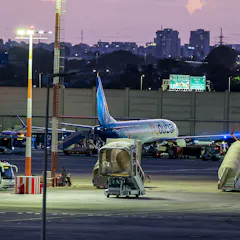
FlyDubai incident: Airline safety expert explains how cockpits have become more secure – but only from outside threats

Jeff Price, Metropolitan State University of Denver

Israel’s prime minister said the pilot stabbed a colleague and tried to crash the plane before passengers subdued him.

Science + Technology

Too many males to choose from can overwhelm female frogs – and change who gets to mate

Claire Therese Hemingway, University of Tennessee; Smithsonian Institution

Many animal species – frogs and humans alike – struggle to make choices in a complex, overwhelming world.

100 years ago, Schrödinger’s equation shed light on quantum physics – scientists use it today to fine-tune chemical reactions

Sophya Garashchuk, University of South Carolina

A 100-year-old equation helps scientists build solar cells, develop biofuels and even study quantum computers.

Arts + Culture

Nina Simone, Langston Hughes and their forgotten creative collaboration

Jason Miller, North Carolina State University

A new book details the fruitful creative partnership between the singer and poet that helped shape Simone’s sound.

As private equity, politics and prediction markets reshape sports, is the press box up to the task?

Alex Volonte, University of Florida

Sports journalism has sometimes been called the ‘toy department,’ since it was known for less serious reporting. But the sports page has an opportunity to take on a real watchdog role.

Politics + Society

The trouble with Flock cameras is the surveillance system’s architecture, not just some of its users

Henry F. Fradella, Arizona State University

The architecture of automated license plate readers turns local cameras into a far-reaching surveillance network that can be accessed by agencies that never purchased the devices.

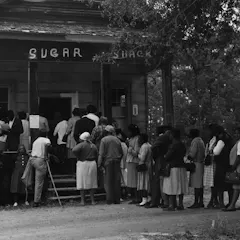
Up-and-down progress of voting rights in America has been shaped by these 10 key moments

Gibbs Knotts, Coastal Carolina University; Christopher A. Cooper, Western Carolina University

The history of voting and elections in America doesn’t follow a steady path toward progress or retreat. It is marked by intense struggles, monumental victories and devastating losses.

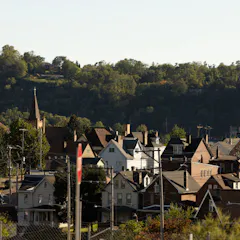
Can development happen without displacement? Pittsburgh’s Hazelwood neighborhood is a test case

Ira Goldstein, University of Pennsylvania

A decade of research on Pittsburgh’s Hazelwood neighborhood finds that major riverfront investment did not push out longtime residents.

Environment + Energy

Question of whether taxpayers or fossil fuel companies pay for climate change damage heads to Supreme Court

Patrick Parenteau, Vermont Law & Graduate School

If fossil fuel companies misled the public about the dangers of their products, should they be required to pay for damages from climate-related disasters?

Antarctica’s ice loss is locked in, and extra snowfall won’t save it – that’s bad news for low-lying coastal areas elsewhere

Yucheng Lin, City University of Hong Kong; Robert Kopp, Rutgers University

The Antarctic ice sheet’s future depends how a chain of events plays out. A new study finds the evidence points in one direction.

Health + Medicine

Global health research makes America richer and healthier

Joshua R. Ehrlich, University of Michigan

US-funded research into the health of people abroad has large health and economic benefits for Americans.

Trending on site

Today's chart

line chart showing safe exposure time to loud noises, where the y axis is time and the x axis is volume.
Read the article
 

About The Conversation

We're a nonprofit news organization dedicated to bringing you facts and trustworthy analysis to help you make sense of our complex world. We can give away our articles thanks to the generosity of readers like you. Learn more about us

Support our work

More from The Conversation

Follow The Conversation

You can fi