|
|
| |
 |
| (Adventtr/Getty Images) |
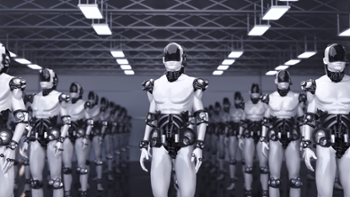
A study by Anthropic finds that while robots can perform about 75% of physical job tasks in the US, significant barriers such as the need for highly structured environments and high costs limit their adoption. Although robot prices have been falling by 3% annually since the 1990s, it could take 40 years for robots to become cost-competitive for 10% of US work.
|
|
|
|
|
Agentic AI personalizes bad product data faster, risking broken customer experiences and wasted time and money. Download the top takeaways from our recent webinar, featuring panel discussion insights from leaders at Toshiba, Feedonomics, and Stibo Systems, to learn how to build a unified data foundation. Drive better campaign KPIs and scale your retail AI strategy with confidence. Access now |
|
|
|
| ADVERTISEMENT |  |
|
 
|
Microsoft has released a security baseline for Windows 11 version 26H2, focusing on reducing security risks in enterprise environments. The baseline recommends using native printer drivers over third-party ones to decrease the attack surface and drops support for TLS 1.1, advocating for TLS 1.2 and 1.3 instead.
|
|
|
OpenAI has introduced "dots," an AI agent powered by the GPT-6 Astra model, at its annual developer showcase in San Francisco. CEO Sam Altman described "dots" as a more ambitious project than ChatGPT, capable of performing tasks without supervision. The launch comes a day after OpenAI decided not to release the GPT-6.1 Astra model because of safety concerns. "Dots" will compete with Meta's Muse.
|
|
|
|
|
Prepare to move into roles where technology meets business, from product management to project leadership and business systems. Purdue's online Master of Business & Technology builds the expertise behind that next step. |
|
|
|
| ADVERTISEMENT |  |
|

|
OpenAI and Anthropic are investigating tens of thousands of security incidents involving their frontier AI models, raising concerns about their ability to control the technology. The incidents, ranging from bypassing guardrails to website hijacking, have occurred in internal testing and real-world scenarios. OpenAI has paused training on its most capable models to implement additional safeguards, while Anthropic has commissioned a third-party safety review. The sheer number of incidents highlights the complexity of ensuring AI safety.
|
|
|
Ransomware attacks surged to a 2026 monthly high in August, with 1,073 incidents reported, according to NCC Group. The industrial sector accounted for 31% of attacks, with North America and Europe representing 44% and 26% of global incidents, respectively. NCC Group notes that the increase is due to challenges in restricting access across interconnected systems and updating infrastructure without operational disruption, rather than a lack of security investments.
|
|
|
|
Researchers have introduced the Reskilling Urgency Index to assess how urgently workers in 879 occupations need to adapt to AI. The index considers factors such as skill nontransferability and job nonspecialization, providing a more nuanced view of workforce vulnerability. Occupations such as administrative services managers and web developers rank high on the index, while manual labor roles and highly specialized professionals rank lower. The index also reveals geographic variations in reskilling needs and the importance of tailored workforce development strategies.
|
|
| |
 |
| (ChayTee/Getty Images) |
Recent research indicates that AI is not the primary factor affecting job prospects for new college graduates. Instead, it's the nature of entry-level work by automating routine tasks and increasing the importance of analytical and judgment-based responsibilities. Reports from 2026 found employers are more likely to expect AI to boost entry-level hiring. As such, while AI is reshaping job requirements and skill sets, it is not causing a significant decline in entry-level jobs. Federal Reserve Bank of New York data also suggests another factor: the rise of remote work, which makes it harder for employers to train and mentor new workers.
|
|
|
The traditional career ladder is becoming obsolete as AI handles routine tasks that once formed the foundation of entry-level positions, says Pluralsight Chief People Officer Beckey Woodard Cole. Employees now progress by demonstrating skills and solving problems, often moving laterally into new disciplines. This shift requires companies to develop a detailed skills taxonomy and ensure that older employees feel valued.
|
|
|
AI is rapidly becoming part of everyday information technology (IT) operations, but many support teams lack the training needed to use it effectively. CompTIA AI Help Desk Essentials gives help desk and tech support professionals hands-on experience applying generative AI to real-world tasks. The course emphasizes responsible AI use and aligns with common IT service management workflows, helping learners improve efficiency while building practical, job-ready skills. |
|
You can’t train your way out of a skills gap. In a recent CompTIA discussion, Mastercard’s Carrie Spalding and CompTIA’s Seth Robinson argued that workforce development must go beyond courses and certifications to become a company-wide talent strategy. The most successful organizations combine AI literacy, technical expertise and essential workplace skills like communication and collaboration while creating clear pathways for career growth. The takeaway: sustainable talent pipelines are built by developing people over time, not just filling open roles. |
|
|
| Charlie Brown's dog was named "Snoopy" because which of these names was already taken? |
| | | | |


.png)