+Yellowstone wolves

UK Edition - Today's top story: Wolves did not save Yellowstone – why were we so desperate to believe they did?

October 3, 2026

UK Edition

The Conversation
 

For the latest instalment in our series on the augmented human, we enter the era of the exoskeleton. A group of mountain rescuers in Seattle is already experimenting with the use of devices worn outside the body to strengthen hips and legs on punishing expeditions. Some Ikea workers wear backpack-like devices to bolster their lifting capacity during heavy warehouse work. So, could the average commuter soon be bounding up escalators with the help of battery powered knees?

Ideas for this technology actually stretch back as far as 1890. Guided by healthcare engineer Ildar Farkhatdinov, we’re looking at the next leap forward.

The reintroduction of wolves to Yellowstone national park in the US in 1995 is one of the world’s most celebrated rewilding projects. The absence of predators since the 1920s had meant local elk and other species were overgrazing and destroying the landscape. Once re-established as the apex predator, wolves “managed” the elk in their own special way and the fauna thrived again. Or so the story goes. But if this all sounds a bit too neat, it’s because it probably was. The question for sustainability expert Rogelio Luque-Lora is why it was so important for us to believe in this story.

In his speech to Labour conference this week, Prime Minister Andy Burnham announced a bold ambition to set up a national care service akin to the NHS. If he succeeds, he’ll finally address a problem that has confounded every national leader for decades. We have looked at how other nations fund social care in the hope of finding inspiration. The evidence suggests Burnham should be looking to Sweden and Norway for ideas.

Also this week, what it’s like to see Renoir in love, why The Traitors is harder for celebrities – and how Etruscan painted tombs turn out to be extremely early examples of immersive art experiences.


 

Laura Hood

Deputy Editor


Wolves did not save Yellowstone – why were we so desperate to believe they did?

Rogelio Luque-Lora, University of Edinburgh

Yellowstone’s reintroduced wolves have become a famous conservation success story, but the reality is far messier.

What your eyes could reveal about your heart health

Barbara Pierscionek, Anglia Ruskin University

Retinal images could contain information about future cardiovascular risk, including atrial fibrillation.

The dawn of the age of the exoskeleton

Ildar Farkhatdinov, King's College London

Powered robotic devices designed to enhance the wearer’s physical capabilities are being developed for an increasing range of uses.

How should England pay for social care? Germany, Norway and Sweden take very different routes

Clarissa Giebel, University of Liverpool

Cost keeps care out of reach for many people in England. Andy Burnham’s National Care Service could learn from how Germany, Norway and Sweden pay for it.


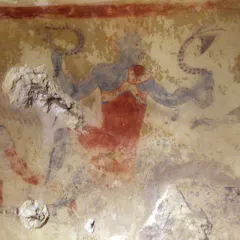
Confronting demons: how acoustic and AI technology brought ancient Etruscan tombs back to life

Jacqueline Ortoleva, University of Oxford; Maurizio Forte, Duke University

Our research suggests these tombs were designed and constructed not simply to house the dead, but to affect the living.

Renoir and Love is a wonderful celebration of the fleeting joys of life

Benedict Carpenter van Barthold, Nottingham Trent University

An exhibition that will leave most with a deep appreciation for Renoir as an artistic innovator and painter of the first rank.

Burnham has said the unsayable on Brexit. What happens now?

Benjamin Martill, University of Edinburgh

Now that Burnham has started the conversation, it’s unlikely to go away again any time soon.

Celebrity Traitors: research suggests that contestants will find the game tougher than it looks

Tony Syme, University of Salford

In the castle, talk is cheap and not to be trusted.


The end of endless summer: why cheap winter veg is under threat

Kambiz Baghalian, Anglia Ruskin University

Year-round tomatoes and asparagus depend on heated glasshouses, abundant sunlight and long-distance transport – all of which come with costs.

An autumn stargazing forecast: how to make the best of our night sky

Alix Violet Freckelton, University of Birmingham

A look at the night sky forecast to motivate you to dust off your telescope for the darker nights of autumn.


Featured events

View all
Socialism after AI

5 October 2026 •

Promote your event
 

Contact us here to have your event listed.

For sponsorship opportunities, email us here


Unsubscribe or manage your preferences