You’ve come to the right place, Julian: I’m also a big Le Guin fan and understand the frustration with looking for books that can clear the high bar she sets. Vivid writing along with a confident sense of values can be hard to find, but I’ve got a few ideas for you.
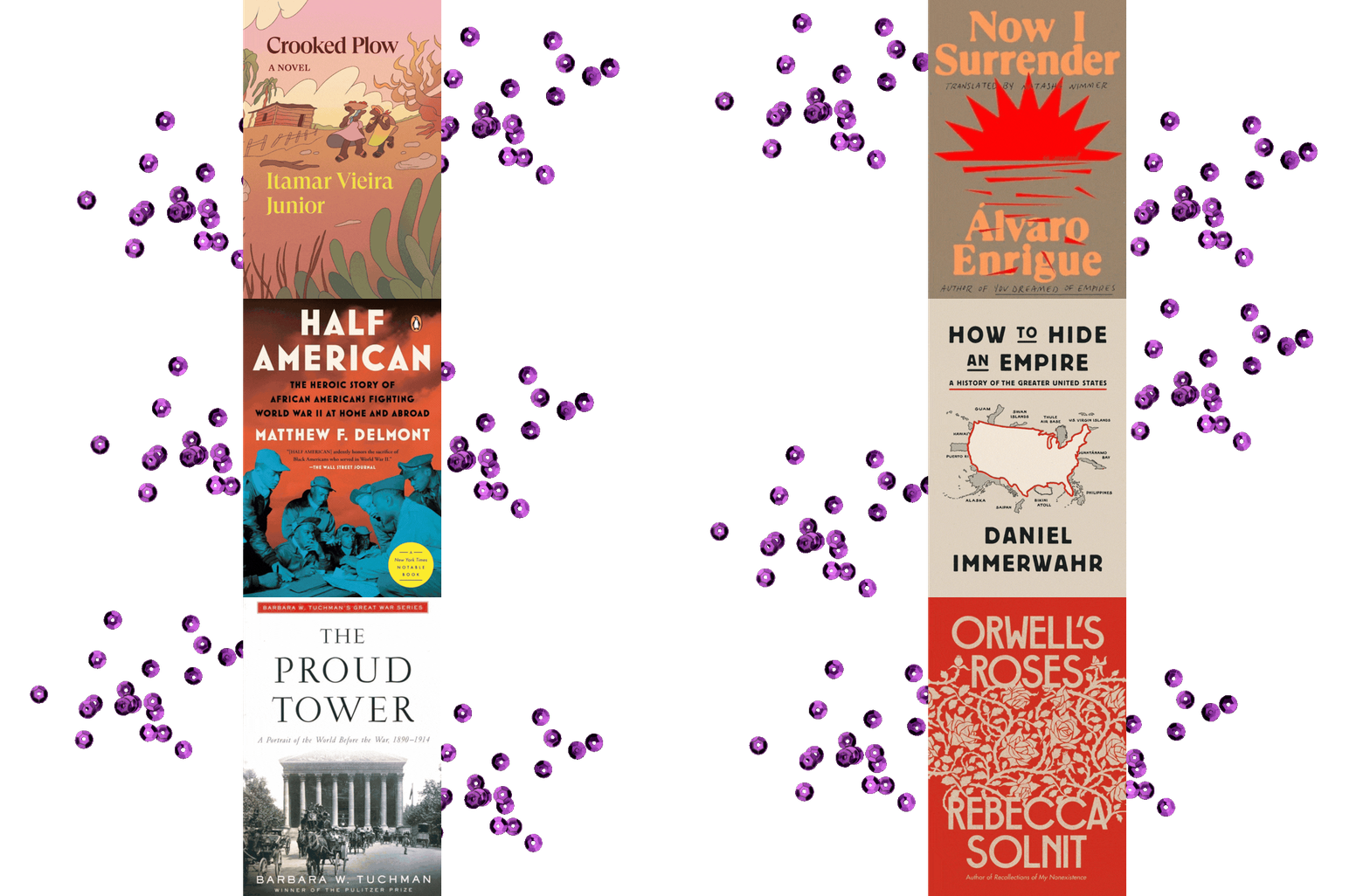
Crooked Plow by Itamar Vieira Junior and translated by Johnny Lorenz is one of my favorite books I read last year, and I think has a lot of Le Guin in it. The book is a family saga set in Brazil’s Bahia region, following two sisters bound together by a mysterious knife. Their family and their community both struggle under a deeply exploitative agricultural system that amounts to de-facto enslavement. The writing and translation in Crooked Plow are excellent, but the way Vieira Junior dramatizes the social and labor struggles of exploited quilombola farmers reminds me of Le Guin’s warts-and-all depiction of political systems and the way people manage to find both transformative and quotidian power and solidarity.
I think you’ll also enjoy Now I Surrender, the latest from Álvaro Enrigue, an expansive anti-Western set in the borderlands between the US, Mexico, and the native countries of Apachería. It’s a gripping historical epic that has drawn comparisons to Cormac McCarthy and E.L. Doctorow, but next to the 19th century shoot-outs between Geronimo and US forces, Enrigue also includes contemporary sequences of his family on a road trip in the region. Enrigue is a beautiful, hallucinatory writer, who has an eye for striking, almost-too-strange details. But Now I Surrender is also thoughtful about larger issues: history, memory, and what to do with land that contains so many ghosts.
On the non-fiction side, there’s plenty of titles that take a critical eye to familiar topics—some favorites off the top of my head include Half-American, How To Hide An Empire, The Bright Ages, and The Proud Tower. All of these are well-written on a sentence level too, but I think your description of wanting “to feel any shade of hopeful” is getting at something essential about Le Guin. She always offers hope that doesn’t feel simple or saccharine. One of my favorite writers who is very much working in that tradition is the great Rebecca Solnit, and if you haven’t read her book Orwell’s Roses, I highly recommend it. Roses is a beautifully written, just gorgeous—there are passages that stopped me in my tracks. Solnit is of course brilliant and incisive, and this thoughtful collection doesn’t shy from the darkness that she’s criticizing. But crucially, it also doesn’t bog down too long that the critique curdles into cynicism. Solnit always reminds me that a better world is in our grasp, but that it will take a lot of work and focus to get there.
–James Folta,
Staff Writer