|
Fund independent journalism
|
|
|

|
|
|
|
The food of love, everyday items to make your life better and more uplifting stories |
|
|
Good morning.
After the death of her beloved cairn terrier, Wilf, Felicity Cloake reflects on the kindness shown by friends and family, many of whom expressed their love and support through food.
The role food plays during major life events, whether joyful or sorrowful, is universal. In this weeks Feast newsletter, Felicity recommends two types of comfort food: portable, energy-boosting snacks that sustain people through stressful periods, such as caring for a newborn or grieving a loss, and hearty home-cooked meals that can go in the freezer and be brought out when needed. From flapjacks and banana bread to pies and casseroles, these dishes offer nourishment and comfort.
Felicity says: “We so often cook, or otherwise provide for people in the aftermath of such shocks, be they happy or sad, as a way both to offer practical help and to show them how much we love them.”
The Guardian newsletters team
|
|
|
|
|
|
|
‘Menopausal and out of work, I sat crying in my car. Now, I’m a standup comedian’ |
|
|
 Barbara Scully performing at the Funny Women comedy show at Whelans, Dublin. Photograph: Paul Sherwood |
Five years ago, Barbara Scully sat in her car crying. Trying to find work after taking time out to raise her children, she found herself facing closed doors. “I presume it was the fact that I was 50 and had a 10-year gap where my career used to live,” she says. “I sat in the car on the driveway in tears, thinking: that’s it, I’m washed up, I’m done.”
Then something changed. “Once I pulled myself together, I thought: OK, if this were one of my kids, what would I tell them? … Look at what it is you enjoy doing and try to make that work for you.”
Scully relaunched her career as a broadcaster and comedian, and feels happier than ever. “I am on a mission to try to tell women in particular not to fear getting older; to embrace it, to push back against all the bullshit about how you should be fighting ageing,” she says.
|
|
|
| |
|
|
|
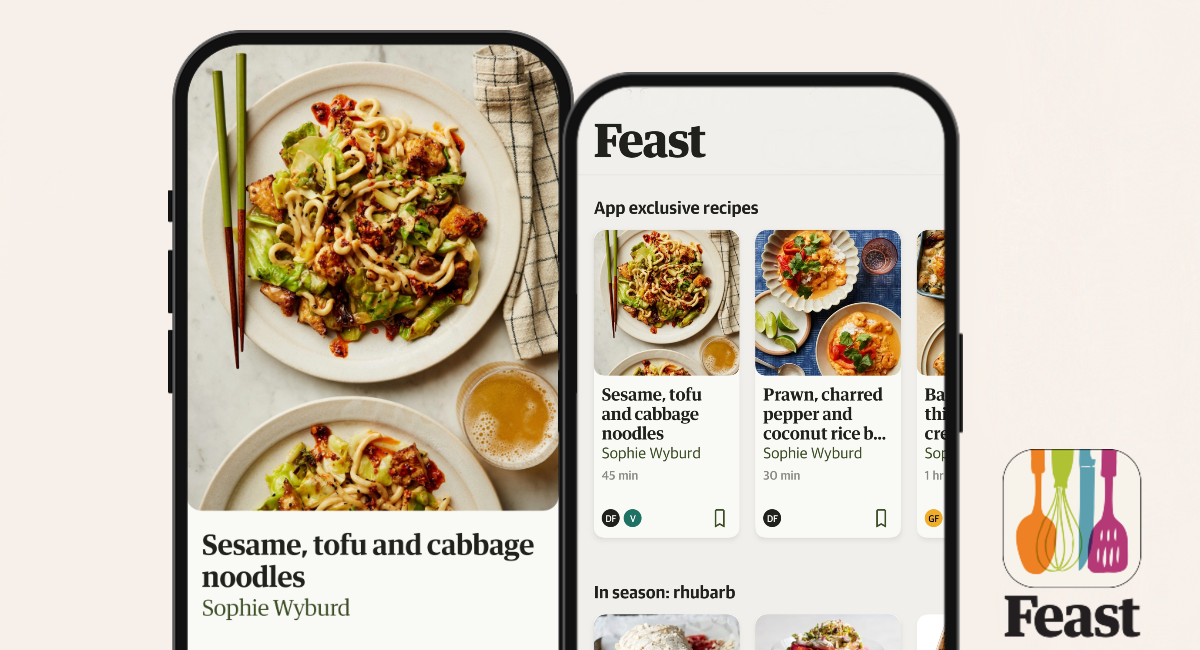
The Feast app: your most useful kitchen utensil
Get inspired with more than 7,000 recipes from our world-class cooks and smart, exclusive features to make cooking a breeze.
|
|
|
|
|
|
| |
|

|
|
|
|
Fifteen everyday items that make your life a teeny bit better |
|
|
Ruff night? Breathable linen sheets could make bedtime more comfortable, according to The Filter. Photograph: Evgeniya Pavlova/Getty Images |
Our Filter team asked Guardian readers to share the everyday products that have improved their lives.
Popular recommendations included linen sheets for better sleep, especially during menopause. Other practical favourites included wrist wraps for weightlifting, and changing robes for all-weather walks.
Gardeners recommended shredders for turning garden waste into useful mulch. In the kitchen, readers highlighted Danish dough whisks, egg cookers, and Jennie loved her jar-opening key: “No more RSI. Every home should have one.”
|
|
|
|
|
|
|
Making scents: could AI help perfumers take pressure off endangered plants? |
|
|
Scientists say the fragrance industry will soon be able to reproduce scents and compounds from endangered plants without repeatedly harvesting them. Photograph: Pixel-shot/Alamy |
What if perfumers could create the smell of the world’s most valuable scent ingredient without cutting down the tree that makes it? Agarwood, or oudh, the dark, fragrant resin produced by Aquilaria trees, is in such high demand that the wild forests have been devastated. Now advances in AI, which allow it to recreate scents, mean that soon the fragrance industry should be able to reproduce scents and compounds from endangered plants without repeatedly harvesting them.
Nevertheless, some conservationists have warned against greenwashing: producing a substitute doesn’t prevent consumers buying the highly prized original – or address other causes of a species’ decline.
|
|
|
|
|
|
|
The 80-year-old market trader who became a Chilean music star |
|
|
Luis Gómez, known as JM, sings with Los Cracks del Puerto at the SCD Hall in Santiago, Chile. Photograph: Tamara Merino/The Guardian |
At 65 years old, Luis Gómez was still hawking vegetables at the market he had worked at since the age of eight. Now at 80, Gomes, or JM as he is popularly known, has become a musical sensation, selling out venues across Chile, as well as in Mexico, the UK, Argentina and France. He is the frontman of Los Crack del Puerto, who in May released their fourth record, Lo Mucho Que Nos Queda (So Much Yet to Come), as a cassette – to great acclaim.
It’s a long way from his early life in the city of Valparaíso; the youngest of five children, he was three when his father died, and 10 when he lost his mother. For a time, he slept on the street between parked cars. JM would eventually form a musical double act with his cousin, Juan Navarro, and the two entertained crowds in Valparaíso’s bars. The pair would find fame well into their 70s after forming the band in 2017. “I never planned any of this, and I’d be happy still working at the market,” JM says. “But I suppose it’s never too late to give something a try.”
|
|
|
|
|
|
|
Can hope save the planet? An endangered parrot beating the odds can help us find out |
|
|
New Zealand’s kākāpō, which was once close to extinction. Photograph: Nature Picture Library/Alamy |
Can hope save the planet? Helen Pilcher ponders that question in this column centred on a new biodiversity report, The Science of Hope, which shows how 32 species of bird (including New Zealand’s kākāpō, pictured above) and 16 types of mammal have been saved from extinction since 1993.
Pilcher writes that far from “hopium” (that is, misleading tales of false hope), the report shows the importance of telling the positive stories in the fight against climate change and habitat loss.
“That’s the kind of hope we need: pragmatic, resilient and open to revision. We need our governments to be honest about the scale of the challenge we face. Because when they withhold information, they don’t just rob us of knowledge. They also rob us of hope,” she writes.
|
|
|
| |
|
… there is a very good reason why not to support the Guardian
|
|
Not everyone can afford to pay for news. That is why our website is open to everyone.
But – if you can afford to do so – here are three good reasons why you might consider becoming a Guardian supporter today:
|
|
1
|
|
Your funding means we can be completely independent
|
|
|
2
|
|
High-quality, trustworthy journalism is a public good
|
|
|
3
|
|
You can support us however you like
|
|
|
Help power the Guardian’s journalism at a time when misinformation is rife online and good news can be hard to find.
It could be a one-off payment or a regular monthly amount of your choice. Thank you.
|
|
|
|
|
|
| |
|

|
|